Explaining Medicine
  • News
  • Health & Lifestyle
    • Diet & Weight Management
    • Exercise & Fitness
    • Nutrition, Food & Recipes
    • Prevention & Wellness
  • Conditions
    • Custom1
      • Conditions A-Z
      • Procedures A-Z
      • Allergies
      • Alzheimer’s
      • Arthritis
      • Asthma
      • Blood Pressure
      • Cholesterol
      • Cancer
    • Custom2
      • Chronic Pain
      • Cold Flu
      • Depression
      • Diabetes
      • Digestion
      • Eyesight
      • Health Living
      • Healthy Kids
      • Hearing Ear
    • Custom3
      • Heart
      • HIV/AIDS
      • Infectious Disease
      • Lung Conditions
      • Menopause
      • Men’s Health
      • Mental Health
      • Migraine
      • Neurology
    • Custom4
      • Oral Health
      • Pregnancy
      • Senior Health
      • Sexual Health
      • Skin Problems
      • Sleep
      • Thyroid
      • Travel Health
      • Women’s Health
  • Medications
    • Medications
    • Supplements and Vitamins
  • Medical Dictionary
  • Health Alerts
Flu shot recommendation for kids dropped just as...
The CDC just sidelined these childhood vaccines. Here’s...
Your next primary care doctor could be online...
In Lodge Grass, Montana, a Crow community works...
RFK Jr.’s new dietary guidelines go all in...
More seniors are becoming homeless. Shelters are trying...
Health officials slash the number of vaccines recommended...
Wegovy obesity pill now available at pharmacies
In the U.S., hunger is often hidden. But...
One doctor’s experience shows the battle for the...
Top Posts

Explaining Medicine

  • News
  • Health & Lifestyle
    • Diet & Weight Management
    • Exercise & Fitness
    • Nutrition, Food & Recipes
    • Prevention & Wellness
  • Conditions
    • Custom1
      • Conditions A-Z
      • Procedures A-Z
      • Allergies
      • Alzheimer’s
      • Arthritis
      • Asthma
      • Blood Pressure
      • Cholesterol
      • Cancer
    • Custom2
      • Chronic Pain
      • Cold Flu
      • Depression
      • Diabetes
      • Digestion
      • Eyesight
      • Health Living
      • Healthy Kids
      • Hearing Ear
    • Custom3
      • Heart
      • HIV/AIDS
      • Infectious Disease
      • Lung Conditions
      • Menopause
      • Men’s Health
      • Mental Health
      • Migraine
      • Neurology
    • Custom4
      • Oral Health
      • Pregnancy
      • Senior Health
      • Sexual Health
      • Skin Problems
      • Sleep
      • Thyroid
      • Travel Health
      • Women’s Health
  • Medications
    • Medications
    • Supplements and Vitamins
  • Medical Dictionary
  • Health Alerts
  • News

    As the pandemic ebbs, an influential COVID tracker shuts down

    by Rob Stein February 10, 2023

    Enlarge this image

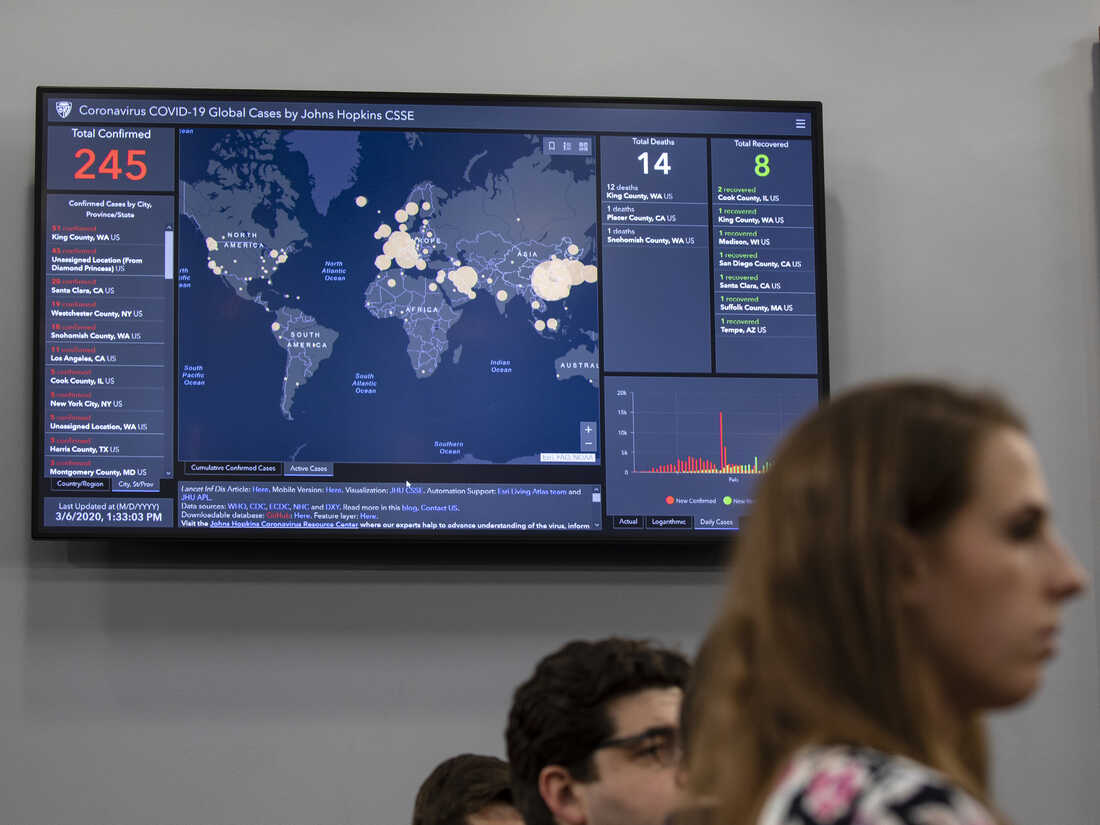
    The COVID-19 dashboard created by the Johns Hopkins Center for Systems Science and Engineering is displayed during a briefing on Capitol Hill in early March 2020, when only 245 confirmed cases had been reported in the U.S. Samuel Corum/Getty Images hide caption

    toggle caption

    Samuel Corum/Getty Images

    The COVID-19 dashboard created by the Johns Hopkins Center for Systems Science and Engineering is displayed during a briefing on Capitol Hill in early March 2020, when only 245 confirmed cases had been reported in the U.S.

    Samuel Corum/Getty Images

    In another sign of the changing state of the pandemic, an invaluable source of information about the virus over the last three years is shutting down, NPR has learned.

    The Johns Hopkins Coronavirus Resource Center plans to cease operations March 10, officials told NPR.

    “It’s bittersweet,” says Lauren Gardner, an engineering professor who launched the project with one of her students on March 3, 2020. “But it’s an appropriate time to move on.”

    When the pandemic erupted, no one knew much of anything about the virus and how to respond. Was it safe to go grocery shopping? How easily could someone get infected on a bus or train? Could runners get sick just by passing another jogger in the park?

    “As everyone can remember, there was very little information, particularly at the beginning of the pandemic,” says Beth Blauer, an associate vice provost at Johns Hopkins who has helped run the center.

    “And when we started to see the cases move out of China and in through Europe and headed toward our shores, we knew that there were going to be a series of public policy decisions that would have to be made,” Blauer says.

    Those decisions included where to impose dramatic but crucial public health measures. Should mayors close schools? Should governors mandate masks? Should CEOs shut down factories? Should heads of state seal borders?

    But there was no good data available to make those decisions. Neither the Centers for Disease Control and Prevention nor the World Health Organization were providing enough useful numbers in real time. So journalists and academic researchers at places like Johns Hopkins jumped in to fill the void.

    NPR launched its own tracker in March, 2020, drawing data from Johns Hopkins. It was viewed over 52 million times over the last three years as readers sought to stay updated on COVID metrics. On Feb. 1, NPR ceased updating the page, recognizing that Americans can find the information they need on the CDC’s COVID website. This was not the case early in the pandemic.

    “I know CDC has the ability to do this and has done it numerous occasions in the past,” says Dr. Ali Khan, a former CDC official who is now dean of the College of Public Health at the University of Nebraska Medical Center. “So it was unusual that at the beginning of this COVID pandemic that they did not collect this data and put it out in a timely manor. Extremely unusual and very surprising.”

    Johns Hopkins “essentially filled the vacuum,” Khan says, “That was invaluable to understand what was going on.”

    Meet The Team Behind The Coronavirus Tracker Watched By Millions

    The Coronavirus Crisis

    Meet The Team Behind The Coronavirus Tracker Watched By Millions

    After Johns Hopkins launched the project, the website quickly became crucial for deciding everything from where drug companies should test vaccines to where Hollywood should film movies. Even the White House and the British prime minister were relying on Hopkins data.

    Gardner recalls many conversations “with people that were just out about doing their job — traveling in Japan, here and there — who would tell me the dashboard was the driving force in decision-making for them … about quitting their job and then coming home so that they wouldn’t get stuck.”

    The site’s maps of the world and individual countries became an iconic way of tracking the virus’s inexorable spread.

    “I would refresh my computer screen over and over again over the course of the work day looking to see what the latest numbers were,” says Dr. Celine Gounder from the Kaiser Family Foundation, who was working as an infectious disease specialist at the Bellevue Hospital in New York when the pandemic began.

    “It was really startling to see even over the course of the day how the numbers were evolving. I think my colleagues thought I was a little obsessive,” Gounder says. “But it was also watching history unfold in real time on your screen.”

    The site, which Blauer and Gardner note was created and run largely by women, cost $13 million and eventually drew more than 2.5 billion views, Blauer says.

    “It is a staggering amount of traffic,” she says. “These are numbers I don’t think I’ll ever see again in my professional career.”

    But now that the threat of the pandemic is receding, states are reporting data less frequently and the CDC has ramped up the agency’s data reporting, the university decided it was time to shut it down.

    “There’s definitely a bitter sweetness about the end,” Blauer says. “But we are at an inflection point.”

    Both Blauer and Gardner say they hope the CDC and the public health system will continue to invest in data collection so the nation will be better prepared in the future. But they’re prepared to step back in if necessary.

    “There will be another pandemic,” Gardner says. “And, so we’ll have to see.”

    Read the article here

    Share this Post

    Share Explaining Medicine Share Explaining Medicine

    As the pandemic ebbs, an influential COVID tracker shuts down was last modified: February 21st, 2023 by Rob Stein

    Related

    COVID-19COVID-19 dataJohns Hopkins University
    0 comment
    0
    Facebook Twitter Google + Pinterest
    Rob Stein

    previous post
    Medicare announces plan to recoup billions from drug companies
    next post
    ERs staffed by private equity firms aim to cut costs by hiring fewer doctors

    Related Articles

    5 ways pain and addiction patients can get better care

    February 24, 2018

    To Help Prevent Colon Cancer, ‘Listen to Your Gut’

    October 5, 2016

    Researchers Making Progress Against Ovarian Cancer

    March 29, 2018

    AFM Has Doctors, Families Trying ‘Whatever Works’

    December 12, 2018

    When It Comes To Romantic Attraction, Real Life Beats Questionnaires

    September 6, 2017

    ABIM Fees Place Physician Bank Accounts on High Continuous Suction

    January 7, 2019

    Autism and advocacy go hand in hand

    April 26, 2019

    How high blood sugar, hypertension and obesity can add up to cancer risk

    March 11, 2024

    U.S. Birth Rates Still Dropping, Moms Still Older

    October 17, 2018

    Mariah Carey Reveals Battle with Bipolar Disorder

    April 11, 2018

    Recent Posts

    • Flu shot recommendation for kids dropped just as the illness rages

      January 12, 2026
    • The CDC just sidelined these childhood vaccines. Here’s what they prevent

      January 9, 2026
    • Your next primary care doctor could be online only, accessed through an AI tool

      January 9, 2026
    • In Lodge Grass, Montana, a Crow community works to rebuild from meth’s destruction

      January 8, 2026
    • RFK Jr.’s new dietary guidelines go all in on meat and dairy

      January 7, 2026

    Keep in touch

    Facebook Twitter Google + RSS

    Recent Posts

    • Flu shot recommendation for kids dropped just as the illness rages

      January 12, 2026
    • The CDC just sidelined these childhood vaccines. Here’s what they prevent

      January 9, 2026
    • Your next primary care doctor could be online only, accessed through an AI tool

      January 9, 2026
    • In Lodge Grass, Montana, a Crow community works to rebuild from meth’s destruction

      January 8, 2026
    • RFK Jr.’s new dietary guidelines go all in on meat and dairy

      January 7, 2026
    • Terms of Service
    • Privacy Policy

    @2026 - Explaining Medicine. All Right Reserved.


    Back To Top
    Explaining Medicine
    Proudly powered by WordPress Theme: soledad child.