 Enlarge this image
Physicians face long hours, frustrating paperwork and sometimes difficult patients. But researchers aren’t so clear on whether burnout is the right word to describe their problems. ERproductions Ltd/Blend Images/Getty Images hide caption
toggle caption
ERproductions Ltd/Blend Images/Getty Images
Physicians face long hours, frustrating paperwork and sometimes difficult patients. But researchers aren’t so clear on whether burnout is the right word to describe their problems.
ERproductions Ltd/Blend Images/Getty Images
Today, JAMA publishes two major studies on a hot topic: physician burnout. Burnout is a buzzword that’s been in the news, but what is it? How does it affect doctors and their patients?
It turns out, nobody really knows. The first study, a systematic review, summarizes the research to date on physician burnout. Study authors found that researchers do not use a consistent definition of burnout, and estimates of how common it is vary widely.
The second study followed doctors-in-training over six years and tracked how they felt about their work. They found that women and doctors in certain high-stress specialties were more likely to experience symptoms of burnout, like emotional exhaustion and regret about career choice.
There’s a problem with this study and with media reports on doctor burnout, according to Dr. Katherine Gold, coauthor of an editorial accompanying the studies, in JAMA, the flagship journal of the American Medical Association. She says that the main questionnaire used to measure burnout wasn’t even designed for doctors. She says it’s intended for professionals like social workers and therapists, who have to cope with trauma their patients experience. Doctors, Gold hypothesizes, may be facing stress related to mounting administrative tasks — a different problem with a different solution.
Enlarge this image
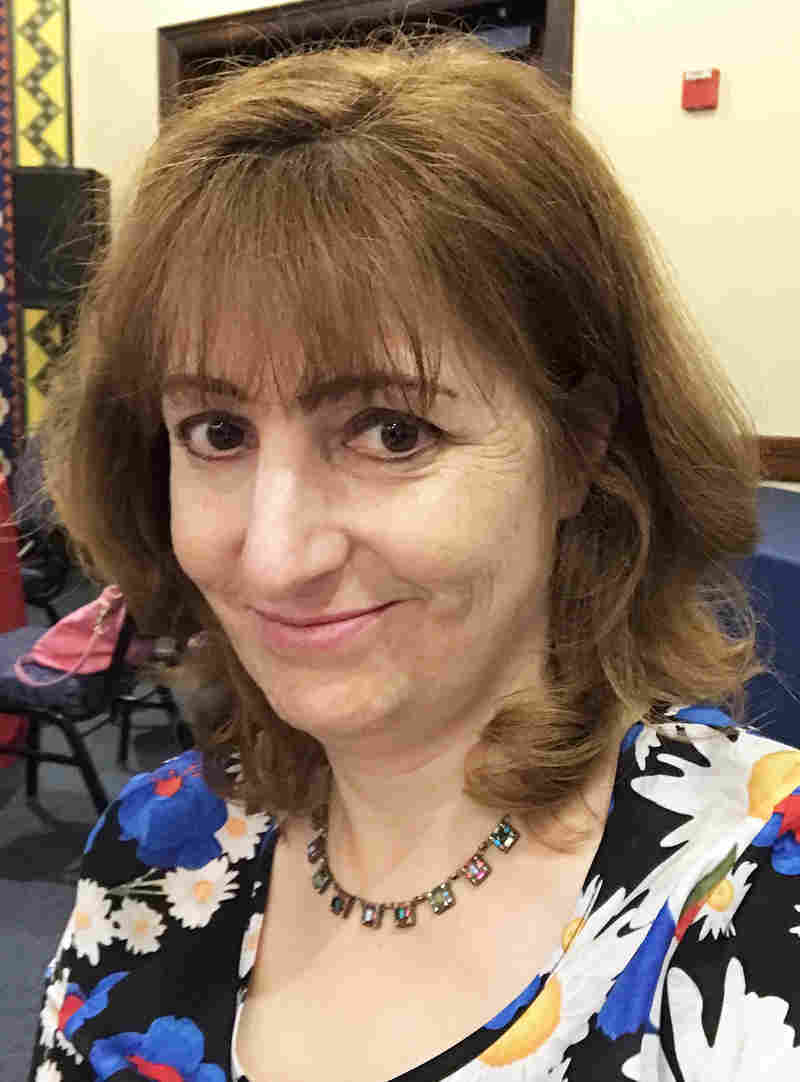
Dr. Katherine Gold Courtesy of Dr. Katherine Gold hide caption
toggle caption
Courtesy of Dr. Katherine Gold
Dr. Katherine Gold
Courtesy of Dr. Katherine Gold
To get a better understanding of what’s going on, we spoke with Gold about her editorial, which calls for more research on exactly what’s afflicting doctors today. Gold is an associate professor of family medicine and obstetrics and gynecology at the University of Michigan and she studies physician well-being.
The following interview has been edited for clarity and length.
You’re a primary care doctor, supposedly at the epicenter of physician burnout. Do you feel burned out?
No. I feel very stressed, but not burned out. I think that stress is a better reflection of the pressures that primary care physicians have in their jobs. Most of us primary care physicians are spending less time with our patients and much more time on clerical activities. That, I think, causes stress, but not necessarily burnout.
Why is the distinction important?
I think that there’s a universal understanding that there is a great deal of distress among physicians, but there has been a lot of hoopla about everybody being burned out. It’s not clear to me whether we’re looking at the nuances there. It might change what you think might help fix burnout.
So, what is “burnout” exactly?
How you define burnout is all over the map. Any time you have a diagnosis that might apply to 85 percent of the population, you wonder how useful that is. But burnout is much less stigmatized than depression. People are just more willing to say they’re burned out.
Shots – Health News
Another Cause of Doctor Burnout? Being Forced To Give Immigrants Unequal Care
People have resonated with the feeling that something isn’t right, and something is making our work really difficult. We’ve latched on to this as the word we’re going to use.
There’s really a need for a lot more research to understand what is happening. Why are people struggling? What kind of changes make a difference?
You say in the editorial, “There is clearly something important and worrisome happening to physician well-being.” Can you tell me more about that?
We certainly know that there are high levels of depression in physicians both in training and in practice. Physicians, who have the best access to healthcare, are still committing suicide. People are reducing their hours seeing patients, because you can’t simply do as much as you used to be able to do, because there’s so much work outside of the work with the patient.
We know anecdotally that physicians are often really frustrated by the non-doctor things that we have to do: the charting, the things that we aren’t trained to do.
I think what people find rewarding is our time with our patients, and we have less and less time for that.
When I spoke with Dr. Douglas Mata, the senior author of the JAMA review article about burnout, he pointed out that depression is a diagnosis that puts the onus on the patient to get better, as opposed to burnout, which is about systems that make us feel unhappy with our work.
Shots – Health News
When Doctors Struggle With Suicide, Their Profession Often Fails Them
There’s talk about the solutions all being personal. The physician should be more resilient. The physician should do yoga. The physician should practice mindfulness. I think the stress that people are feeling is much more about external demands, like the electronic medical record and paperwork.
I know I feel frustrated when I get emails telling me that there’s lunchtime yoga, which of course I can’t make it to because I have too many patient charts to complete.
Exactly. I think it’s fundamental to this discussion. When [Christina] Maslach, [the main author of the questionnaire many researchers use to study burnout], developed the whole concept of burnout, it was based on studies of people working with other people, it was based on interpersonal relationships. Medicine used to be like that, but now we know it’s much more paperwork, it’s much more computer clicking, and checking boxes, and not being with patients.
And so I think it’s a valid question to ask whether this construct that was designed based on interpersonal relationships applies, when most of us are spending very little of our time actually with our patients.
Why do you think defining burnout is so important?
I don’t think you can address it without understanding that. All of us who are physicians have times when we’re frustrated. If you’ve been on call for a long period of time, you might feel burned out. But I don’t know that that means that person needs an intervention or needs something changed.
What helps protect you from burnout?
One of the things I have realized as a family physician is that taking extra time to see my patients — sometimes outside of my office visit, like when they’re hospitalized, or after they’ve delivered a baby — [those] are some of the most rewarding experiences that I have. That takes a lot of extra time, but it’s also sort of what refuels me and makes me feel good about my work.
Have you experienced any institutional changes that have made a difference in your own life?
Not a lot. The huge focus in the beginning has been on: You need to make yourself well and be resilient, but we’re still going to put you back in the same system.
I’m working within my own department on small things, like how people are using the medical record. If that gives everybody an extra minute with a patient, that might be a big boost.
Mara Gordon is a family physician in Washington, D.C., and a health and media fellow at NPR and Georgetown University School of Medicine.
Share this Post
