 Enlarge this image
Endai Huedl/fStop/Getty Images
America’s attitude toward pain has shifted radically over the past century. Psychiatrist Anna Lembke says that 100 years ago, the medical community thought that pain made patients stronger.
“Doctors believed that pain was salutary,” she tells Fresh Air‘s Terry Gross, “meaning that it had some physiologic benefit to the individual, and certainly some spiritual benefit.”
But as prescription painkillers became more available, patients became less willing to endure pain. Suddenly, Lembke says, “doctors began to feel that pain was something they had to eliminate at all cost.”
Shots – Health News
When A Prescription For Pain Pills Becomes A Gateway To Addiction
Prescriptions for opioid painkillers increased, and so, too, did cases of opioid addiction. In 2011, the Centers for Disease Control and Prevention declared a prescription drug epidemic as a result of doctors overprescribing painkillers to patients. Lembke’s new book, Drug Dealer, MD, explores the origins of the prescription drug epidemic from a doctor’s perspective.
“Starting in the 1980s, doctors started to be told that opioids were effective treatment for chronic pain, and that treating patients long-term with opioids was evidence-based medicine,” she says. “That was patently false and that was propagated by what I call ‘big medicine,’ in cahoots with Big Pharma.”
Interview Highlights
On how Lembke realized there was a problem in her own practice
Drug Dealer, MD
How Doctors Were Duped, Patients Got Hooked, and Why It’s So Hard to Stop
Paperback, 172 pages |
purchase
close overlayBuy Featured Book
Title Drug Dealer, MD Subtitle How Doctors Were Duped, Patients Got Hooked, and Why It’s So Hard to Stop Author Anna, M.D. LembkeYour purchase helps support NPR programming. How?
Amazon Independent BooksellersIt was very insidious and subtle. One of the ways I realized was that my patients weren’t getting better. They were asking for more and more medications at higher and higher doses. They were wanting early refills, and then it really wasn’t until the prescription drug monitoring program was made available in the state of California where I could go online and see the other prescriptions that my patients were getting from other doctors when I suddenly realized what a huge problem it was — not just for patients taking opioid painkillers — but also for my own patients.
For example, I had a patient I was seeing for many years, he was a lawyer and I prescribed him Ambien, 10 milligrams every bedtime. Ambien is a sleep aid. And that went on for years, and, incidentally, I decided to check the prescription drug monitoring program and what I found out was that he was seeing at least 10 other doctors who were also prescribing Ambien, 10 milligrams daily. He had an Ambien addiction, and I never knew until I checked that database.
Article continues after sponsorshipOn treating patients with perplexing pain
I see a lot of patients with mysterious chronic pain syndromes, and many of them are young people who otherwise have no evidence of disease, but are completely debilitated and nonfunctional by their mysterious chronic pain syndromes. …
What ends up happening to these patients often is they get “medicalized,” and by that I mean they end up seeing four or five or 10 different specialists. Everybody has a different diagnosis. They get poked and prodded and “surgerized,” and by the end of it they come out five or 10 years later with real bona fide physical problems because they’ve had so many surgeries and so many interventions. And by then they’re also on very high-dose opiates.
On how what doctors were told about opioids changed over the years
Doctors were taught that no dose was too high. So if you had a patient who responded to opioids, but then developed tolerance where that dose wasn’t working, when they came back in you should just give them more opioids. And that’s how we got to this place where we have patients who are on unbelievable doses, astronomical amounts. …
Doctors were told that opioids are not addictive as long as you’re prescribing them for a patient in pain, as if there was some sort of magic halo effect with the prescription. That also is obviously not true. Now we’re seeing studies showing that upwards of 50 percent of patients taking opioids long-term for a medical condition begin to show signs and symptoms of addiction to those opioids.
On what Lembke means when she says that big medicine and Big Pharma “were in cahoots”
The pharmaceutical industry realized that they can no longer directly go to doctors to get them to prescribe their pills. Various regulations were put in place to prevent them giving gifts and pens and hats and things that we do know can influence doctor prescribing. So instead they took a kind of Trojan horse approach and infiltrated regulatory agencies and academic medicine in order to convince doctors that prescribing more opioids was evidence-based medicine, and evidence-based medicine means medicine based on science, and that’s something that all doctors are supposed to practice. …
So for example, what they did was Purdue Pharma joined forces with the Joint Commission, and the Joint Commission is an organization that accredits hospitals, and Purdue Pharma gave all kinds of teaching material to the Joint Commission and said, “You really need to make doctors treat pain more aggressively and that needs to be a quality measure.” So the Joint Commission said, “You know what? You’re absolutely right, and we’re going to do that and we’re going to take your videos that you made that tell doctors that opioids aren’t addictive as long as they’re treating them for pain.” …
So it became a kind of groupthink where it looked like treating pain aggressively with opioids was something that was based on science, when in fact it was based on Big Pharma’s influence of these major regulatory bodies.
Enlarge this image
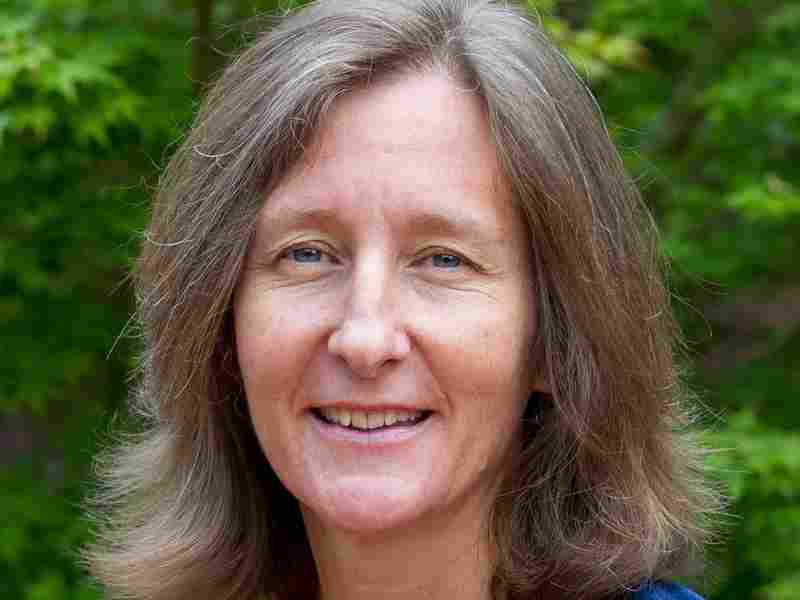
Dr. Anna Lembke is a psychiatrist who treats people who are addicted to prescription drugs, including opioids, stimulants, sedatives and sleeping pills. Norbert von der Groeben/Johns Hopkins Univ Press hide caption
toggle caption
Norbert von der Groeben/Johns Hopkins Univ Press
Dr. Anna Lembke is a psychiatrist who treats people who are addicted to prescription drugs, including opioids, stimulants, sedatives and sleeping pills.
Norbert von der Groeben/Johns Hopkins Univ Press
On doctors learning how to say “no” to their patients
It’s not something that we really learn in medical school, and I think it’s something most doctors have a hard time with, because we go into medicine because we like helping people and we want to experience the warm fuzzies of having helped somebody and them expressing gratitude. And so to be in conflict with our patients around what their goal is and what my goal is for them is extremely challenging. …
It’s something that a lot of doctors avoid, which is also why a lot of doctors don’t even ask their patients about substance abuse problems, because they just don’t want to go there. They don’t want to have to deal with the tension that arises in the interaction, in the moment when they are talking about something that the patient is resistant to talking about. But I feel like that is my job to do that, and I feel like I’ve developed skills over time.
Share this Post
