 Enlarge this image
After a patient leaves, Jacqueline Towarnicki prepares the examination room in case she gets a call that someone else needs to see a sexual assault nurse examiner. Katheryn Houghton/KFF Health News hide caption
toggle caption
Katheryn Houghton/KFF Health News
After a patient leaves, Jacqueline Towarnicki prepares the examination room in case she gets a call that someone else needs to see a sexual assault nurse examiner.
Katheryn Houghton/KFF Health News
Jacqueline Towarnicki got a text as she finished her day shift at a local clinic in Missoula, Montana. She had a new case, a patient covered in bruises who couldn’t remember how the injuries got there.
Towarnicki’s breath caught, a familiar feeling after four years of working night shifts as a sexual assault nurse examiner in this northwestern Montana city.
“You almost want to curse,” Towarnicki, 38, said. “You’re like, ‘Oh, no, it’s happening.'”
These nights on duty are Towarnicki’s second job. She’s on call once a week and a weekend a month. A survivor may need protection against sexually transmitted infections, medicine to avoid getting pregnant, or evidence collected to prosecute their attacker. Or all the above.
When her phone rings, it’s typically in the middle of the night. Towarnicki tiptoes down the stairs of her home to avoid waking her young son, as her half-asleep husband whispers encouragement into the dark.
Her breath is steady by the time she changes into the clothes she laid out close to her back door before going to bed. She grabs her nurse’s badge and drives to First Step Resource Center, a clinic that offers around-the-clock care for people who have been assaulted.
She wants her patients to know they’re out of danger.
“You meet people in some of their most horrifying, darkest, terrifying times,” Towarnicki said. “Being with them and then seeing who they are when they leave, you don’t get that doing any other job in health care.”
Gaps in care persist
A former travel nurse who lived out of a van for years, Towarnicki is OK with the uncertainty that comes with being a sexual assault nurse examiner.
Most examiners work on-call shifts in addition to full-time jobs. They often work alone and at odd hours. They can collect evidence that could be used in court, are trained to recognize and respond to trauma, and provide care to protect their patients’ bodies from lasting effects of sexual assault.
But their numbers are few.
As many as 80% of U.S. hospitals don’t have sexual assault nurse examiners, often because they either can’t find them or can’t afford them. Nurses struggle to find time for shifts, especially when staffing shortages mean covering long hours. Sexual assault survivors may have to leave their town or even their state to see an examiner.
Gaps in sexual assault care can span hundreds of miles in rural areas. A program in Glendive, Montana — a town of nearly 5,000 residents 35 miles from the North Dakota border — stopped taking patients for examinations this spring. It didn’t have enough nurses to respond to cases.
“These are the same nurses working in the ER, where a heart attack patient could come in,” said Teresea Olson, 56, who is the town’s part-time mayor and also picked up on-call shifts. “The staff was exhausted.”
The next closest option is 75 miles away in Miles City, adding at least an hour to the travel time for patients, some of whom already had to travel hours to reach Glendive.
Nationwide, policymakers have been slow to offer training, funding, and support for the work. Some states and health facilities are trying to expand access to sexual assault response programs.
Oklahoma lawmakers are considering a bill to hire a statewide sexual assault coordinator tasked with expanding training and recruiting workers. A Montana law that takes effect July 1 will create a sexual assault response network within the Montana Department of Justice. The new program aims to set standards for that care, provide in-state training, and connect examiners statewide. It will also look at telehealth to fill in gaps, following the example of hospitals in South Dakota and Colorado.
There’s no national tally of where nurses have been trained to respond to sexual assaults, meaning a survivor may not know they have to travel for treatment until they’re sitting in an emergency room or police department.
Sarah Wangerin, a nursing instructor with Montana State University and former examiner, said patients reeling from an attack may instead just go home. For some, leaving town isn’t an option.
This spring, Wangerin called county hospitals and sheriff’s offices to map where sexual assault nurse examiners operate in Montana. She found only 55. More than half of the 45 counties that responded didn’t have any examiners. Just seven counties reported they had nurses trained to respond to cases that involve children.
“We’re failing people,” Wangerin said. “We’re re-traumatizing them by not knowing what to do.”
Enlarge this image
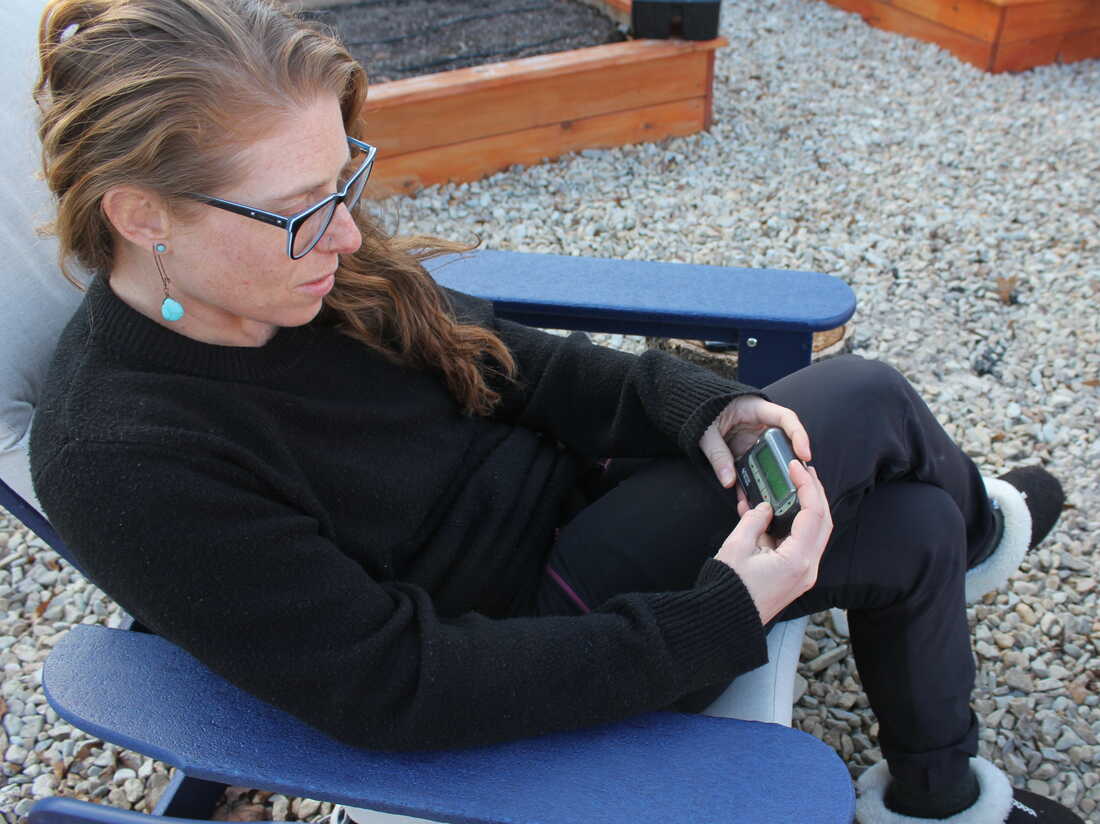
Kate Harrison turns on her pager at the start of her night shift as a sexual assualt nurse examiner. Katheryn Houghton/KFF Health News hide caption
toggle caption
Katheryn Houghton/KFF Health News
Kate Harrison turns on her pager at the start of her night shift as a sexual assualt nurse examiner.
Katheryn Houghton/KFF Health News
Shots – Health News
How Rape Affects Memory And The Brain, And Why More Police Need To Know About This
Science
Sexual harassment and assault plague U.S. research bases in Antarctica, report says
A clinic ready to help at any hour
First Step, in Missoula, is one of the few full-time sexual assault response programs in the state. It’s operated by Providence St. Patrick Hospital but is separate from the main building.
The clinic’s walls are adorned with drawings by kids and mountain landscapes. The staff doesn’t turn on the harsh overhead fluorescent lights, choosing instead to light the space with softer lamps. The lobby includes couches and a rocking chair. There are always heated blankets and snacks on hand.
First Step stands out for having nurses who stay. Kate Harrison waited roughly a year to join the clinic and is still there three years later, in part because of the staff support.
The specially trained team works together so no one carries too heavy a load. While being on night shift means opening the clinic alone, staffers can debrief tough cases together. They attend group therapy for secondhand trauma.
Harrison is a cardiac hospital nurse during the day, a job that sometimes feels a little too stuck to a clock.
At First Step, she can shift into whatever role her patient needs for as long as they need. Once, that meant sitting for hours on a floor in the lobby of the clinic as a patient cried and talked. Another time, Harrison doubled as a DJ for a nervous patient during an exam, picking music off her cellphone.
“It’s in the middle of the night, she just had this sexual assault happen, and we were just laughing and singing to Shaggy,” Harrison said. “You have this freedom and grace to do that.”
When the solo work is overwhelming or she’s had back-to-back cases and needs a break, she knows a co-worker would be willing to help.
“This work can take you to the undercurrents and the underbelly of society sometimes,” Harrison said. “It takes a team.”
That includes co-workers like Towarnicki, who dropped her work hours at her day job after having her son to keep working as a sexual assault nurse examiner. That meant adding three years to her student loan repayment schedule. Now, pregnant with her second child, the work still feels worth it, she said.
On a recent night, Towarnicki was alone in the clinic, clicking through photos she took of her last patient. The patient opted against filing a police report but asked Towarnicki to log all the evidence just in case.
Towarnicki quietly counted out loud the number of bruises, their sizes and locations, as she took notes. She tells patients who have gaps in their memories that she can’t speculate how each mark got there or give them all the answers they deserve.
But as she sat in the blue light of her computer screen long after her patient left, it was hard to keep from ruminating.
“Totally looks like a hand mark,” Towarnicki said, suddenly loud, as she shook her head.
All the evidence and her patient’s story were sealed and locked away, just feet from a wall of thank-you cards from patients and sticky notes of encouragement between nurses.
On the harder evenings, Towarnicki takes a moment to unwind with a pudding cup from the clinic’s snacks. Most often, she can let go of her patient’s story as she closes the clinic. Part of her healing is “seeing the light returned to people’s eyes, seeing them be able to breathe deeper,” which she said happens 19 out of 20 times.
“There is that one out of 20 where I go home and I am spinning,” Towarnicki said. In those cases, it takes hearing her son’s voice, and time to process, to pull her back. “I feel like if it’s not hard sometimes, maybe you shouldn’t be doing this work.”
It was a little after 11 p.m. as Towarnicki headed home, an early night. She knew her phone could go off again.
Eight more hours on call.
KFF Health News, formerly known as Kaiser Health News (KHN), is a national newsroom that produces in-depth journalism about health issues and is one of the core operating programs at KFF — the independent source for health policy research, polling, and journalism.
After The Assault
Life Kit
Abusive relationships are disturbingly common. Here’s how to support a loved one
Share this Post
