Explaining Medicine
  • News
  • Health & Lifestyle
    • Diet & Weight Management
    • Exercise & Fitness
    • Nutrition, Food & Recipes
    • Prevention & Wellness
  • Conditions
    • Custom1
      • Conditions A-Z
      • Procedures A-Z
      • Allergies
      • Alzheimer’s
      • Arthritis
      • Asthma
      • Blood Pressure
      • Cholesterol
      • Cancer
    • Custom2
      • Chronic Pain
      • Cold Flu
      • Depression
      • Diabetes
      • Digestion
      • Eyesight
      • Health Living
      • Healthy Kids
      • Hearing Ear
    • Custom3
      • Heart
      • HIV/AIDS
      • Infectious Disease
      • Lung Conditions
      • Menopause
      • Men’s Health
      • Mental Health
      • Migraine
      • Neurology
    • Custom4
      • Oral Health
      • Pregnancy
      • Senior Health
      • Sexual Health
      • Skin Problems
      • Sleep
      • Thyroid
      • Travel Health
      • Women’s Health
  • Medications
    • Medications
    • Supplements and Vitamins
  • Medical Dictionary
  • Health Alerts
Flu shot recommendation for kids dropped just as...
The CDC just sidelined these childhood vaccines. Here’s...
Your next primary care doctor could be online...
In Lodge Grass, Montana, a Crow community works...
RFK Jr.’s new dietary guidelines go all in...
More seniors are becoming homeless. Shelters are trying...
Health officials slash the number of vaccines recommended...
Wegovy obesity pill now available at pharmacies
In the U.S., hunger is often hidden. But...
One doctor’s experience shows the battle for the...
Top Posts

Explaining Medicine

  • News
  • Health & Lifestyle
    • Diet & Weight Management
    • Exercise & Fitness
    • Nutrition, Food & Recipes
    • Prevention & Wellness
  • Conditions
    • Custom1
      • Conditions A-Z
      • Procedures A-Z
      • Allergies
      • Alzheimer’s
      • Arthritis
      • Asthma
      • Blood Pressure
      • Cholesterol
      • Cancer
    • Custom2
      • Chronic Pain
      • Cold Flu
      • Depression
      • Diabetes
      • Digestion
      • Eyesight
      • Health Living
      • Healthy Kids
      • Hearing Ear
    • Custom3
      • Heart
      • HIV/AIDS
      • Infectious Disease
      • Lung Conditions
      • Menopause
      • Men’s Health
      • Mental Health
      • Migraine
      • Neurology
    • Custom4
      • Oral Health
      • Pregnancy
      • Senior Health
      • Sexual Health
      • Skin Problems
      • Sleep
      • Thyroid
      • Travel Health
      • Women’s Health
  • Medications
    • Medications
    • Supplements and Vitamins
  • Medical Dictionary
  • Health Alerts
  • News

    How our perception of time shapes our approach to climate change

    by Rebecca Hersher January 4, 2023

    Enlarge this image

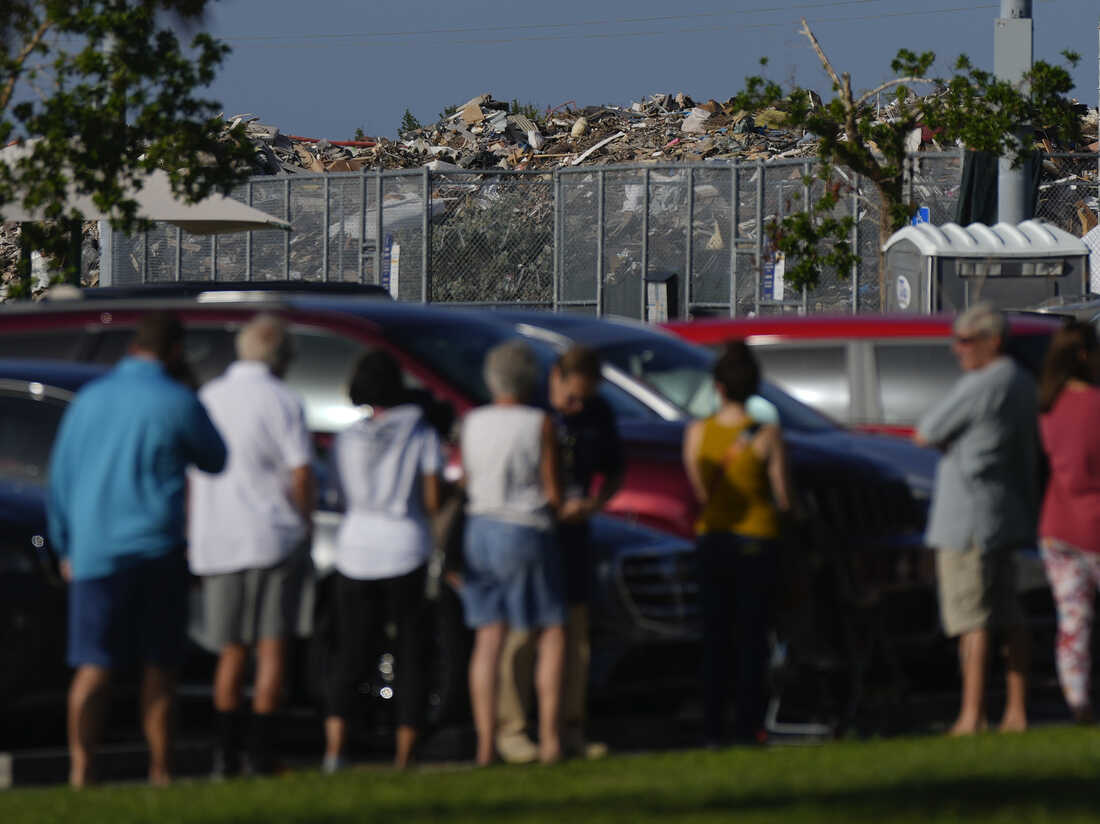
    A pile of debris from Hurricane Ian rises behind a line of people waiting to vote in Fort Myers, Fla., in November 2022. Research suggests support for some climate policies increases immediately after climate-driven disasters such as Ian. Rebecca Blackwell/AP hide caption

    toggle caption

    Rebecca Blackwell/AP

    A pile of debris from Hurricane Ian rises behind a line of people waiting to vote in Fort Myers, Fla., in November 2022. Research suggests support for some climate policies increases immediately after climate-driven disasters such as Ian.

    Rebecca Blackwell/AP

    Most people are focused on the present: today, tomorrow, maybe next year. Fixing your flat tire is more pressing than figuring out if you should use an electric car. Living by the beach is a lot more fun than figuring out when your house will be underwater because of sea level rise.

    That basic human relationship with time makes climate change a tricky problem.

    “I consider climate change the policy problem from hell because you almost couldn’t design a worse fit for our underlying psychology, or our institutions of decision-making,” says Anthony Leiserowitz, the director of the Yale Program on Climate Change Communication.

    Our obsession with the present obscures the future

    Those institutions — including companies and governments that ultimately have the power to dramatically reduce greenhouse gas emissions — can be even more obsessed with the present than individuals are.

    For example, says Leiserowitz, many companies are focused on quarterly earnings and growth. That helps drive short-term behavior, such as leasing new land to drill for fossil fuels, that makes long-term climate change worse.

    And there are also big incentives for political leaders to think short-term. “The president gets elected every four years. Members of the Senate get elected every six years. And members of the House get elected every two years,” Leiserowitz points out, “so they tend to operate on a much shorter time cycle than this problem, climate change, which is unfolding over decades.”

    Embracing 'Deep Time' Thinking

    13.7: Cosmos And Culture

    Embracing ‘Deep Time’ Thinking

    How did COVID warp our sense of time? It's a matter of perception

    Shots – Health News

    How did COVID warp our sense of time? It’s a matter of perception

    There are deadlines looming for those elected leaders. The Biden administration pledged to cut emissions in half by 2030. By 2050, humans need to eliminate greenhouse gas emissions entirely in order to avoid the most catastrophic effects of climate change later this century.

    Fortunately, our collective focus on the present also offers hints, psychologists say, about how to harness that hyperfocus on the present to inspire action.

    To spur action, speed up the psychological rewards for addressing climate change now

    For example, there are ways to highlight the quick payoff for addressing climate change. In the political realm, that could mean that an elected official gets more votes because they support policies that reduce emissions. The promise of a benefit in the next election may be more galvanizing than the goal of protecting future generations, even if the latter has more moral weight.

    “The benefits that we get today are more salient, and we want them more than benefits that may be larger, but will accrue in the future,” explains Jennifer Jacquet, a researcher and associate professor of environmental studies at New York University who studies the psychology of collective action, including on climate change.

    Researchers say time is an illusion. So why are we all obsessed with it?

    Finding Time

    Researchers say time is an illusion. So why are we all obsessed with it?

    Jacquet says the huge spending bill passed last year by Congress, called the Inflation Reduction Act, is another example of using our focus on the present to drive climate-conscious behavior. The bill includes financial incentives for people who buy electric vehicles or install solar panels.

    “They’re trying to speed up the benefits,” says Jacquet. “That’s smart. That’s good. That plays into how we think about things.”

    Extreme weather is starting to catch everyone’s attention

    In some ways, our focus on the present is less and less of a problem as climate change makes itself more and more obvious today — in our daily lives. Everyone on Earth is experiencing the effects of a hotter planet. That makes it a problem of the present, not of the future.

    Climate change is making the weather more severe. Why don't most forecasts mention it?

    Climate

    Climate change is making the weather more severe. Why don’t most forecasts mention it?

    That immediacy is already showing up in how Americans view climate change, according to Leiserowitz, who has been leading an annual poll on the topic for more than 15 years. As extreme weather is becoming more common, he says support for climate policies is also growing, especially at the local level.

    For example, the vast majority of respondents in a September 2021 poll said they support local governments providing money to help make homes more energy efficient, to increase public transportation and to install bike lanes. And the majority of respondents supported investments in renewable energy.

    There’s no time to waste

    Widespread public support for climate policies can help push politicians and corporate leaders to act quickly – which is important, because scientists warn that greenhouse gas emissions need to drop dramatically, and immediately, to avoid runaway warming later this century.

    “We have big societal choices to make,” says Leiserowitz, and those changes need to happen now. In the present. “People working together to demand action by their leaders is going to be an absolutely critical piece.”

    This story is part of our periodic science series “ Finding Time — taking a journey through the fourth dimension to learn what makes us tick.”

    Read the article here

    Share this Post

    Share Explaining Medicine Share Explaining Medicine

    How our perception of time shapes our approach to climate change was last modified: January 19th, 2023 by Rebecca Hersher

    Related

    climate changeelectric vehiclesglobal warminggreenhouse gas emissions
    0 comment
    0
    Facebook Twitter Google + Pinterest
    Rebecca Hersher

    previous post
    Many ERs offer minimal care for miscarriage. One group wants that to change
    next post
    A Focus on Fitness, Not Fatness

    Related Articles

    A student doctor says, “Time’s Up”

    March 1, 2019

    The free IVF camp mela !

    March 9, 2018

    Waiting to Get Pregnant? Know the Risks

    March 22, 2019

    Recall: Burgers Sold to Schools for Contamination

    April 3, 2019

    20 women are now suing Texas, saying state abortion laws endangered them

    November 15, 2023

    I am glad patients are learning to say No !

    January 30, 2018

    Seniors got COVID tests they didn’t order in Medicare scam. Could more fraud follow?

    May 18, 2023

    Colonoscopies save lives. Doctors push back against European study that casts doubt

    October 13, 2022

    A physician’s love-hate relationship with dividends. And what he does about it.

    January 9, 2018

    Sit Less Each Day to Live Longer

    January 15, 2019

    Recent Posts

    • Flu shot recommendation for kids dropped just as the illness rages

      January 12, 2026
    • The CDC just sidelined these childhood vaccines. Here’s what they prevent

      January 9, 2026
    • Your next primary care doctor could be online only, accessed through an AI tool

      January 9, 2026
    • In Lodge Grass, Montana, a Crow community works to rebuild from meth’s destruction

      January 8, 2026
    • RFK Jr.’s new dietary guidelines go all in on meat and dairy

      January 7, 2026

    Keep in touch

    Facebook Twitter Google + RSS

    Recent Posts

    • Flu shot recommendation for kids dropped just as the illness rages

      January 12, 2026
    • The CDC just sidelined these childhood vaccines. Here’s what they prevent

      January 9, 2026
    • Your next primary care doctor could be online only, accessed through an AI tool

      January 9, 2026
    • In Lodge Grass, Montana, a Crow community works to rebuild from meth’s destruction

      January 8, 2026
    • RFK Jr.’s new dietary guidelines go all in on meat and dairy

      January 7, 2026
    • Terms of Service
    • Privacy Policy

    @2026 - Explaining Medicine. All Right Reserved.


    Back To Top
    Explaining Medicine
    Proudly powered by WordPress Theme: soledad child.