I’ve been out of medicine a little over a month now. The first couple of weeks were crazy; I ran right to Boston to my MFA residency, and was too busy to really process much. When I got home, there were a lot of people and things to catch up with, and I had to figure out how to manage my days. I made sure I was getting my work for my MFA done but also taking care of myself.
I was still having a lot of headaches, and clenching my teeth in my sleep at first. It was as though my mind knew I wasn’t under the stress of my medical practice anymore, but my body handn’t caught up. For a couple weeks I had a lot of nightmares about patient care and the EMR; in one, I was two hours behind, and there was no data in a record for a patient I was supposed to know well. In another, a patient was yelling at me because a prescription was wrong and I couldn’t fix it.
I’ve tried to get a schedule going. I started going to the gym regularly. I made some appointments for the doctor and dentist: things I was overdue for. I found a new headache specialist. I started doing relaxation exercises and yoga regularly. I write for several hours each weekday, and I leave time open to meet with people I want to connect with for work or personal reasons. My husband and I plan fun with friends and family or just for the two of us on weekends. I’m starting to feel a little better, not as stressed out. I’m sleeping a lot better.
So now it’s time to start addressing, in my writing, some of the more serious wellness issues that physicians are facing. The darker things that we don’t want to talk about, but we need to. In fact, the reason they’ve become issues is partly that we’re not talking about them. One that I’m thinking about today is secondary trauma.
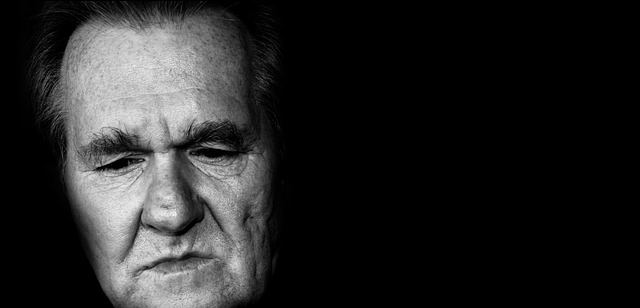
What is secondary trauma? Health care workers see terrible things all the time. We see pain and suffering. We see awful injuries. We may ‘see’ emotional suffering that is unfathomable. Some doctors see mass casualties. Others see family tragedies. We might act tough. We might pretend it doesn’t bother us. We might even believe it doesn’t bother us. But somewhere inside, we’re all human. Somewhere inside, we identify with these other humans, and feel their pain. Somewhere inside, we may feel we haven’t done enough, or we have made mistakes in care and contributed to bad outcomes. The pain we carry with us from the suffering of others and the guilt of not fixing it is secondary trauma.
When we cease to even know that all this bothers us is when something might be really wrong. That may be a sign of loss of empathy (one of the signs of ‘burnout’) or that the physician has become so damaged by the system that he or she is numb.
Look, many of us probably are tougher than others about a lot of things. We have to be. I don’t flinch seeing blood or vomit or even really ugly-looking wounds. If I know that something’s going to heal, it’s all good, no matter how bad it looks today.
I trained at a hospital that served an underserved population in a violent area of Philadelphia. I could deal with a lot. But I do remember the day I hit my limit for secondary trauma for the first time.
I was an intern on the inpatient oncology service, and I was on overnight call. My attending had accepted a transfer from another service for chemo. My resident and I voiced our dismay; he seemed much too frail to get chemo. But he said he wanted it, and the attending insisted. The family wanted everything, she said, and so she made him a full code.
That night, he developed a massive GI bleed. He was obtunded. I could not reach the family. I could not reach the attending. I had to take him to a bleeding scan to find out the source of the bleed; my resident was too busy to help me. I took him to the radiology suite with two units of blood running through two large-bore IVs, and the radiology resident began the scan. By the end of the scan, he coded. By the end of the code, when he was pronounced dead, it was morning. I was covered in blood and stool. I hadn’t eaten or slept in a very long time. I was devastated that my patient had died on a gurney, alone in the radiology suite, no one to comfort him, because of our folly. I wondered if there was something I should have done differently. But nobody would talk about it. My resident told me it was “predestined” and to “forget it.” My attending told me I needed to “learn how to deal with death better.” While I have seen many deaths, and many have happened in terrible ways, it is this death that has haunted me all these years. Why? Because I wasn’t allowed to talk about it.
Last week I met with a young doctor, someone I mentored during her training. She had just come back from a year-long assignment in an underserved area. She had been alone at a particular site much of the time, with almost no resources. No EKG machine. Almost no labs. Only very basic X-ray. People died in agony frequently. There was nobody to discuss her cases with. There was nobody to process the losses with. She has returned carrying so much pain that it is visible in her face.
Secondary trauma is unavoidable, but it doesn’t have to cause this kind of damage.
I have generally been very lucky, as I could always go home and process these events with my husband, also an internist, and a group of close friends, many of whom are physicians, including psychiatrists and internists with training in physician trauma. I haven’t been alone. But so many doctors are alone. ER docs who see mass casualties and go back to work without a break. Trauma surgeons who lose young patients to senseless violence and go to the next surgery without a word. Residents and students who run codes and then have no formal way to process what they have seen.
So what do we do? We need to have processes in place for doctors and other health care personnel who are exposed to trauma. Nobody should be alone with critical patients. There ought to be at least two doctors together in sites like the one my young friend was at. A time-out to process the sadness of a loss should be expected procedure in ER’s and trauma OR’s. And it needs to be mandated, because otherwise the people who need or want it could be bullied or stigmatized by others as being ‘weak’ or ‘emotionally unstable.’ Ideally, high-risk sites, such as ER’s and ICU’s would have on-site or at least on-call counselors for the providers.
Attending physicians in charge of residents and students in the hospital need to be trained in debriefing techniques, and should be required to meet with their teams and work through losses with residents and students. Balint groups are also valuable resources for doctors at all levels of training. I’ve been through part of Balint group leader training, and plan to finish it in the next year. Physicians can get training through the American Balint Society.
As caretakers, we can’t avoid secondary trauma, but we can ameliorate its effects. We also should never traumatize one another by being dismissive or stigmatizing when someone needs to process traumatic experiences.
Secondary trauma is just one piece of the crisis medicine is in. It’s certainly not new, but with so much violence in our current world, and so much isolation in the current practice of medicine, I think it’s exacerbated. Just one more piece of a giant jigsaw puzzle we all need to work on together.
Share this Post

