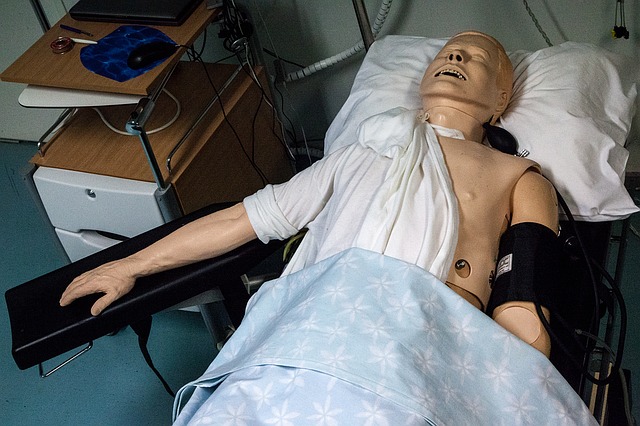
When my classmates and I returned to Boston to continue our first year of medical school early last month, we returned to a very different type, of course, called “Essentials of the Profession.” In it, we explored health policy, social medicine, ethics, and other topics outside the realm of traditional physiology and disease but just as important to our roles as physicians. In the health policy class, we learned about escalating health care costs and how the landscape of American health care is changing. While the inclusion of these topics in our curriculum reflects a significant advance in medical education, our health policy teachings also exposed a critical gap in our training – one that will leave us ill-prepared to meet our future obligations as physicians.
Health care providers, we learned, are increasingly expected to consider the cost of clinical care, and the costs of care we deliver will influence how much we’ll be paid. Medicare is increasingly tying physician payment to spending benchmarks such that wasteful health care services will be punished with lower reimbursements. Further, providers are being pressured by public and private payers to enter into alternative payment models that force physicians to bear financial risk. This means that doctors may lose money if they spend more on patient care than government-set benchmarks. The goal is to incentivize cost-effective care and penalize inefficiency, in stark contrast to the traditional fee-for-service scheme, which encourages overutilization and contributes to cost growth.
A common example of an alternative payment model is the accountable care organization (ACO), which cares for a population of patients and shares in any savings it produces by providing care efficiently. In the risk-bearing variety, the ACO might accept a lump sum payment based on the number and complexity of patients in the population. If the cost of caring for the ACO’s patients exceeds the payment for that year, the providers have to swallow the losses – this is the risk they take on in order to access shared savings and other bonuses.
Models like these are meant to reign in health care costs, and are becoming more common – there are close to 1,000 ACOs nationwide. The increasing prevalence of these new provider models are being driven by changing incentive structures constructed by the government (through the Affordable Care Act and the Medicare Access and CHIP Reauthorization Act) and by commercial insurers.
As future physicians, my classmates and I recognize the burden that sky-high health care spending places on the economy as well as our patients. We have a social responsibility to be good stewards of limited resources. Engaging in ACOs and other risk-bearing models is part of that responsibility. However, I fear that medical education today doesn’t give us the skills we need to do that.
Bearing risk is incredibly complex, and these new models hinge the sustainability of a clinical practice on its financial management acumen. While consultants and business-savvy administrators can handle high-level strategic decisions, success in risk-bearing organizations will depend primarily on clinical decisions made by individual physicians. Every day, clinicians face difficult choices, like choosing the optimal chemotherapy regimen or whether to order a biopsy. We learn how to make these decisions based on medical necessity and evidence-based guidelines. But those choices also carry significant financial ramifications, and training on how to factor those costs into clinical decision-making is largely absent from medical school curricula.
Concerns about the need to teach clinicians about cost-effectiveness and cost-consciousness are not new, and there has been some progress. For instance, efforts to educate medical students about health care costs have been spreading, and more attention is being paid to teaching us how to talk about and contain costs for patients. However, success in risk-bearing models requires more than that – it demands that doctors be smart financial managers as well as smart clinicians. Physical exams and differential diagnoses must be complemented by rational budgeting, reliable accounting, and cost-benefit analyses if cost savings are to be realized without harming patient outcomes.
In light of the changing ecosystem and the expanded role of physicians, some experts have concluded that “New Physicians Will Need Business School Skills.” Sure enough, these changes are likely contributing to the rising popularity of MD/MBA programs. But it’s not feasible to ask every medical student to add a second degree or take business classes in their limited elective space. Rather, robust evidence-based training in cost-effective clinical decision-making should be integrated into our core curriculum.
If we continue to neglect this gap in our training, the consequences could be severe. Beyond medical school, there is little opportunity for structured nonmedical training – the 80+ hour weeks of residency leave no time for non-clinical activities. Thrown into risk-bearing organizations as budding clinicians, we would struggle to succeed because we’re missing crucial tools in our toolkit. Many of us might find ourselves at the mercy of administrators and insurance companies seeking to influence our clinical choices because our decision calculus neglects costs. Others will struggle to maintain ownership of their practices, being forced to sell into large provider organizations that can more easily afford financial management expertise and adapt to evolving payment mechanisms.
Health care has changed substantially in the last decade, and medical education has made important strides to keep pace. Now, public and private payers are asking more of physicians. They are re-aligning incentives such that those who control the use of services are also at risk for paying for them. The challenge for us will be to promote efficiency without compromising health outcomes – to deliver high-quality yet cost-effective care that heals our patients without breaking the bank. To accomplish this, we’ll need new skillsets that ought to be considered “essential to the profession.”
Hopefully, medical schools will continue to keep pace.
Share this Post

