 by
by 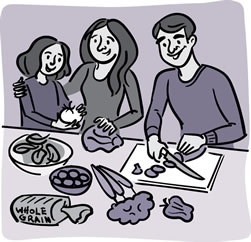
We make dozens of decisions every day. When it comes to deciding what to eat and feed our families, it can be a lot easier than you might think to make smart, healthy choices. It takes just a little planning.
The food we put into our bodies is our fuel. It provides us with nutrients—the vitamins, minerals, and other compounds our bodies need to function and thrive. Research shows that good food choices are especially important for children’s growing bodies and minds. Smart choices have both immediate and long-lasting benefits for you and your family.
“My best advice is for parents to be good role models by eating healthy and being physically active with their children,” says Janet de Jesus, a nutritionist at NIH. “Keep healthy foods around the house for meals and snacks. If you save desserts and treats for special occasions, it will be more special. Involve children in the meal planning and cooking, and they will be more likely to eat the meals.”
“Parents can begin teaching their children about healthy eating from the day they are born,” says Dr. Donna Spruijt–Metz, whose research at the University of Southern California focuses on preventing and treating obesity in minority youth. “Setting a good example is very important.”
Try the GO, SLOW, WHOA approach to food. GO foods are great to eat anytime. They have lots of nutrients and are low in unhealthy fats, sugar, and calories. GO foods include fruits; vegetables; whole-grain cereals, breads, and pastas; fat-free or low-fat milk, yogurt, and cheese; fat-trimmed and lean meats; fish; beans; and water. SLOW foods should be eaten less often. These include non-whole-grain bread, rice, and pasta; peanut butter; granola; pretzels; and fruit juices. WHOA foods are only for once in a while—foods like french fries, doughnuts, whole milk, full-fat cheese, hot dogs, fried fish and chicken, candy, and soda.
“Healthier diets don’t have to cost more, provided that you have the right attitude, make the right food choices, and try to cook at home,” says Dr. Adam Drewnowski, a nutrition expert at the University of Washington in Seattle. With some planning, he says, you can prepare meals that are tasty, affordable, and nutrient rich.
Get the whole family to help slice, dice, and chop. NIH has developed several resources to help you learn how to cut unhealthy fats and calories (see the Web Links box). You might be surprised how easy healthy cooking and snacking can be.
Unfortunately, these days much of our food isn’t eaten at home. It’s eaten on the go. One easy way to eat more nutritiously is to pack healthy lunches—both for yourself and your kids.
“You can work with your child to make a lunch using whole-grain bread, wraps, or pita pockets filled with lean meats or cheese, vegetables, and nut butters or spreads, such as hummus,” de Jesus says. “Pack vegetables such as carrots, snap peas and cucumbers, or any fresh fruit that’s currently in season. Teens can learn to pack their own lunches with a healthy variety of foods.”
If your kids buy lunch, talk to them about making healthy choices when buying food from the school cafeteria and vending machines. “Parents should encourage their children to choose the important food groups for lunch: a lean protein, fruit and vegetable, whole grains,” de Jesus says. “If a salad bar is available, this is a great opportunity for kids to make their own salad with vegetables, lean protein, and even fruit.”
If you have a busy day with your family planned, pack healthy snacks in a small cooler or tote bag before you leave. Consider water, fresh fruit, veggies, and low-fat cheese sticks. Pack small baggies with small portions of healthy nuts, whole-grain crackers, or a low-sugar cereal.
Fast-food restaurants can also be a challenge. Sometimes, fast food is your only option. Try making healthier choices, such as sandwiches without cheese, salads, sliced fruit instead of french fries, and grilled options instead of fried.
When you’re grocery shopping, the Nutrition Facts label is a great resource to help you compare foods. It can help you confirm whether products marked with healthy-sounding terms really are healthy. For example, “low-fat” foods aren’t necessarily healthy; they can be very high in sugar and calories.
Use the Nutrition Facts label to help guide you to limit the nutrients you want to cut back on, such as sodium and unhealthy saturated fat. You can also use it to make sure you’re getting plenty of the nutrients you need, such as calcium and iron.
When reading the label, start at the top. Look at the serving size. Next, look at the calorie count. Then move on to the nutrients, where it lists the amount and daily values experts recommend.
Remember that what you might eat as one portion can be multiple servings. For example, if you eat one bag of chips but the label says there are 3 servings in a bag, you need to multiply all the numbers on the label by 3 to find out how many calories you just ate.
Sometimes it can be hard to find healthy food choices when shopping locally. People in some communities have been working together to make it easier to find healthy foods in their neighborhoods.
For instance, in some neighborhoods, people have joined together to tend community garden plots. “Learning to garden, planting rooftop gardens, box gardens, or small planters can provide some easy growing veggies like tomatoes right at home,” Spruijt–Metz says. “Another possibility is finding a fruit and vegetable truck that would be willing to come to the neighborhood.”
Take time to build healthy eating decisions into every aspect of your family’s life. If you’re a parent or guardian, start talking with kids at an early age about health and nutrition. And practice what you preach. Make healthy food choices yourself so you can set a good example for your kids.
“Food provides our bodies with needed nourishment. Teaching children to read labels while shopping as they get older is a good way to help them learn to shop for healthy foods,” Spruijt–Metz says. “Teaching them to cook simple, tasty, and healthy meals when they’re young is a skill that will stay with them throughout their lives.”
