 Enlarge this image
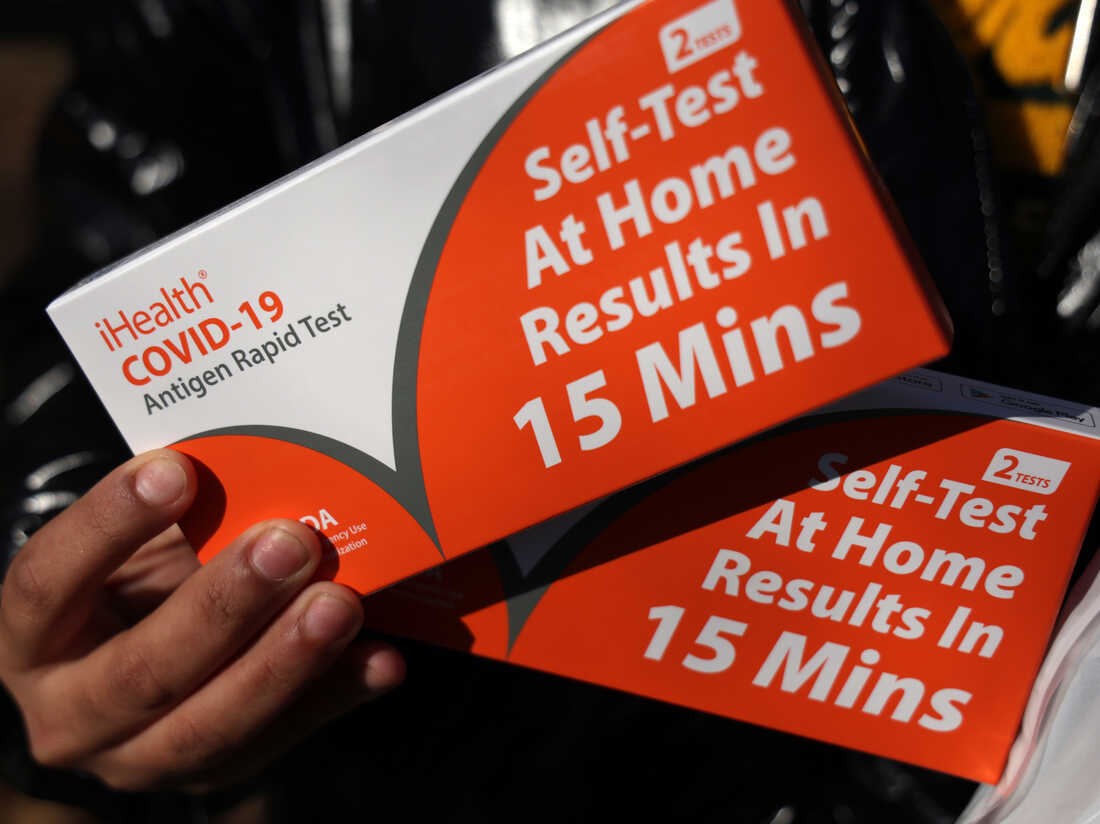
Starting May 11 most people will have to pay for those at-home test kits for COVID-19, as the federal government’s declaration of a COVID-19 public health emergency officially ends. Alex Wong/Getty Images hide caption
toggle caption
Alex Wong/Getty Images
Starting May 11 most people will have to pay for those at-home test kits for COVID-19, as the federal government’s declaration of a COVID-19 public health emergency officially ends.
Alex Wong/Getty Images
Time is running out for free-to-consumer COVID-19 vaccines, at-home test kits and even some treatments.
The White House announced this month that the national public health emergency, first declared in early 2020 in response to the pandemic, is set to expire May 11. When it ends, so will many of the policies designed to combat the virus’s spread.
COVID vaccine makers are poised to raise prices
Take vaccines. Until now, the federal government has been purchasing COVID-19 shots. It recently bought 105 million doses of the Pfizer-BioNTech bivalent booster for about $30.48 a dose, and 66 million doses of Moderna’s version for $26.36 a dose. (These are among the companies that developed the first COVID vaccines sold in the United States.)
Health
The White House plans to end COVID emergency declarations in May
People will be able to get these vaccines at low or no cost as long as the government-purchased supplies last. But even before the end date for the public emergency was set, Congress opted not to provide more money to increase the government’s dwindling stockpile. As a result, Pfizer and Moderna were already planning their moves into the commercial market. Both have indicated that as soon as that happens, they will raise the price they charge, somewhere in the range of $110 to $130 per dose, though insurers and government health programs could negotiate lower rates.
“We see a double-digit billion[-dollar] market opportunity,” investors were told at a JPMorgan conference in San Francisco recently by Ryan Richardson, chief strategy officer for BioNTech. The company expects a gross price — the full price before any discounts — of $110 a dose, which, Richardson said, “is more than justified from a health economics perspective.”
That could translate to tens of billions of dollars in revenue for the manufacturers, even if uptake of the vaccines is slow. And consumers would foot the bill, either directly (in copays) or indirectly (through higher premiums and taxpayer-funded subsidies).
If half of adults — about the same percentage as those who opt for an annual flu shot — get a COVID shot at the new, higher prices, a recent KFF report estimated, insurers, employers and other payors would shell out $12.4 billion to $14.8 billion. That’s up to nearly twice as much as what it would have cost for every adult in the U.S. to get a bivalent booster at the average price paid by the federal government.
As for COVID treatments, an August blog post by the Department of Health and Human Services’ Administration for Strategic Preparedness and Response noted that government-purchased supplies of the drug Paxlovid are expected to last at least through midyear before the private sector takes over. The government’s bulk purchase price from manufacturer Pfizer was $530 for a course of treatment, and it isn’t yet known what the companies will charge once government supplies run out.
The type of health insurance you have will determine how much more you’ll pay
One thing is certain: How much, if any, of the boosted costs are passed on to consumers will depend on their health coverage.
Medicare beneficiaries, those enrolled in Medicaid — the state-federal health insurance program for people with low incomes — and people who have health plans via the Affordable Care Act exchanges will continue to get COVID-19 vaccines without charge, even when the public health emergency ends and the government-purchased vaccines run out. Many people with job-based insurance will also likely not face copayments for vaccines, unless they go out-of-network for their vaccinations.
People with limited-benefit or short-term insurance policies might have to pay for all or part of their vaccinations. And people who don’t have insurance will need to either pay full cost out-of-pocket or seek no- or low-cost vaccinations from community clinics or other providers. If they cannot find a free or low-cost option, some uninsured patients may feel forced to skip vaccinations or testing.
Coming up with what could be $100 or more for vaccination will be especially hard “if you are uninsured or underinsured; that’s where these price hikes could drive additional disparities,” said Sean Robbins, executive vice president of external affairs for the Blue Cross Blue Shield Association. Those increases, he said, will also affect people with insurance, as the costs “flow through to premiums.”
COVID-19 treatments will cost more, too.
Meanwhile, public policy experts say many private insurers will continue to cover Paxlovid, although patients may face a copayment, at least until they meet their deductible, just as they do for other medications. Medicaid will continue to cover it without cost to patients until at least 2024.
Medicare beneficiaries will face cost-sharing for most COVID-19 treatments once the emergency officially ends and the government supply runs out. Meanwhile, the treatment will also need to go through the regular FDA approval process, which takes longer than the emergency use authorization under which it has been marketed
Another complication: The rolls of the uninsured are likely to climb in the next year, with states poised to reinstate the process of regularly determining Medicaid eligibility; that sort of review was halted during the pandemic. In April, states will begin reassessing whether Medicaid enrollees meet income and other qualifying factors.
An estimated 5 million to 14 million people nationwide might lose coverage.
“This is our No. 1 concern” right now, said John Baackes, CEO of L.A. Care, the nation’s largest publicly operated health plan with 2.7 million members.
“They may not realize they’ve lost coverage until they go to fill a prescription” or seek other medical care, including vaccinations, he said.
At-home COVID tests won’t be free for many people
Rules remain in place for insurers, including Medicare and Affordable Care Act plans, to cover the cost of up to eight in-home test kits a month for each person on the plan, until the public health emergency ends.
For consumers — including those without insurance — a government website is still offering up to four test kits per household, until they run out. The Biden administration shifted funding to purchase additional kits and made them available in late December.
Health
You can order free COVID tests again by mail
Starting in May, though, beneficiaries in original Medicare and many people with private, job-based insurance will have to start paying out-of-pocket for the rapid antigen test kits. Some Medicare Advantage plans, which are an alternative to original Medicare, might opt to continue covering them without a copayment. Policies will vary, so check with your insurer. And Medicaid enrollees can continue to get the test kits without cost into mid-2024.
Overall, the future of COVID tests, vaccines and treatments will reflect the complicated mix of coverage consumers already navigate for most other types of care.
“From a consumer perspective, vaccines will still be free, but for treatments and test kits, a lot of people will face cost-sharing,” said Jen Kates, a senior vice president at KFF. “We’re taking what was universal access and now saying we’re going back to how it is in the regular U.S. health system.”
Shots – Health News
Is it time for a reality check on rapid COVID tests?
KHN correspondent Darius Tahir contributed to this report. KHN (Kaiser Health News) is a national, editorially independent program of KFF (Kaiser Family Foundation).
Share this Post
