 Enlarge this image
“We would not be able to foster without Medicaid,” says Sherri Croom of Tallahassee, Fla. Croom and her husband, Thomas, have fostered 27 children in the past decade. They’re pictured here with four adopted children, two 18-year-old former foster daughters and those daughters’ sons. Courtesy of the Croom family hide caption
toggle caption
Courtesy of the Croom family
“We would not be able to foster without Medicaid,” says Sherri Croom of Tallahassee, Fla. Croom and her husband, Thomas, have fostered 27 children in the past decade. They’re pictured here with four adopted children, two 18-year-old former foster daughters and those daughters’ sons.
Courtesy of the Croom family
Sherri and Thomas Croom have been foster parents to 27 children — from newborns to teenagers — during the past decade.
That has meant visits to dozens of doctors and dentists for issues ranging from a tonsillectomy to depression.
While foster parenting has innumerable challenges, health care coverage for the children isn’t one of them. Medicaid, the federal-state health insurance program for the poor, picks up the tab for nearly all children in foster care and often continues to cover them if they are adopted, regardless of their parents’ income. And as a result of the 2010 Affordable Care Act, foster kids who have Medicaid when they reach 18 can keep the coverage until they turn 26.
“We would not be able to foster without Medicaid,” says Sherri Croom, 41, of Tallahassee, Fla. “It pays for everything.”
Yet Croom and other foster parents say that even with the coverage, they struggle to meet the extraordinary health needs of their children. Part of the trouble is that too few doctors accept Medicaid, most notably mental health specialists. Families also face the challenge of coordinating treatment decisions between government welfare agencies and foster kids’ biological parents.
Treating the effects of abuse and neglect
Although foster care children make up only a tiny portion of the 74 million Americans who receive Medicaid, this population faces significantly more health needs than most enrollees. These children often have experienced abuse, neglect, violence and parental substance abuse. About half of them have been diagnosed with mental health disorders, according to the Medicaid and CHIP Payment and Access Commission.
A 2016 study in the journal Pediatrics found that children in foster care were twice as likely as others to have learning disabilities and developmental delays, five times as likely to have anxiety, six times as likely to have behavioral problems and seven times as likely to have depression.
And there are more children entering foster care, largely as the opioid epidemic has devastated many families. Between 2012 and 2016, children in foster care nationally rose from roughly 397,000 to 437,500, according to federal data.
Enlarge this image
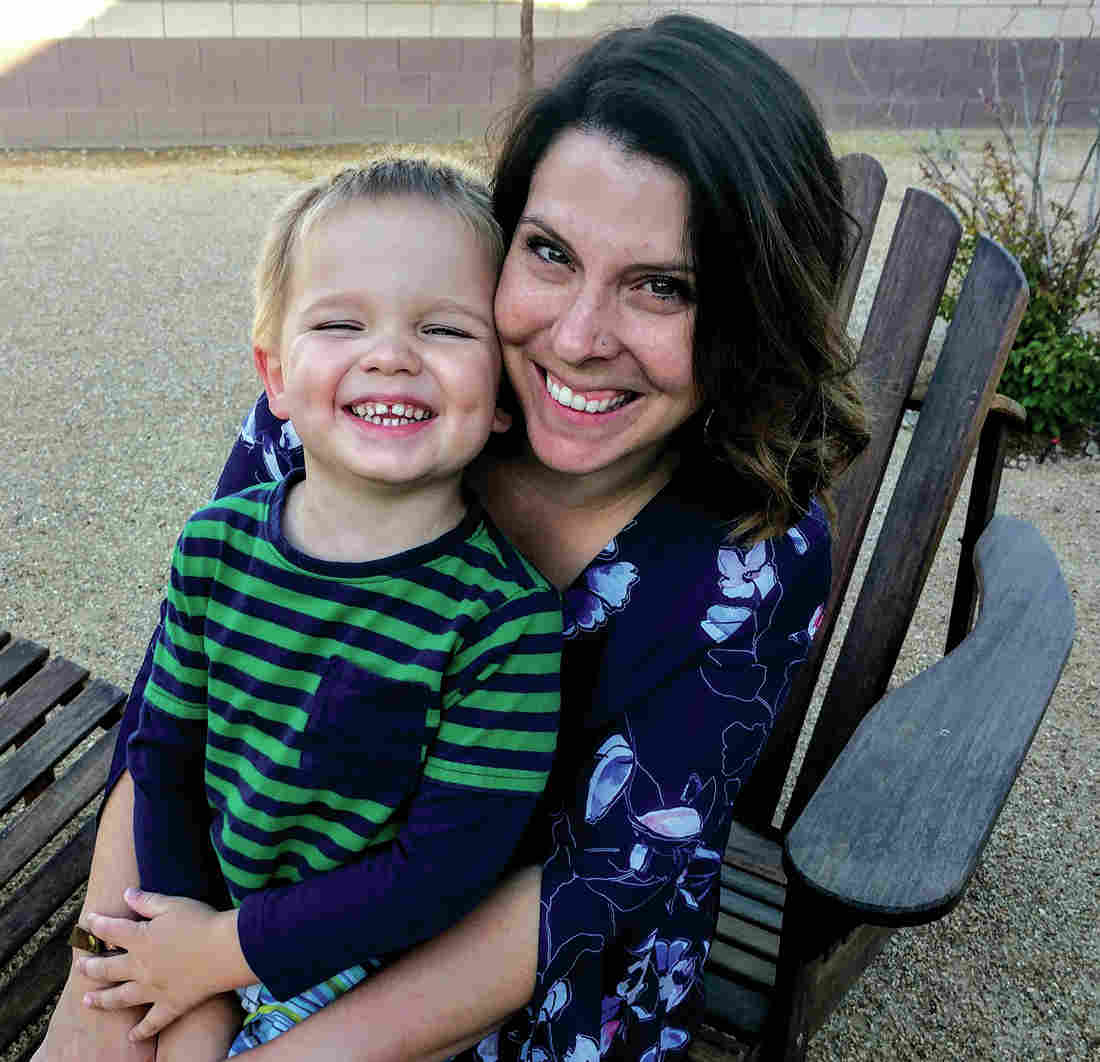
Ali Caliendo says Medicaid coverage has been invaluable since she and her husband, Terry, became Anthony’s foster parents over four years ago. Courtesy of Ali Caliendo hide caption
toggle caption
Courtesy of Ali Caliendo
Ali Caliendo says Medicaid coverage has been invaluable since she and her husband, Terry, became Anthony’s foster parents over four years ago.
Courtesy of Ali Caliendo
Foster kids with health problems frequently demand specialized and consistent care, yet their often unstable lives make it difficult for doctors and other health specialists to care for them, says Dr. Moira Szilagyi, a pediatrician based in Los Angeles. The kids often move between foster homes or from foster homes back and forth to their families.
“Every time they change providers, some information is lost and leads to some duplication of services or children fall out of treatment,” she says.
Melanie Stimmell, a foster parent currently to a dozen children in Winter Garden, Fla., says nearly all the children she and her husband have taken in have had some mental health issues. She recalled it took months to find a nearby, Medicaid-friendly therapist for an 11-year-old who was bipolar and had been hospitalized before coming to her home.
In many places, there’s a shortage of mental health providers who will accept Medicaid, in part because of its low reimbursement rates. The problem is exacerbated for foster children because their needs can be much greater than most kids.
Delays in getting these kids care has lasting consequences, Stimmell says.
“The issues snowball into other issues,” she says. “It affects their performance in school, which hurts their ability to make friends, which hurts their self-esteem, and then they fall behind in classes and get held back and it affects everything in their life.”
An experiment in streamlining care
A few states, including Florida, Georgia and Texas, have started to test an idea that might improve foster children’s access to care. They are placing foster children in their own Medicaid health plan — separate from the coverage offered to most Medicaid families.
These plans are typically run by private, mostly for-profit Medicaid managed-care companies, including Centene, Amerigroup and UnitedHealthcare.
Supporters say these plans can be designed to meet the higher health needs — particularly for mental health services — of foster children.
For instance, Florida’s child welfare plan is required to have more primary care doctors and mental health specialists available than are traditional Medicaid health plans. It also offers extra benefits such as nutrition counseling, art therapy and a $25 monthly allowance for over-the-counter items such as cough syrup and vitamins. About 34,000 foster kids are in the plan, managed by Centene Corp.
“This is a promising model,” says Roxann McNeish, a research assistant professor of child and family studies at the University of South Florida.
She says having health plans where administrators and physicians are trained to address the unique needs of foster kids has helped better coordinate care to them. But more study is needed to see whether children’s health has improved care compared with traditional health plans, she cautions.
These plans can also allow children to remain under the same coverage if they move to different parts of the same state.
Szilagyi says getting care to foster children is often challenging because responsibilities vary among state agencies, birth parents and guardians. “Obtaining consent from parents to provide health care to the child can be challenging,” she says.
The foster-care-only plans try to improve this by being trained to work with state foster care caseworkers to speed care to children.
But a 2016 study conducted by researchers at the University of South Florida for the state Agency for Health Care gave the foster-kids-only plan mixed reviews. It found that parents still often complained about lack of access to doctors. On the other hand, child welfare agencies reported having more input in health decisions for children. This is important because those agencies are responsible for recruiting and supporting foster parents and coordinating health services for the children.
The report did not examine whether the children in the plan had better outcomes.
Glen Casel, chief executive of Community Based Care of Central Florida, a foster care agency that contracts with the state to provide child welfare services, says these specialized plans have limited benefit. “I don’t think a foster-care-only plan is a silver bullet,” he says.
His nonprofit has worked with Centene to get more mental health providers in the network, particularly in communities that typically don’t have large numbers of Medicaid enrollees but have foster parents.
“It’s a daily fight for us,” he says.
When the system works
Despite the challenges, foster parents do recount successes in getting their kids’ needs met through Medicaid.
Ali and Terry Caliendo, of Las Vegas, says Medicaid has been invaluable since they became foster parents to 7-month-old Anthony in 2013. He had bronchitis and pneumonia his first year and later was repeatedly sent home from day care for being too aggressive toward other children.
“He was so sick as a baby, and then socially and emotionally he really struggled with violent rages and attachment issues,” Ali Caliendo says.
Medicaid paid for him to see psychiatrists, psychologists and physical and occupational therapists.
“Having the support through Medicaid made it an easier decision to be foster parents,” Caliendo says.
The Caliendos adopted Anthony at 18 months and were able to keep his Medicaid coverage. This fall, he begins kindergarten.
“Because we were able to intervene early, he is on a good trajectory, and we are really pleased,” she says.
Kaiser Health News is a nonprofit news service covering health issues. This story is part of a series, Medicaid Nation, which examines how Medicaid affects the lives of millions of Americans. KHN is an editorially independent program of the Kaiser Family Foundation that is not affiliated with Kaiser Permanente.
Share this Post
