 Enlarge this image
Dr. Nancy Caroline with paramedic Walt Brown in 1975 The National EMS Museum Archives hide caption
toggle caption
The National EMS Museum Archives
Dr. Nancy Caroline with paramedic Walt Brown in 1975
The National EMS Museum Archives
It is difficult to imagine society without the assurance that skilled, professional paramedics will respond to a medical emergency. But before the 1970s, clumsy, haphazard care, often at the hands of police officers, was the norm for emergencies. So much so that negligent ambulance care was responsible for an estimated 1,200 to 2,000 preventable deaths per year in the United States, according to journalist and former paramedic Kevin Hazzard.
In his new book American Sirens, Hazzard narrates the eight-year saga of the Freedom House Ambulance Service, the all-Black team of paramedics who pioneered the profession from 1968-1975 in Pittsburgh.
The book documents an untold piece of American history, recording how Freedom House saved thousands of lives and influenced the emergence of professional paramedic services in cities across the U.S., eventually setting the gold standard of emergency medical care.
Hazzard begins the book through the eyes of John Moon, a Black man who was born into poverty at Atlanta’s Grady Hospital but found his calling as a Freedom House recruit. Other prominent Freedom House contributors include Dr. Peter Safar, the Austrian-born physician who co-founded Freedom House Ambulance Service shortly after he invented mouth-to-mouth resuscitation; and Dr. Nancy Caroline, the first medical director of Freedom House who authored the seminal emergency medical services text Emergency Care in the Streets.
Author Interviews
‘Henrietta Lacks’: A Donor’s Immortal Legacy
With his professional EMS experience, Hazzard’s writing feels like a paramedic ride-along, witnessing medical chaos – intubating patients against the clock, confronting frightened patients and their distressed relatives, and competing with an adversarial police force.
Most shocking are the stories of preventable deaths before the advent of EMS, illustrating the crater-wide gap the Freedom House service filled. Wealthy, white Pittsburgh residents could afford private ambulances, while residents of the Hill District, the city’s oldest Black neighborhood, barely received basic city services, let alone a chance for survival in a medical emergency.
Paramedics Eugene Key and Harold Brown demonstrate their equipment for a guest in 1975. The National EMS Museum Archives hide caption
toggle caption
The National EMS Museum Archives
Freedom House provided much needed medical care in a neglected community. It also provided employment and training opportunities for dignified work. Some members of the team were high school dropouts, none had formal medical training whatsoever. They became skilled paramedics and dispatchers saving lives.
NPR spoke with Hazzard about the book, the racism the predominantly Black team faced, and how the Freedom House Ambulance Service changed U.S. society for the better.
Shots – Health News
Delaware is shrinking racial gaps in cancer death. Its secret? Patient navigators
This interview has been edited for clarity and length.
The EMS workforce today is majority white and male, with the proportion of Black paramedics around 8%. Meanwhile, most people do not know that this profession has roots in a Black neighborhood in Pittsburgh. Why is it important that this story is told?
I had written this memoir about my time as a paramedic, and somebody sent me an email and said, ‘Hey, you know, have you ever heard this other story?’ I realized that not only I had not heard the story, but nobody had. I found it strange that I had been taught by people who began their EMS careers in the 1970s – very close to the genesis of the field – and yet, none of them had ever said anything about this.
So once I came across the story, I thought that this was the history of something that had a profound effect on my life and I want to tell this story.
When I started digging into it, I immediately realized by talking to the men and women involved that some people died waiting for this story to be told, and others were waiting for the world to simply acknowledge this incredible thing they did and the service they provided to all of us.
Enlarge this image
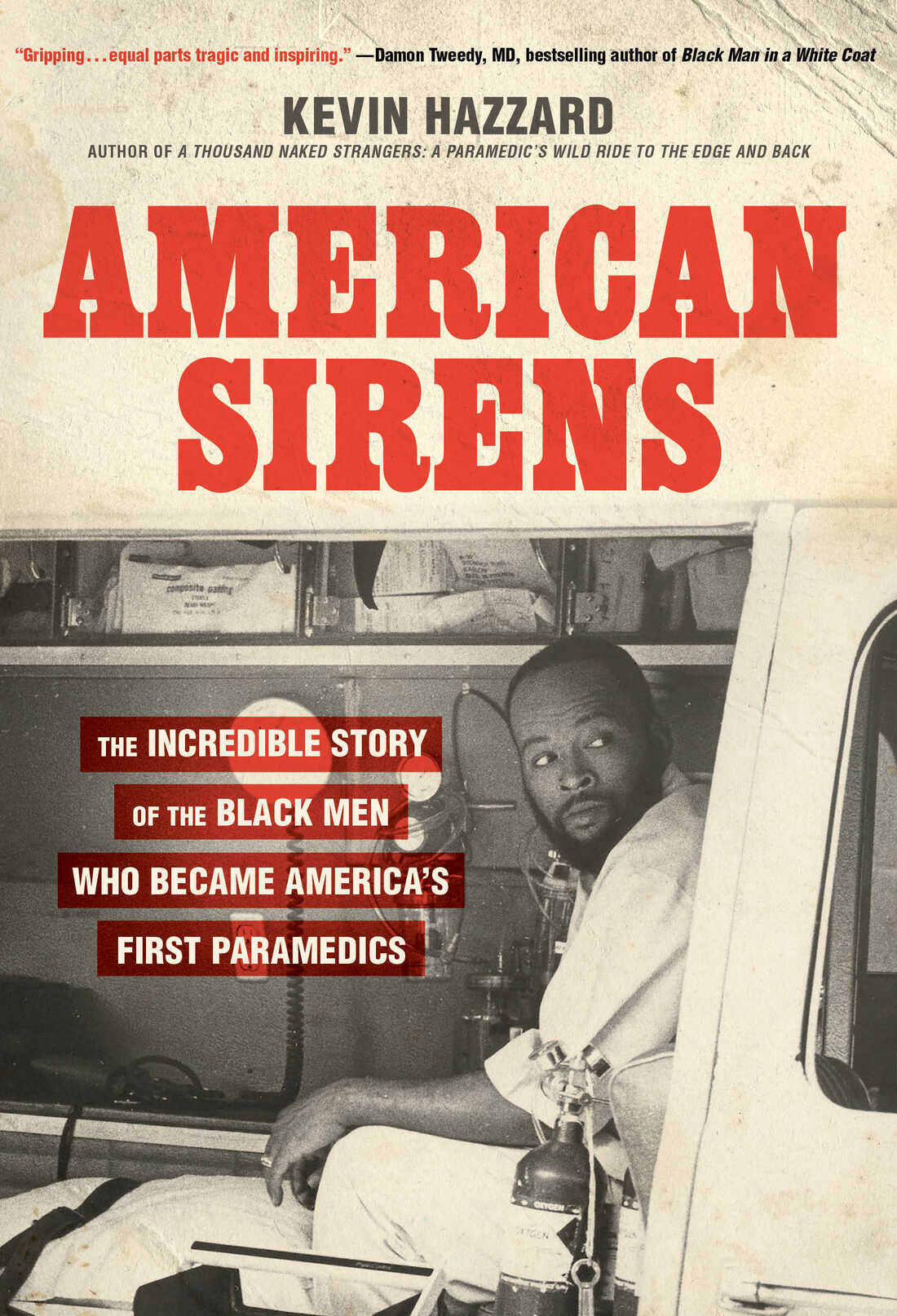
American Sirens, a book by Kevin Hazzard, traces the history of the professional ambulance service in the U.S. Hachette Books hide caption
toggle caption
Hachette Books
American Sirens, a book by Kevin Hazzard, traces the history of the professional ambulance service in the U.S.
Hachette Books
What was it like to sit down with these people who were so formative in your training as a paramedic, and hear their stories?
It is not very often, you have an opportunity to reach out and touch history. [I spoke with] the surviving members of Freedom House — the doctors are gone, a huge portion of the paramedics themselves are gone, but some of them are still there.
This was not a small achievement. This was a massive, massive thing they did. They all say I was just doing a job, but they knew that they were changing the world. That’s why it meant so much to them.
Freedom House changed forever how the ambulance industry works, down to the color of the ambulance, the way that the ambulance was designed, many of the pieces of equipment that we used and the textbook.
A lot of people know Nancy Caroline and that she wrote Emergency Care in the Streets. It’s this sort of Bible for EMS, but where did that information come from? How did she test those ideas and those theories? Where did those lessons come from? They came from the couple dozen people [at Freedom House]. On April 4th, 1968, they began work that influenced what people did four decades later and that is a tremendous legacy. The stamp that they left on the field of EMS, it simply cannot be underestimated. There’s too many innovations that were born out of Freedom House Ambulance Service.
The razing of entire Black and Latinx communities in Los Angeles, Atlanta, and New York City to “revitalize” cities in the 1960s sets the backdrop for Freedom House’s emergence. Why did you need to include urban renewal in this story about the first paramedics?
On its surface, urban renewal was a good thing. Yet, what nobody wants to acknowledge is that to do this thing, to build these universities and hospital systems and put in highways, somebody had to lose. That’s not a very flattering story to tell.
I was born in ’77, so much of this took place before I was born. We tend to say, well, these things a long time ago, and we’ve moved on from that. [But] the insidious nature of this sort of systemized disenfranchisement of an entire group, I felt was important to tell. Without it there’s no way to understand who these 24 people were, how unlikely it was that this situation would come about, how important it is that they are the ones to do it first, and how unsurprising it was that they had all this pushback.
At one point, Pittsburgh’s mayor at the time, Robert Flaherty, pushed to get Freedom House defunded, discredited, and shut down. He and others considered the services that Freedom House provided to be “un-American.” What about providing emergency medical service and saving lives garnered this label?
The un-American thing was idea of public money being used for what people viewed as a business. There were private companies who felt that getting city money was perhaps unconstitutional. The other question that came up was if we are going to say that an ambulance is a public service that needs to be paid for with public dollars, what happens to the rest of medicine?
A common boogeyman of the right is this idea of socialized medicine, and suddenly, it becomes a slippery slope where everything is public. I found that staggering that people are so afraid of a public health system that they would try to handicap even an emergency system.
What are some of the challenges that today’s paramedics face that are parallel to that of Freedom House faced in the 1970s?
In so many ways, many things haven’t changed at all. You know, I think the last two and a half years have shown that we are unable to learn from our mistakes and plan ahead.
So, people on an ambulance today are fighting for money. They’re fighting for benefits. How many years did it take firefighters from New York to get benefits for 9/11-related health problems? Here in Georgia, the firefighters have been fighting to get various types of on-the-job cancer coverage because that was something they didn’t have.
And they’re the only people other than doctors who can intubate, for instance. ERs are always crowded, and you’ve got this incredible resource that you feel you can’t tap into because there’s this rigid hierarchy that won’t allow it.
Share this Post
