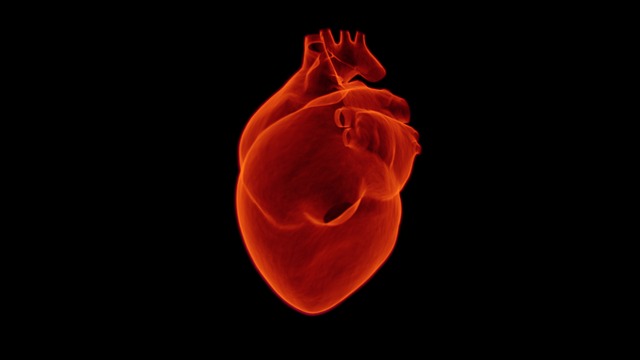
April 9, 2019 — When he arrived at the hospital by ambulance, the 70-year-old man said he felt like he was dying. He was pale, nauseated, and reported severe chest pain. “He had had hallucinations at home,” says his doctor, Alexandra Saunders, MD, chief medical resident for Dalhousie University in St. John, New Brunswick, Canada. Soon, the medical team confirmed he’d had a heart attack.
He had eaten a marijuana-laced lollipop, given to him by a friend who thought it might help him sleep. “I don’t know if we can say it caused the heart attack,” Saunders says, citing the patient’s pre-existing heart disease. ”We don’t have enough guidance to say what a safe dose would be.”
Other health experts share her concern over CBD edibles, including chocolates, brownies and other baked goods, snacks, drinks, and even pizza.
CBD is cannabidiol, one of more than 100 cannabinoids found in cannabis. It is credited with helping a host of health issues, including anxiety, sleeplessness, and seizures. CBD edibles can originate from hemp or from marijuana. Those that originate from marijuana, sold only in states where it’s legal, include the high-producing THC cannabinoid along with the CBD. Those that originate from hemp include CBD and less than 0.3% THC.
The concern over marijuana edibles is from getting too much THC. In Colorado, where recreational use of marijuana is legal, researchers reviewed more than 2,500 cannabis-related emergency room visits from 2012 through 2016 and found that the percentage of visits was higher for inhaled cannabis, but that those using edibles were more likely to have psychiatric and cardiovascular problems.
Product labeling is an issue, too, for both hemp and marijuana CBD edibles, experts say. Consumers can’t be sure that what the label lists is actually in the CBD edible. In a 2015 study, researchers evaluated 75 marijuana edibles and found only 17% accurately labeled.
Booming Edibles Market
Despite the concerns, the market is booming. In 2018, the cannabis edibles market was $2.3 billion, says Bethany Gomez, managing director of the Brightfield Group, a market research firm. By 2022, it’s predicted to be $5.3 billion, including medical and recreational uses. In 2018, the market for hemp CBD edibles was $100.2 million, she says, and it’s predicted to reach $4.9 billion by 2022.
The FDA’s View of Edibles
Despite the popularity, neither type of CBD edible — from hemp or marijuana — is considered legal in the eyes of the federal government, at least not yet.
The 2018 Farm Bill (Agriculture Improvement Act of 2018) did recognize a new category of cannabis classified as ”hemp,” defined as cannabis and cannabis derivatives with no more than 0.3% concentration of THC. This decision removed hemp from the federal Controlled Substances Act. Even so, the FDA kept its authority to regulate products with cannabis or cannabis-derived compounds under the Federal Food, Drug and Cosmetic Act.
As a result, the FDA says, it is not lawful to introduce food with added CBD or THC into interstate commerce, or to market the products either as dietary supplements or as an addition to them.
But that stance may change. The FDA is forming a group to explore ways for supplements or foods with CBD to be marketed lawfully. A hearing on May 31 will allow people to exchange information and challenges about the products.
But until that happens, the FDA is standing firm. In early April, it sent warning letters to three companies that market CBD products, including edibles, for making unsubstantiated health claims.
Buyer Be Aware
Beyond the FDA, the legal situation on edibles is confusing, to say the least, says Martin Lee, co-founder and director of Project CBD, an informational website about cannabis medicine.
“Now hemp is no longer under the Controlled Substances Act, but the FDA does not consider CBD edibles, whether hemp or marijuana, legal,” he says.
Some states have prohibited CBD edibles, falling in line with the FDA view. In February, the North Carolina Department of Agriculture and Consumer Services issued letters to manufacturers and retailers, warning them that under FDA laws, CBD is a drug and “cannot legally be added to any human food or animal feed that is for sale.”
New York City’s Department of Health and Mental Hygiene has warned food service establishments and retailers not to add CBD to foods and drinks. If they don’t comply by July 1, they risk returning the products to the supplier or discarding them. Starting October 1, the department will issue violations and perhaps fines.
After outlawing hemp products in food earlier this year, Maine reversed course in late March, when the governor signed a bill allowing it.
Testing Requirements
No universal testing requirements are in place for CBD edibles.
But the vast majority of states that have legalized marijuana have some sort of testing requirements for CBD products derived from marijuana, says Gomez of the Brightfield Group.
Consumers who are ages 21 and over living in states with legalized marijuana can feel most confident buying marijuana CBD products from a dispensary, says Lee of Project CBD.
On the hemp CBD side, Gomez says, some companies are doing voluntary testing, including QR (quick response) codes on labels or putting an identifier on products so consumers can link quickly to the manufacturer’s site and see if the product is legitimate.
In March, 13 companies producing hemp received permission to use the Certified Seal of the U.S. Hemp Authority on their products. To earn that, companies have to meet self-regulatory requirements and pass a third-party audit, among other steps. The Hemp Authority is an independent organization, launched with seed money from the U.S. Hemp Roundtable, an industry organization of hemp-producing companies.
Edibles: Label Reading
Until edibles get the blessing of the FDA, buyers can do their own research before buying CBD edibles.
If you’re looking for CBD from hemp, ”make sure on the package it is hemp and doesn’t have high levels of THC, unless that is what you are looking for,” says Jonathan Miller, general counsel for the U.S. Hemp Roundtable.
“There are lots of fake products,” he says. “Sometimes they don’t have [any] CBD in them. Other times they have more THC than is allowed [in hemp products].”
For marijuana edibles produced in a state where marijuana is legal, ”many of the testing requirements in some states are quite strict,” Gomez says. “Consumers are more likely to know what they are getting in the marijuana-derived edibles” produced in the regulated market. She acknowledges there is certainly an issue with black market CBD products derived from marijuana. “If it looks like it was created in someone’s basement, it probably was,” she says.
Caveats
Even if the label on a CBD product accurately reflects what’s in it, ”labeling on the package alone is not going to address the larger issue,” says Paul Armentano, deputy director of NORML (the National Organization for the Reform of Marijuana Laws). “It’s not just a labeling issue, it’s an education issue.”
The general public, he says, is unaware that ”the way the body responds to cannabis when it is inhaled is entirely different than the way the body responds when it is consumed orally.”
With marijuana edibles, he says, it takes longer for the drug to take effect. And once it does, you feel the effects longer.
When a marijuana edible is eaten, the blood level of THC peaks in about 3 hours, compared to 30 minutes when inhaled, says Nora Volkow, MD, director of the National Institute on Drug Abuse of the National Institutes of Health, who co-wrote an editorial to accompany the Colorado study of ER visits due to edibles.
Gomez advises those trying marijuana CBD edibles: “Start low and go slow. You don’t know how the dosage level is going to interact with your body. Definitely start with small doses and wait [before eating more].”
Lisa Dabby, MD, an emergency room doctor at UCLA Medical Center in Santa Monica, CA, wishes more people would heed that advice. “I probably see someone once every 1 or 2 weeks, someone with a complication after ingesting [an edible],” she says. Symptoms include vomiting that is hard to control, a heart rate that’s too fast, and anxiety.
Consumers aren’t the only ones who need more education about edible products’ effects, Armentano says. So do retailers selling them. It would also help, he says, to include information on the label advising users to wait for a significant amount of time before taking an additional portion of an edible that contains THC.
WebMD Health News Reviewed by Michael W. Smith, MD on April 09, 2019
Sources
Annals of Internal Medicine: “Acute Illness Associated With Cannabis Use, by Route of Exposure: An Observational Study.”
Canadian Journal of Cardiology: “Marijuana Lollipop-Induced Myocardial Infarction.”
JAMA: “Cannabinoid Dose and Label Accuracy in Edible Medical Cannabis Products”
FDA: Statement from FDA Commissioner Scott Gottlieb, MD, April 2, 2019.
Alexandra Saunders, MD, chief medical resident, Dalhousie University, St. John, New Brunswick, Canada.
Bethany Gomez, managing director, Brightfield Group.
Martin Lee, co-founder and director, Project CBD.
Paul Armentano, deputy director, NORML.
Lisa Dabby, MD, emergency room doctor, UCLA Medical Center, Santa Monica, CA.
Jonathan Miller, general counsel, U.S. Hemp Roundtable.
State of Maine, Office of Gov. Janet Mills: News release, March 27, 2019.
New York City Department of Health and Mental Hygiene.
North Carolina Department of Agriculture and Consumer Services: News release Feb. 8, 2019.
© 2019 WebMD, LLC. All rights reserved.
Share this Post

