 Enlarge this image
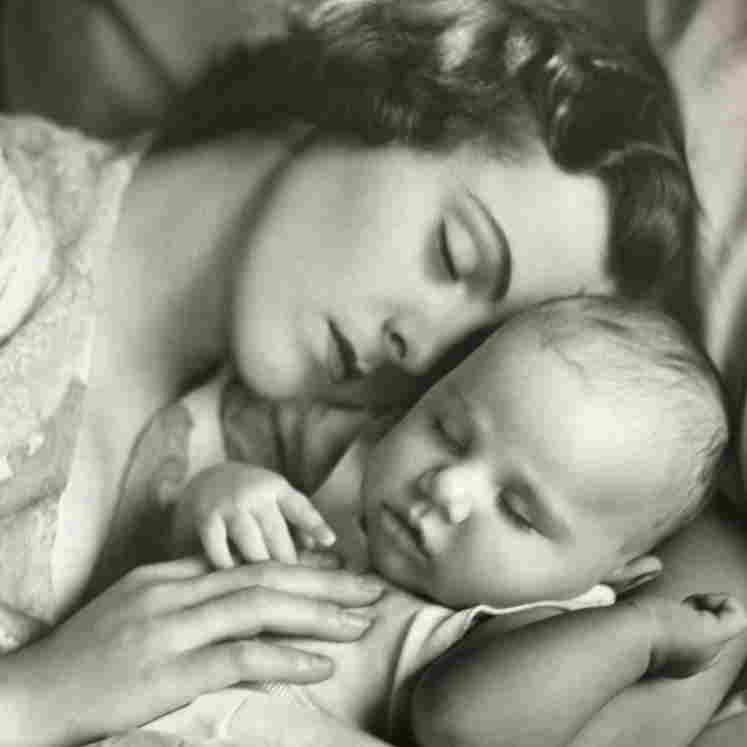
This happens, pediatricians acknowledge. So they’re offering advice on how to reduce the risk of bed sharing with infants, which includes removing loose bedding that could lead to suffocation. PhotoAlto/Anne-Sophie Bost/Getty Images hide caption
toggle caption
PhotoAlto/Anne-Sophie Bost/Getty Images
This happens, pediatricians acknowledge. So they’re offering advice on how to reduce the risk of bed sharing with infants, which includes removing loose bedding that could lead to suffocation.
PhotoAlto/Anne-Sophie Bost/Getty Images
It’s a familiar scene for sleep-deprived parents everywhere: They put down the baby in the bassinet to sleep, and those tiny eyes flutter shut. Then they flutter back open and the crying starts. The only thing perhaps more harrowing than those long wakeful nights of a baby’s first year is the fear that one day the child won’t wake up.
A notable, if subtle, change in sleep guidelines released Monday by the American Academy of Pediatrics acknowledges the reality of those long nights and what parents should do if they can’t always follow the guidelines to the letter. The goal is to reduce the risk of sleep deaths in babies.
“We recognize the fact that not only do mothers often inadvertently fall asleep with the infant in their bed, but many mothers choose to bed share,” says Lori Feldman-Winter, a co-author of the new guidelines and a professor of pediatrics at Cooper University Health Care in Camden, N.J. “We thought it was prudent to provide guidance on making the bed-sharing arrangement as safe as possible and provide guidance on what populations are most at risk when bed sharing.”
Article continues after sponsorshipAn estimated 3,500 infants die each year from deaths related to sleep. Together, these are called sudden unexpected infant deaths, which includes both sudden infant death syndrome and deaths from suffocation, asphyxiation, strangulation and other preventable deaths.
As before, relying on years of strong evidence about the risk factors for these deaths, the AAP recommends that infants be placed to sleep on their backs on a firm mattress in their own crib or bassinet, with no blankets, sheets, pillows, stuffed animals, crib bumpers, positioners or other items. The group recommends against parents and infants sharing a bed, sometimes called co-sleeping, because of a significantly increased risk of death from suffocation or other causes.
Bed sharing has been an area of controversy because some parents insist, contrary to the evidence, that it’s safer than having an infant sleeping on a separate surface. Other parents feel they simply cannot get sleep without bed sharing.
The issue has been complicated by an incomplete and sometimes contradictory evidence base, making it difficult to tease out the risks of bed sharing compared with other risk factors. So the AAP hired an independent statistician to review studies that looked at similar data and came to slightly different conclusions.
“Upon further review of the available evidence, it is clear that we cannot safely recommend bed sharing because of the hazard,” Feldman-Winter says. “The hazards are particularly in infants under 4 months of age.”
But she noted that several studies conducted since the last AAP recommendations have highlighted bed sharing’s popularity both in the U.S. and abroad.
“I am pleased to see an acknowledgement that despite the clear, elevated, independent risk of bed sharing with an infant, a high proportion of parents — even the most well-educated ones — end up bed sharing with their babies, whether they intend to or not,” says Daniel Flanders, a pediatrician in Toronto. “This doesn’t make them bad parents; it simply reflects the fact that some medical recommendations are easier to follow than others.”
The populations at greatest risk are those under 4 months old and those born prematurely or with a low birth weight. Putting a baby to sleep on his or her back as well as breast-feeding, routine immunizations and using a pacifier all reduce the risk of both SIDS and death during bed sharing, though none of those can eliminate the risk. Similarly, prenatal and postpartum smoking and parental use of alcohol, illicit drugs or medications causing drowsiness all increase the risk of infant sleep death, but abstaining from these cannot eliminate bed-sharing risks.
“We hear a lot of myths — ‘I’m not overweight, I’m not drunk, I’m not high, I’m breast-feeding, and therefore nothing bad is going to happen me,’ ” explains Elizabeth Murray, a pediatrician in emergency medicine at Golisano Children’s Hospital in Rochester, N.Y. Of the many resuscitations of infants she has attempted over the years, she says she hears the same thing from every parent: “We didn’t think it was going to happen to us.”
While the AAP continues to recommend against bed sharing, the statement also points out that the risks of sleeping together on a sofa or couch are far greater.
“When feeding occurs during the night, we recognize that mothers might be sleepy when they’re feeding their baby, but if they fall asleep and the baby falls asleep with them, it’s much more hazardous if they’re feeding in the couch or an armchair than in the adult bed,” Feldman-Winter says.
Previous studies have shown some sleep deaths occurred when parents took their baby to the living room to avoid bed sharing when they fed or calmed them, and then they fell asleep with the baby.
The updated recommendation, then, is that mothers feed their baby in bed and then place the baby on its own sleep surface afterward. If the mother falls asleep by accident, it’s not as hazardous as it would be on a couch. When she wakes again, she should immediately place the baby back in its own bed, since the risk of death increases with the duration of bed sharing.
Children’s Health
For Parents, New Newborn Sleep Advice Turns Babies Into Roommates
Mothers who choose to bed share or who may accidentally fall asleep should also make sure they have a firm mattress — no pillow top, water bed or other nonfirm surface — and remove pillows, comforters, blankets, loose sheets and anything from the infant’s sleep area that could lead to suffocation or difficulty breathing. The bed should also be moved away from the wall so the infant cannot become trapped.
“Previous iterations of SIDS reduction guidelines have not really acknowledged the reality that for some families, it is virtually impossible to make it through the night without bringing baby into bed,” Flanders says. This has led to a situation where parents feel ashamed or frustrated discussing their baby’s sleep arrangements with their primary care doctors — and a missed opportunity to reduce risk.
“We make the statement for the first time that health care providers should first and foremost have open and nonjudgmental conversations with families about their individual preferences, sleep patterns, sleep environment and be able to have a dialogue about doing the best they can do,” Feldman-Winter says.
Jaime Friedman, a pediatrician and partner at Children’s Primary Care Medical Group in San Diego, is among the pediatricians welcoming this change.
“I think it’s a sign, like they did with the media guidelines, that the AAP is more in tune with what’s happening with parents,” Friedman says. “You can look at the data and say this is the best thing to do, but if you’re in the home, things are very different.”
In addition to recommendations for those who end up bed sharing, the revised guidelines emphasize the importance of breast-feeding and skin-to-skin contact in reducing SIDS risk. A period of neurodevelopmental vulnerability is thought to be a major factor in SIDS, and both skin-to-skin contact and breast-feeding contribute to neurodevelopmental maturity and normal respiratory breathing patterns, Feldman-Winter explained.
In addition, breast-feeding reduces the risk of infections, and breast-feeding babies have different feeding patterns, sleeping patterns and sleep states, which may explain the reduced risk.
Another change in the guidelines is the recommendation that babies sleep in their own bed in their parents’ room for at least their first six months, preferably up to one year. That recommendation comes from evidence that room sharing reduces the risk of SIDS, but Friedman questions how realistic that is in practice.
13.7: Cosmos And Culture
Should Babies Co-Sleep With Their Parents?
“I see families where they can’t get the kid to go into the bassinet next to the bed because the baby wants to be in the bed with the parent,” she says. “Sometimes that doesn’t improve until they get the kid into their own room.”
The recommendations reiterate that baby sleep monitors do not reduce the risk of SIDS. By contrast, regular prenatal care does reduce risk. They also emphasize that commercial devices sold in stores, including crib bumpers, are not recommended if they do not adhere to the safe sleep guidelines.
The most significant change, however, appears to be the shift in tone toward understanding parents who may not feel they can follow every recommendation.
“When parents feel comfortable and safe to discuss their baby’s sleep environment with their physician, the chances of successfully catalyzing risk-reducing behaviors are maximized,” Flanders says.
Tara Haelle is the co-author of The Informed Parent: A Science-Based Resource for Your Child’s First Four Years. She’s on Twitter: @tarahaelle
Share this Post
