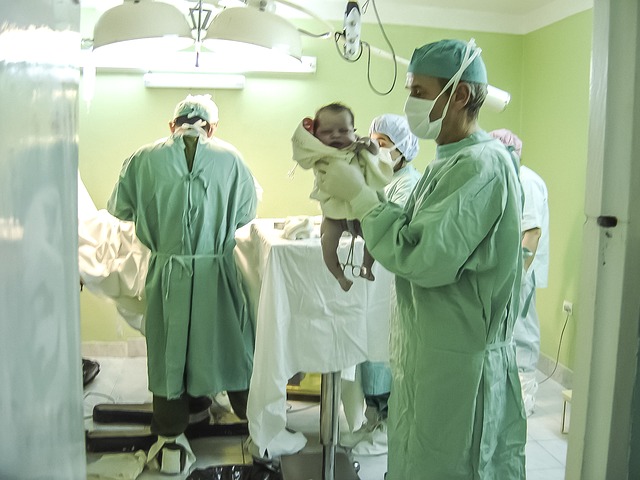
As pediatricians who care for fragile, premature babies — we know firsthand the road to child health runs through quality health insurance coverage. Our patients require breathing machines, customized intravenous nutrition, expensive, specialized equipment and 24/7 monitoring in the neonatal intensive care unit, often with a dedicated nurse.
The high-tech care our patients require is supremely expensive. And quality health insurance partially supports these costs, which for premature babies, can be millions of dollars in the first year alone. Sadly, many current federal policies have been working against these babies — making insurance more out-of-reach and expensive for families across the country.
In 2016, the expansion of Medicaid contained within the Affordable Care Act and the consistent reauthorization of the Children’s Health Insurance Program (CHIP) reduced the rate of uninsured US children to 4.5 percent — the lowest level ever. Medicaid and CHIP covered nearly 45 million children, or 40 percent of all kids. Another 1.1 million children received health insurance via the health insurance marketplace. The current administration, having failed to earn an outright repeal of “Obamacare” last year, has been systematically cutting away at its core provisions. This “death-by-a-thousand-pinpricks” approach means the families of our patients won’t be able to afford the care their babies need when they leave the hospital.
Elimination of the mandate that all Americans have health insurance means fewer healthier individuals subsidize the care for the sick newborns in our hospital, and has destabilized insurance markets. The politicization of cost share reduction payments — dollars to support insurance companies as they dealt with the influx of newly-insured patients — may result in insurance premiums increasing by 20 percent in some states. This would make health care coverage costlier for employers to provide or individuals to buy on their own and will make quality health insurance even more unaffordable.
The results have sadly been predictable. Last year, the rate of uninsured Americans increased by 3.5 million. The rate of poor and economically insecure children without health insurance increased by 300,000, per a recent study. Nationally, this means fewer premature babies have access to the lung, eye and neurology specialists they need once they are discharged from the hospital. Without health insurance, patients are more likely to run out of medicine, come to the emergency room for primary care and be readmitted to the hospital — debilitating parents who have been at their babies’ bedside for weeks.
Other actions have been just as destructive.
Since the passage of the Social Security Act, states have been eligible to alter federal health programs in innovative ways to increase the number of insured patients — the clear intent of the Medicaid program. States have used these Medicaid “waivers” to expand coverage, modify physician payments or extend coverage after emergencies. In the past, waivers were denied to the states by the federal government if they were detrimental to people who needed insurance. Unfortunately, the Medicaid waiver program has now been exploited by the current administration to further deny insurance to those economically insecure families who need it most.
Waivers, which cut off Medicaid coverage if a parent doesn’t re-enroll in time, have already been approved in Arkansas, Kentucky, and Indiana. Waivers that effectively increase co-payments for using the emergency room use, needing certain medications and using urgent care are approved or pending in seven states. Four other states are re-introducing proposals that place lifetime dollar limits on what insurance companies have to spend on a person’s care. This financially penalizes babies for being born premature, since these infants reach these dollar amounts in the first years of life.
Instead of moving forward, we are returning to the days when parents of sick babies will have to choose between food on the table or medicine in the cabinet. It means parents will again be asking pediatricians if a baby can “get away” with cheaper, suboptimal alternative medicines. Even worse, some may never even fill prescriptions because they can’t afford their children’s medicine.
Other actions have also threatened children’s health. Another proposal will let states undermine Essential Health Benefits and permit the sale of policies with weakened minimum standards. These rules could leave pregnant women, kids, and families with fewer options for coverage and increased out-of-pocket costs which most cannot afford.
The decision to permit low-quality, cheap, short-term health plans into the market also deluded parents into thinking they have reasonable health insurance, only to realize they enrolled in “health insurance lite,” when their baby needs the hospital and they realize nothing is truly covered. These plans don’t cover hernia surgery — a frequent condition in premature infants — so parents pay their premium and for the entire cost of their infant’s surgery. How about a child who breaks an arm playing soccer? Not covered in these junk plans, since injuries from sports or playgrounds are often excluded.
The administration’s decision not to defend the Affordable Care Act in federal court against a lawsuit claiming the almost decade-old law is invalid is another indirect attempt to prevent patients from accessing the care they need to become, or stay, healthy. Defunding teen pregnancy prevention programs means fewer sexually active teens have access to birth control, which will result in more teen pregnancies. Teen motherhood is a risk factor for preterm birth, so this means more sick babies.
And finally, in an act of pettiness, the federal government’s failure to utilize funds to advertise public health insurance plans means families who qualify for subsidized insurance may not even know they are eligible.
Coverage limits, waivers, marketplaces, and cost-share reductions mean little to the family of the one-pound-one-ounce baby who is on a mechanical ventilator, struggling to breathe and requires medications to sustain his heartbeat after undergoing a second surgery. He needs care and insurance that pays for it.
Our votes in November may determine if he gets it.
Share this Post

