Explaining Medicine
  • News
  • Health & Lifestyle
    • Diet & Weight Management
    • Exercise & Fitness
    • Nutrition, Food & Recipes
    • Prevention & Wellness
  • Conditions
    • Custom1
      • Conditions A-Z
      • Procedures A-Z
      • Allergies
      • Alzheimer’s
      • Arthritis
      • Asthma
      • Blood Pressure
      • Cholesterol
      • Cancer
    • Custom2
      • Chronic Pain
      • Cold Flu
      • Depression
      • Diabetes
      • Digestion
      • Eyesight
      • Health Living
      • Healthy Kids
      • Hearing Ear
    • Custom3
      • Heart
      • HIV/AIDS
      • Infectious Disease
      • Lung Conditions
      • Menopause
      • Men’s Health
      • Mental Health
      • Migraine
      • Neurology
    • Custom4
      • Oral Health
      • Pregnancy
      • Senior Health
      • Sexual Health
      • Skin Problems
      • Sleep
      • Thyroid
      • Travel Health
      • Women’s Health
  • Medications
    • Medications
    • Supplements and Vitamins
  • Medical Dictionary
  • Health Alerts
Flu shot recommendation for kids dropped just as...
The CDC just sidelined these childhood vaccines. Here’s...
Your next primary care doctor could be online...
In Lodge Grass, Montana, a Crow community works...
RFK Jr.’s new dietary guidelines go all in...
More seniors are becoming homeless. Shelters are trying...
Health officials slash the number of vaccines recommended...
Wegovy obesity pill now available at pharmacies
In the U.S., hunger is often hidden. But...
One doctor’s experience shows the battle for the...
Top Posts

Explaining Medicine

  • News
  • Health & Lifestyle
    • Diet & Weight Management
    • Exercise & Fitness
    • Nutrition, Food & Recipes
    • Prevention & Wellness
  • Conditions
    • Custom1
      • Conditions A-Z
      • Procedures A-Z
      • Allergies
      • Alzheimer’s
      • Arthritis
      • Asthma
      • Blood Pressure
      • Cholesterol
      • Cancer
    • Custom2
      • Chronic Pain
      • Cold Flu
      • Depression
      • Diabetes
      • Digestion
      • Eyesight
      • Health Living
      • Healthy Kids
      • Hearing Ear
    • Custom3
      • Heart
      • HIV/AIDS
      • Infectious Disease
      • Lung Conditions
      • Menopause
      • Men’s Health
      • Mental Health
      • Migraine
      • Neurology
    • Custom4
      • Oral Health
      • Pregnancy
      • Senior Health
      • Sexual Health
      • Skin Problems
      • Sleep
      • Thyroid
      • Travel Health
      • Women’s Health
  • Medications
    • Medications
    • Supplements and Vitamins
  • Medical Dictionary
  • Health Alerts
  • News

    Tornado damage to Pfizer factory highlights vulnerabilities of drug supply

    by Sydney Lupkin July 27, 2023

    Enlarge this image

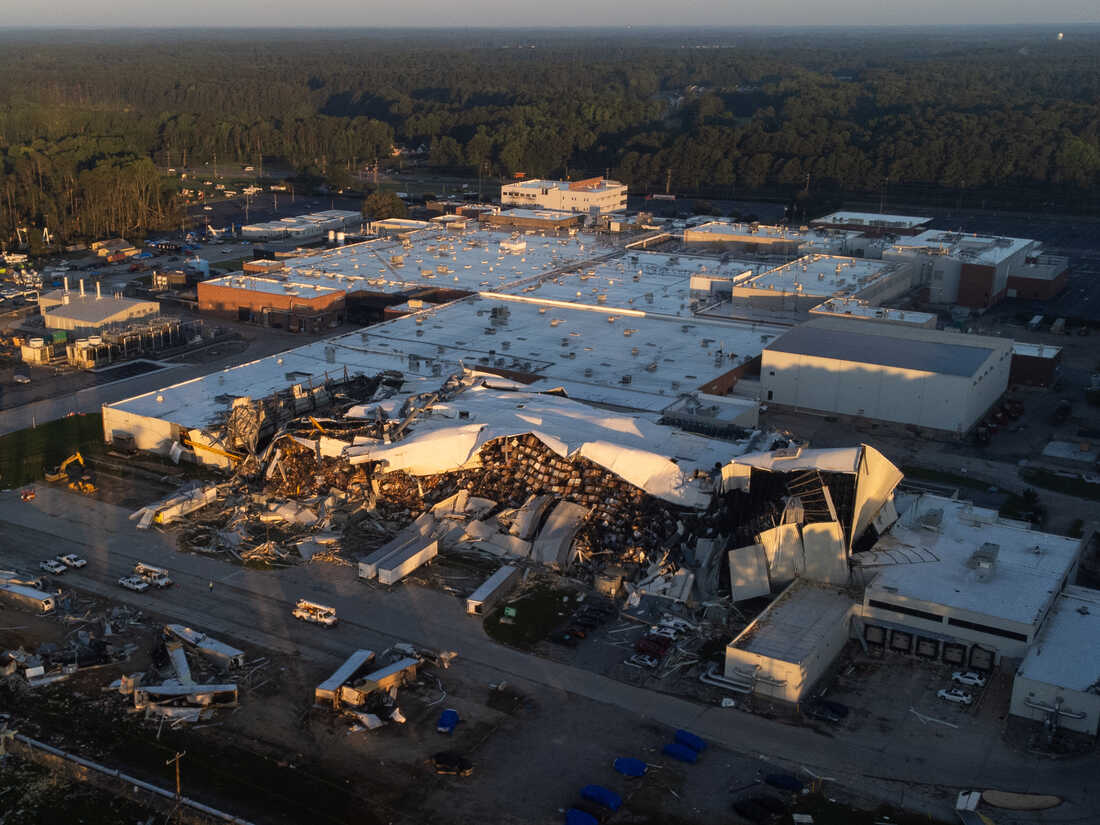
    An aerial view shows damage to a Pfizer pharmaceutical factory in Rocky Mount, N.C., from a tornado that struck on July 19. The plant produces many drugs used in hospitals. Sean Rayford/Getty Images hide caption

    toggle caption

    Sean Rayford/Getty Images

    An aerial view shows damage to a Pfizer pharmaceutical factory in Rocky Mount, N.C., from a tornado that struck on July 19. The plant produces many drugs used in hospitals.

    Sean Rayford/Getty Images

    The extent of damage from a tornado that struck a critical Pfizer factory in Rocky Mount, N.C., is now coming into focus.

    The first images after the tornado hit it on July 19 showed a roof that was mangled and torn off. The facility makes dozens of medicines used in hospitals across the United States.

    Hospitals panicked.

    “Every hospital buyer across the country, the second they heard about that tornado, everyone was just, like, ‘Buy, buy, buy, buy, buy!'” says Erin Fox, a pharmacy director for the University of Utah Health’s hospitals.

    They didn’t wait to find out which products were affected or how long shortages might last.

    Pfizer makes dozens of hospital drugs at the damaged factory

    Pharmaceutical companies are reluctant to disclose exactly what they make where. The information is often blacked out on Food and Drug Administration inspection records, for example. The agency’s statement following the tornado explained “disclosure laws prevent the FDA from providing a complete list of products made at the facility.”

    Pfizer declined an interview request.

    NPR was able to use records from the National Institutes of Health to compile a list of dozens of drugs that are made there. They cover hundreds of billing codes that comprise different formulations and packages.

    The products include a lot of painkillers and anesthetics that are used in hospitals and given intravenously. And there are also drugs like naloxone, which is used to reverse opioid overdoses, and vitamin K, which is used to prevent bleeding in newborns.

    According to Pfizer, this site makes about 8% of all sterile injectables used in hospitals across the U.S.

    Pfizer makes many of these products only at its Rocky Mount site, NPR found. However, a competing company, like Baxter International, often makes a similar product.

    The FDA says fewer than 10 products made by Pfizer at its Rocky Mount factory are sole source. But the agency said there are either substitutes or enough stock in other Pfizer warehouses to minimize disruptions.

    Boston University health economist Rena Conti says her research shows only a handful are “backbone” therapies for which there are no real alternatives. “This includes vitamin K1, which is needed for almost every live birth in a hospital,” she says, and aminophylline, which can help people who are having trouble breathing.

    The FDA is working with Pfizer to assess and mitigate the situation, commissioner Robert Califf said in a statement. The agency said it doesn’t anticipate any immediate significant supply disruptions.

    Pfizer limited hoarding

    The company was able to curtail hoarding fairly quickly, University of Utah’s Fox says. Pfizer worked with wholesalers to limit what hospitals could buy to no more than 100% of their usual orders.

    Pfizer also sent a letter to health care providers on Friday, explaining that its initial assessment of the damage found that production areas of the Rocky Mount facility were mostly unscathed. The warehouse sustained most of the damage.

    The company’s letter listed 65 products made at the site that Pfizer thinks might have disruptions based on existing inventory and market share.

    A lot of the products were already in shortage, which is good news and bad news, says Fox, who is also a national expert on drug shortages. The bad news is those shortages will continue for things like certain formulations of lidocaine, a local anesthetic. But the good news is hospitals already know how to cope.

    “If there had to be this tornado, it seems like this is probably one of the best-case scenarios where, you know, manufacturing lines aren’t impacted, and it was an area of the facility that can be fairly quickly rebuilt,” Fox says. “And so it’s not a time to panic.”

    She expects the ripple effects of this to last a few months rather than a few years.

    Climate change puts drug factories at risk

    Conti, of Boston University, says the tornado is a good reminder about the vulnerabilities in the U.S. drug supply. When Hurricane Maria struck Puerto Rico in 2017, the damage caused shortages of IV saline bags.

    “Pharmaceutical manufacturing in the United States requires access to water and has traditionally been located in places such as Puerto Rico, the Gulf states and other locations that are now vulnerable to climate change,” Conti says.

    The weather events could serve as a warning.

    Redundancy is also important in the drug supply chain so that when something halts production at one factory — whether it’s a tornado or a bad inspection — it’s not the end of the world.

    “There are approximately 230 drugs in short supply currently in the United States,” Conti says. “The Pfizer plant will definitely take down another couple of dozen drugs, and a handful of those will likely go into shortage, or the shortages will become more persistent because of what happened. However, there are somewhere on the order of 6,000 drugs sold into the U.S. market every single day.”

    She says it’s important to remember that despite all the challenges, the U.S. drug supply is resilient and “remarkably high quality.”

    “Our system remains the gold standard for the world,” she says.

    Read the article here

    Share this Post

    Share Explaining Medicine Share Explaining Medicine

    Tornado damage to Pfizer factory highlights vulnerabilities of drug supply was last modified: August 7th, 2023 by Sydney Lupkin

    Related

    drug shortagesHospitalsNorth Carolinapfizer
    0 comment
    0
    Facebook Twitter Google + Pinterest
    Sydney Lupkin

    previous post
    They billed Medicare late for his anesthesia. He went to collections for a $3,000 tab
    next post
    What’s a fair price for a prescription drug? Medicare’s about to weigh in

    Related Articles

    A physician’s letter to his wife

    December 3, 2018

    Trigger Warnings ‘Not Helpful,’ Study Author Says

    March 26, 2019

    Calcium Supplements Up Odds of Colon Polyps

    March 2, 2018

    In 2023, opioid settlement funds flowed to states. Here’s how it’s going

    December 21, 2023

    Heart Failure Risk: Where You Live, What You Look Like, and Where You Come From

    February 26, 2024

    People With Cancer May Face Greater Shingles Risk

    January 9, 2019

    A fibrous path ‘twixt heart and brain may make you swoon

    December 7, 2023

    Most Child Tonsillectomies Unnecessary, Study Finds

    November 9, 2018

    Medical Research, Health Care Face Deep Cuts In Trump Budget

    May 23, 2017

    Opinion: With abortion bans on the rise, kids need to know more about menstruation

    September 17, 2022

    Recent Posts

    • Flu shot recommendation for kids dropped just as the illness rages

      January 12, 2026
    • The CDC just sidelined these childhood vaccines. Here’s what they prevent

      January 9, 2026
    • Your next primary care doctor could be online only, accessed through an AI tool

      January 9, 2026
    • In Lodge Grass, Montana, a Crow community works to rebuild from meth’s destruction

      January 8, 2026
    • RFK Jr.’s new dietary guidelines go all in on meat and dairy

      January 7, 2026

    Keep in touch

    Facebook Twitter Google + RSS

    Recent Posts

    • Flu shot recommendation for kids dropped just as the illness rages

      January 12, 2026
    • The CDC just sidelined these childhood vaccines. Here’s what they prevent

      January 9, 2026
    • Your next primary care doctor could be online only, accessed through an AI tool

      January 9, 2026
    • In Lodge Grass, Montana, a Crow community works to rebuild from meth’s destruction

      January 8, 2026
    • RFK Jr.’s new dietary guidelines go all in on meat and dairy

      January 7, 2026
    • Terms of Service
    • Privacy Policy

    @2026 - Explaining Medicine. All Right Reserved.


    Back To Top
    Explaining Medicine
    Proudly powered by WordPress Theme: soledad child.