 Enlarge this image
People line up outside a public assistance office in Missoula, Montana, before its doors open at 8 a.m., Oct. 27, 2023, to try to regain health coverage after being dropped from Medicaid, a government insurance program for people with low incomes and disabilities. Katheryn Houghton/KFF Health News hide caption
toggle caption
Katheryn Houghton/KFF Health News
People line up outside a public assistance office in Missoula, Montana, before its doors open at 8 a.m., Oct. 27, 2023, to try to regain health coverage after being dropped from Medicaid, a government insurance program for people with low incomes and disabilities.
Katheryn Houghton/KFF Health News
On a cold February morning at the Flathead Warming Center in Kalispell, Montana, guests who had stayed overnight in the shelter were getting ready for the day. But Tashya Evans was sticking around. She needed help with her Medicaid application.
This story was produced in partnership with KFF Health News.
She had lost Medicaid coverage last September, she said, because she didn’t receive paperwork after she moved from Great Falls, Montana.
That lack of coverage forced her to forgo her blood pressure medication and pause urgently-needed dental work.
“The teeth broke off. My gums hurt. There’s sometimes where I’m not feeling good, I don’t want to eat,” she said.
Enlarge this image
Tashya Evans waiting outside at the Flathead Warming Center, a low-barrier shelter in Kalispell, Mont. on March 5, 2024. Evans had just finished work in time to join the line for a bed that evening. Aaron Bolton/Montana Public Radio hide caption
toggle caption
Aaron Bolton/Montana Public Radio
Tashya Evans waiting outside at the Flathead Warming Center, a low-barrier shelter in Kalispell, Mont. on March 5, 2024. Evans had just finished work in time to join the line for a bed that evening.
Aaron Bolton/Montana Public Radio
Evans is one of about 130,000 Montanans who have lost Medicaid coverage as the state re-evaluates everyone’s eligibility following a federally-mandated pause in disenrollment that began during the Covid-19 pandemic.
After the federal government ended the public health emergency, states had to resume regular eligibility checks — and they faced a big backlog. After a historic surge in Medicaid enrollment during the pandemic, the difficult bureaucratic process of doing these state-by-state eligibility checks — known as “Medicaid redetermination” — have led to more than 10 million people losing coverage.
National
Homelessness in the U.S. hit a record high last year as pandemic aid ran out
About two-thirds of those who were kicked off Montana’s Medicaid rolls lost it for technical reasons, such as incorrectly filling out paperwork. That’s one of the highest procedural disenrollment rates in the nation, according to a KFF analysis.
Even unsheltered people like Evans are losing their coverage, despite state officials saying they would automatically renew people who should still qualify, by using Social Security and disability data.
Getting Medicaid back difficult for unhoused people
As other guests filtered out of the shelter that February morning, Evans sat down in a spare office with an application counselor from Greater Valley Health Clinic, which serves much of the homeless population here, and recounted her struggle to re-enroll.
She had asked for help at the state public assistance office, Evans told the counselor. But the staff didn’t have time to answer her questions about which forms she needed to fill out or to walk through the paperwork with her. She tried the state’s helpline, but couldn’t get through.
“You just get to the point where you’re like, ‘I’m frustrated right now. I just have other things that are more important, and let’s not deal with it,'” she said.
Evans has a job, but because she doesn’t have housing she spends most of her free time finding a place to sleep. Sitting on the phone most of the day just isn’t feasible.
Enlarge this image
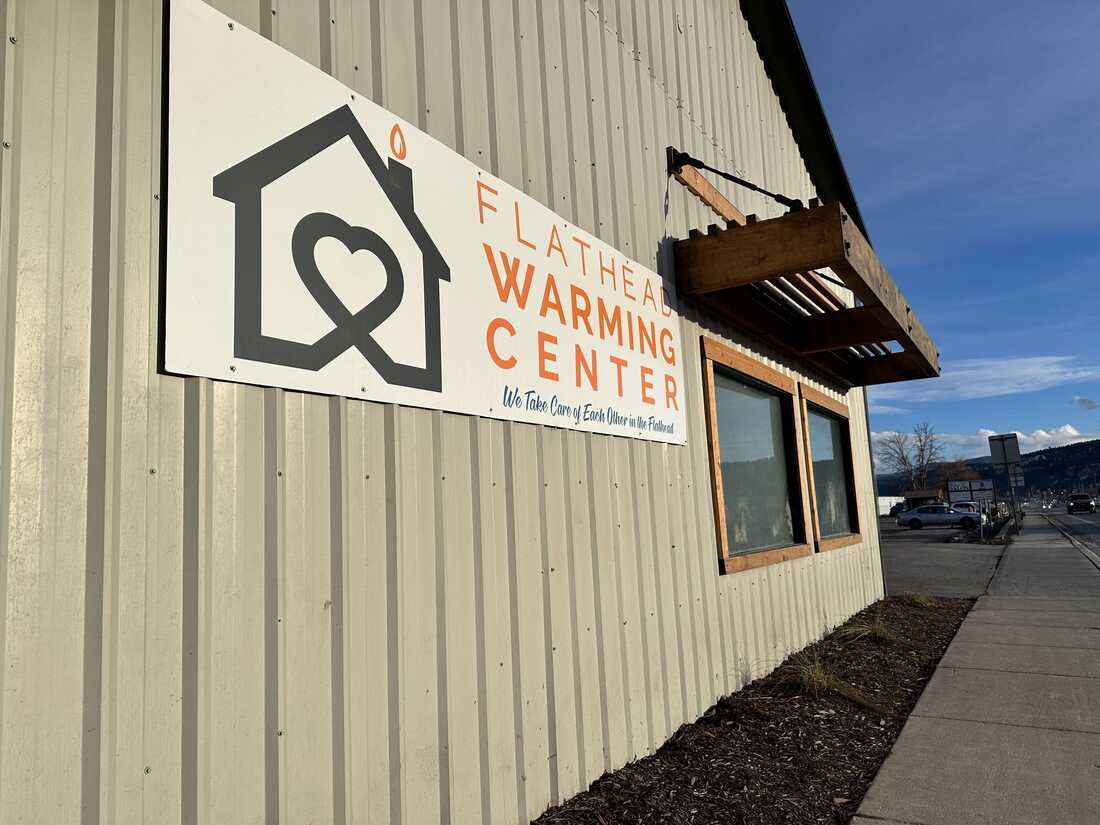
The Flathead Warming Center is a low-barrier shelter in Kalispell, MT. The shelter offers 50 beds for overnight stays and often has to turn people away when it’s at capacity. Aaron Bolton/Montana Public Radio hide caption
toggle caption
Aaron Bolton/Montana Public Radio
The Flathead Warming Center is a low-barrier shelter in Kalispell, MT. The shelter offers 50 beds for overnight stays and often has to turn people away when it’s at capacity.
Aaron Bolton/Montana Public Radio
There’s no public data on how many unhoused people have lost Medicaid in Montana or nationally, but homeless service providers and experts say it’s a big problem.
Those helping unsheltered people who have lost Medicaid coverage say they spend much of their time helping people contact the Montana Medicaid office. Sorting through paperwork mistakes is also a headache, says Crystal Baker, a case manager at HRDC, a homeless shelter in Bozeman.
“We’re getting mail that’s like, ‘Oh, this needs to be turned in by this date,’ and that’s already two weeks past. So, now we have to start the process all over again,” Baker aid. “Now, they have to wait two to three months without insurance.”
In a statement, Montana health officials told NPR and KFF Health News that they provided training for agencies that serve unhoused clients in order to help them prepare those clients for navigating through the redetermination process.
Warning letters and calls for a pause
Federal health officials have warned Montana and some other states against pulling large numbers of people from the Medicaid rolls people for technicalities such as paperwork problems. The agency also warned states for having unreasonable barriers to accessing help, such as long hold times on helplines. The Centers for Medicare & Medicaid Services has told states it could order them to halt their processes, but so far hasn’t done so.
In Montana, Democratic lawmakers called on the state health department to pause the redetermination process, but department director Charlie Brereton resisted. Redetermination ended in January, four months ahead of the federal deadline.
“I’m confident in our redetermination process,” Brereton said. “I do believe that many of the Medicaid members who’ve been disenrolled were disenrolled correctly.”
Weather
This winter’s temperature swings are having health consequences for homeless people
Health industry observers say that homeless people are being removed from the Medicaid rolls in both liberal-leaning and conservative-leaning states, and that the redetermination process has been chaotic everywhere. Because unsheltered people are particularly vulnerable and unable to address bureaucratic barriers, it’s especially easy for them to fall through the cracks and lose coverage.
Why spotty insurance coverage affects health
It may not seem like a big chore to fill out some paperwork, says Dr. Margot Kushel, a physician and a homeless researcher at the University of California-San Francisco. But homeless people live lives of unpredictability and precarity: “Put yourself in the position of an elder experiencing homelessness,” Kushel explains, especially those without access to a computer, a phone, or a car.
If they still qualify, people can usually get their Medicaid coverage renewed — eventually — and it may reimburse retroactively for care received while they were unenrolled.
But being without health coverage for for any period can be risky, Kushel says, and it’s especially dangerous for homeless patients, who have high rates of chronic health conditions.
“Being out of your asthma medicine for three days can be life threatening, Kushel says. “If you have high blood pressure and you suddenly stop your medicine, your blood pressure shoots up, and your risk of having a heart attack goes way up.”
When people don’t understand why they lost coverage or how to get it back, that erodes their trust in the medical system, says Kushel.
Evans, the homeless woman in Kalispell, was able to get help with her application and is likely to regain coverage.
Reenrolling eligible patients could take years
Social service agencies in Montana predict it will take years to get everyone who recently lost coverage, back on Medicaid. They worry that those who go without coverage will resort to using the emergency room rather than managing their health conditions proactively.
Crystal Baker, the case manager at the homeless shelter in Bozeman, Montana, recalled her efforts to help another client re-enroll in Medicaid after he lost coverage due to technical errors. She set up several call-backs for him with state workers, so they could conduct an interview to make sure he still qualified. But the state never called back.
“He waited all day long. By the fifth time, it was so stressful for him, he just gave up,” she says.
That client ended up leaving the Bozeman area before Baker could convince him to keep trying to get back on Medicaid.
Now Baker is left worrying that his health issues will catch up with him first.
This article comes from NPR’s health reporting partnership with MTPR and KFF Health News.
Share this Post
