Explaining Medicine
  • News
  • Health & Lifestyle
    • Diet & Weight Management
    • Exercise & Fitness
    • Nutrition, Food & Recipes
    • Prevention & Wellness
  • Conditions
    • Custom1
      • Conditions A-Z
      • Procedures A-Z
      • Allergies
      • Alzheimer’s
      • Arthritis
      • Asthma
      • Blood Pressure
      • Cholesterol
      • Cancer
    • Custom2
      • Chronic Pain
      • Cold Flu
      • Depression
      • Diabetes
      • Digestion
      • Eyesight
      • Health Living
      • Healthy Kids
      • Hearing Ear
    • Custom3
      • Heart
      • HIV/AIDS
      • Infectious Disease
      • Lung Conditions
      • Menopause
      • Men’s Health
      • Mental Health
      • Migraine
      • Neurology
    • Custom4
      • Oral Health
      • Pregnancy
      • Senior Health
      • Sexual Health
      • Skin Problems
      • Sleep
      • Thyroid
      • Travel Health
      • Women’s Health
  • Medications
    • Medications
    • Supplements and Vitamins
  • Medical Dictionary
  • Health Alerts
Flu shot recommendation for kids dropped just as...
The CDC just sidelined these childhood vaccines. Here’s...
Your next primary care doctor could be online...
In Lodge Grass, Montana, a Crow community works...
RFK Jr.’s new dietary guidelines go all in...
More seniors are becoming homeless. Shelters are trying...
Health officials slash the number of vaccines recommended...
Wegovy obesity pill now available at pharmacies
In the U.S., hunger is often hidden. But...
One doctor’s experience shows the battle for the...
Top Posts

Explaining Medicine

  • News
  • Health & Lifestyle
    • Diet & Weight Management
    • Exercise & Fitness
    • Nutrition, Food & Recipes
    • Prevention & Wellness
  • Conditions
    • Custom1
      • Conditions A-Z
      • Procedures A-Z
      • Allergies
      • Alzheimer’s
      • Arthritis
      • Asthma
      • Blood Pressure
      • Cholesterol
      • Cancer
    • Custom2
      • Chronic Pain
      • Cold Flu
      • Depression
      • Diabetes
      • Digestion
      • Eyesight
      • Health Living
      • Healthy Kids
      • Hearing Ear
    • Custom3
      • Heart
      • HIV/AIDS
      • Infectious Disease
      • Lung Conditions
      • Menopause
      • Men’s Health
      • Mental Health
      • Migraine
      • Neurology
    • Custom4
      • Oral Health
      • Pregnancy
      • Senior Health
      • Sexual Health
      • Skin Problems
      • Sleep
      • Thyroid
      • Travel Health
      • Women’s Health
  • Medications
    • Medications
    • Supplements and Vitamins
  • Medical Dictionary
  • Health Alerts
  • Slideshows

    Appendicitis: Do I Need My Appendix Removed?

    by explainingmedicine October 14, 2016

    What is the appendix?

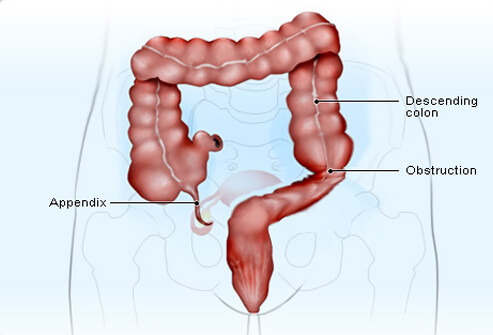
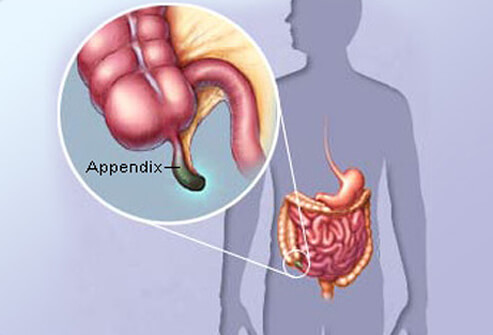
    The appendix is a small, pouch-like sac of tissue that is located in the first part of the colon (cecum) in the lower- right abdomen. Lymphatic tissue in the appendix aids in immune function. The official name of the appendix is veriform appendix, which means "worm-like appendage." The appendix harbors bacteria.
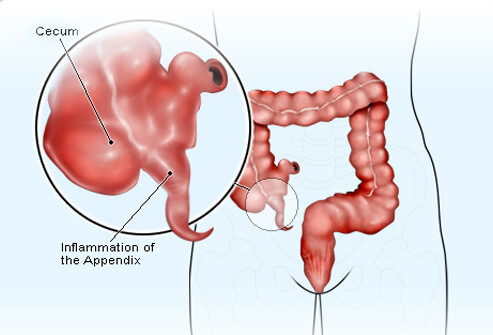

    What is appendicitis?

    The suffix "-itis" means inflammation, so appendicitis is inflammation of the appendix. Appendicitis occurs when mucus, stool, or a combination of the two blocks the opening of the appendix that leads to the cecum. Bacteria proliferate in the trapped space and infect the lining of the appendix. If the inflammation and blockage are severe enough, the tissue of the appendix can die and even rupture or burst, leading to a medical emergency.

    Who is affected by appendicitis?

    Anyone can get appendicitis, but it occurs most often in people between the ages of 10 and 30. About 7% of people in the U.S. experience appendicitis during their lifetime. Very young children and elderly people are at higher risk of complications due to appendicitis. Early recognition and prompt treatment of the condition are necessary, especially in vulnerable populations.

    What are the most frequent complications of appendicitis?

    Delaying the diagnosis and treatment of appendicitis increases the risk of complications. One potential complication -- perforation -- can lead to an accumulation of pus (abscess) around the appendix or an infection that spreads throughout the abdominal lining and that of the pelvis (peritonitis). Surgery should occur as soon as possible after the diagnosis of appendicitis. Longer delays between diagnosis and treatment (surgery) increase the risk of perforation. For example, the risk of perforation 36 hours after appendicitis symptoms first appear is 15% or more.

    What is another complication of appendicitis?

    Sometimes the inflammation associated with appendicitis interferes with the action of the intestinal muscle and prevents bowel contents from moving. Nausea, vomiting, and abdominal distention can occur when liquid and gas build up in the part of the intestine above the blockage. In these cases, the insertion of a nasogastric tube -- a tube that is inserted into the nose and advanced down the esophagus into the stomach and intestines -- may be necessary to drain the contents that cannot pass.

    What are the symptoms of appendicitis?

    One of the first symptoms of appendicitis is abdominal pain that is hard to localize. People with appendicitis typically experience pain in the central part of the abdomen that eventually moves over to the right lower quadrant. Loss of appetite is another early symptom of appendicitis. Nausea and vomiting may occur early in the course of the illness or even later as the result of an intestinal obstruction.

    How is appendicitis diagnosed?

    Doctors diagnose appendicitis based on the patient's symptoms and findings during physical examination. A person with appendicitis usually experiences moderate-to-severe pain when the doctor gently pushes down on the lower right abdomen. A potential indication of peritonitis is "rebound tenderness," which is a worsening of pain when the doctor removes his hand after pressing down on a tender area of the abdomen.

    How is appendicitis treated?

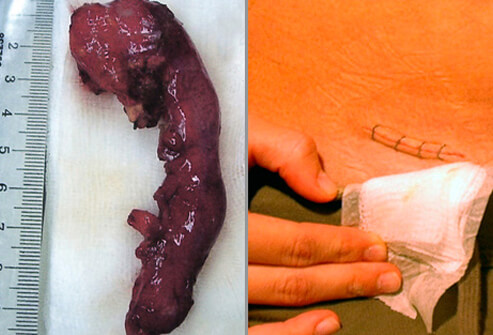
    Surgical removal of the appendix is called an appendectomy. Antibiotics are given to a patient with suspected or confirmed appendicitis both before and after surgery. Appendectomies can be performed laparoscopically, where special surgical tools are advanced into the abdomen via several small incisions. The following is a step-by-step account of an appendectomy.

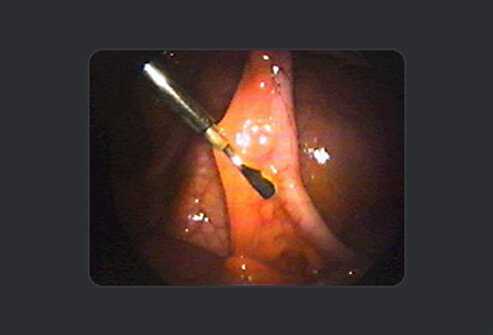
    Appendectomy: Step 1 of 8.

    This image shows a normal appendix in a female patient undergoing surgery for an infection in her reproductive system. Since there is no known function of the appendix and to prevent diagnostic confusion in the future, the surgeon removes it to prevent potential appendicitis in the future.

    Appendectomy: Step 2 of 8.

    To remove the appendix, the surgeon separates it from the mesentery, which is the tissue that delivers blood to the area. Electric current delivered by an instrument called a bipolar forceps is used to seal (cauterize) the blood vessels and prevent bleeding.

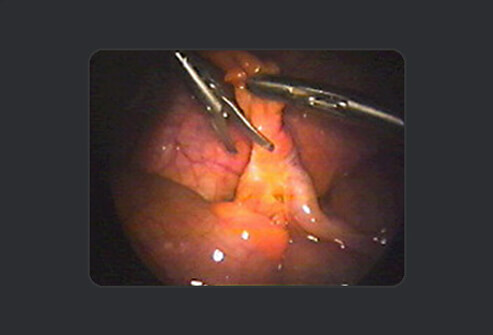
    Appendectomy: Step 3 of 8.

    In the next step, the surgeon uses scissors to snip the appendix free from the mesentery. He alternates between electrocautery (to seal blood vessels) and cutting to completely separate the appendix from the surrounding tissues until the only remaining connection is to the colon.

    Appendectomy: Step 4 of 8.

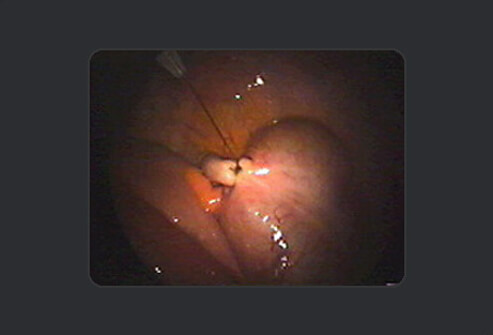
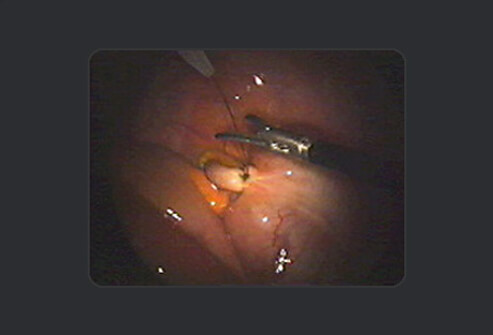
    In the next step, the surgeon crushes the base of the appendix with a clamp and then moves the clamp slightly towards the end of the appendix, positioning a pre-tied suture at the base of the appendix to tie it off.

    Appendectomy: Step 5 of 8.

    The surgeon tightens and secures the suture using a fisherman'’s knot, which can be tightened but is incapable of loosening by itself.

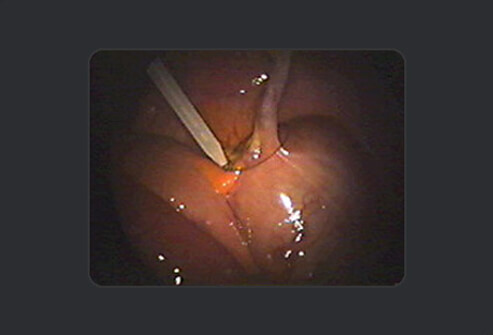
    Appendectomy: Step 6 of 8.

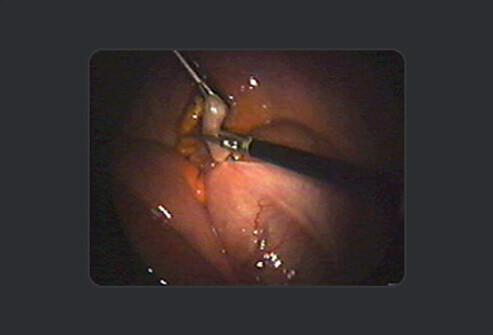
    The surgeon then uses the scissors to cut the suture above the knot.

    Appendectomy: Step 7 of 8.

    The surgeon cuts the appendix with the same scissors above the knot but below the clamp to prevent contamination.

    Appendectomy: Step 8 of 8.

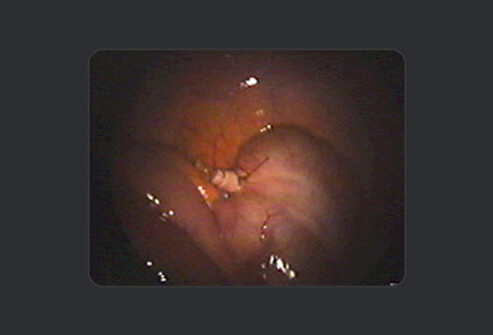
    The surgeon and his surgical team complete one final inspection of the area to ensure there is no bleeding.

    Are there complications and/or long-term consequences of appendectomy?

    Infection at the surgical sites is the most common complication associated with an appendectomy. Redness and pain may be present with a mild infection. Moderate infections may have more severe symptoms. Antibiotics are used to treat mild-to-moderate postsurgical infections. If an abscess develops, drainage may be necessary.

    The appendix plays an uncertain role in adults and older children. Removal of the appendix is not associated with any major long-term health problems. Some studies report an increased risk of certain diseases after an appendectomy. Crohn’s disease, which is an inflammatory intestinal condition, is one such disease.
    0 comment
    0
    Facebook Twitter Google + Pinterest
    explainingmedicine

    previous post
    Pink Eye (Conjunctivitis): Learn About This Common Eye Condition
    next post
    Dental Health: 19 Habits That Wreck Your Teeth

    Related Articles

    Sex-Drive Killers: Causes of Low Libido

    October 14, 2016

    Atrial Fibrillation: Visual Guidelines to Causes, Tests and Treatment

    October 14, 2016

    Travel Health: Vaccines & Preventing Diseases Abroad

    October 14, 2016

    Head Lice: What Parents Should Know

    October 14, 2016

    Healthy Eating in Restaurants: Don’t Abandon Your Diet

    October 14, 2016

    Cold Sores: When Are Cold Sores Contagious?

    October 14, 2016

    Diet and Weight Loss: Low-Carb Snacks

    October 14, 2016

    Skin and Beauty: Anti-Aging Tips & Secrets to Look Younger

    October 14, 2016

    Cold & Flu : The 13 Germiest Places You Need to Know

    October 14, 2016

    Schizophrenia: A Visual Guide to Schizophrenia

    October 14, 2016

    Recent Posts

    • Flu shot recommendation for kids dropped just as the illness rages

      January 12, 2026
    • The CDC just sidelined these childhood vaccines. Here’s what they prevent

      January 9, 2026
    • Your next primary care doctor could be online only, accessed through an AI tool

      January 9, 2026
    • In Lodge Grass, Montana, a Crow community works to rebuild from meth’s destruction

      January 8, 2026
    • RFK Jr.’s new dietary guidelines go all in on meat and dairy

      January 7, 2026

    Keep in touch

    Facebook Twitter Google + RSS

    Recent Posts

    • Flu shot recommendation for kids dropped just as the illness rages

      January 12, 2026
    • The CDC just sidelined these childhood vaccines. Here’s what they prevent

      January 9, 2026
    • Your next primary care doctor could be online only, accessed through an AI tool

      January 9, 2026
    • In Lodge Grass, Montana, a Crow community works to rebuild from meth’s destruction

      January 8, 2026
    • RFK Jr.’s new dietary guidelines go all in on meat and dairy

      January 7, 2026
    • Terms of Service
    • Privacy Policy

    @2026 - Explaining Medicine. All Right Reserved.


    Back To Top
    Explaining Medicine
    Proudly powered by WordPress Theme: soledad child.