Explaining Medicine
  • News
  • Health & Lifestyle
    • Diet & Weight Management
    • Exercise & Fitness
    • Nutrition, Food & Recipes
    • Prevention & Wellness
  • Conditions
    • Custom1
      • Conditions A-Z
      • Procedures A-Z
      • Allergies
      • Alzheimer’s
      • Arthritis
      • Asthma
      • Blood Pressure
      • Cholesterol
      • Cancer
    • Custom2
      • Chronic Pain
      • Cold Flu
      • Depression
      • Diabetes
      • Digestion
      • Eyesight
      • Health Living
      • Healthy Kids
      • Hearing Ear
    • Custom3
      • Heart
      • HIV/AIDS
      • Infectious Disease
      • Lung Conditions
      • Menopause
      • Men’s Health
      • Mental Health
      • Migraine
      • Neurology
    • Custom4
      • Oral Health
      • Pregnancy
      • Senior Health
      • Sexual Health
      • Skin Problems
      • Sleep
      • Thyroid
      • Travel Health
      • Women’s Health
  • Medications
    • Medications
    • Supplements and Vitamins
  • Medical Dictionary
  • Health Alerts
Flu shot recommendation for kids dropped just as...
The CDC just sidelined these childhood vaccines. Here’s...
Your next primary care doctor could be online...
In Lodge Grass, Montana, a Crow community works...
RFK Jr.’s new dietary guidelines go all in...
More seniors are becoming homeless. Shelters are trying...
Health officials slash the number of vaccines recommended...
Wegovy obesity pill now available at pharmacies
In the U.S., hunger is often hidden. But...
One doctor’s experience shows the battle for the...
Top Posts

Explaining Medicine

  • News
  • Health & Lifestyle
    • Diet & Weight Management
    • Exercise & Fitness
    • Nutrition, Food & Recipes
    • Prevention & Wellness
  • Conditions
    • Custom1
      • Conditions A-Z
      • Procedures A-Z
      • Allergies
      • Alzheimer’s
      • Arthritis
      • Asthma
      • Blood Pressure
      • Cholesterol
      • Cancer
    • Custom2
      • Chronic Pain
      • Cold Flu
      • Depression
      • Diabetes
      • Digestion
      • Eyesight
      • Health Living
      • Healthy Kids
      • Hearing Ear
    • Custom3
      • Heart
      • HIV/AIDS
      • Infectious Disease
      • Lung Conditions
      • Menopause
      • Men’s Health
      • Mental Health
      • Migraine
      • Neurology
    • Custom4
      • Oral Health
      • Pregnancy
      • Senior Health
      • Sexual Health
      • Skin Problems
      • Sleep
      • Thyroid
      • Travel Health
      • Women’s Health
  • Medications
    • Medications
    • Supplements and Vitamins
  • Medical Dictionary
  • Health Alerts
  • Slideshows

    Cold Sores: When Are Cold Sores Contagious?

    by explainingmedicine October 14, 2016

    What You Should Know

    Cold sores, also known as fever blisters, can make you feel uncomfortable and self-conscious. What’s worse, it seems like some people get them while others are apparently spared. Even though there is no cure, treatments are available to shorten the duration of the symptoms or bring some relief. This guide will show you how to recognize and manage cold sores.

    Colds Aren’t to Blame

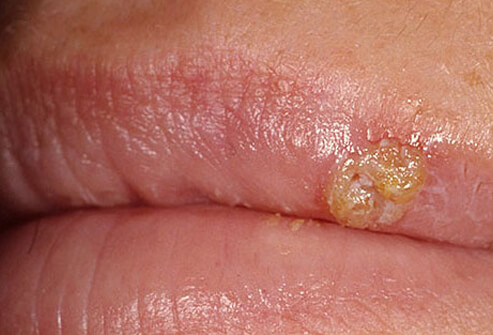
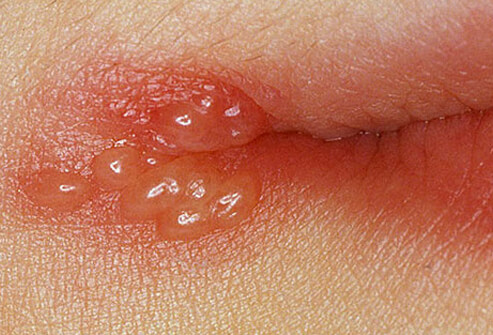
    Cold sores, despite the name, are not caused by the common cold. They are caused by a virus, specifically, the herpes simplex virus (HSV). Cold sores are contagious and are passed to others through direct contact or contact with body fluid. There are two different types of HSV- type 1 and type 2. Type 1 HSV usually caused cold sores. As the virus reproduces, it damages the skin and leads to blister formation that lasts about a week. In between outbreaks of cold sores, the virus remains present in the body inside nerve cells.

    Who Can Get Cold Sores and Why

    Kissing is a common form of transmission of HSV, and estimates suggest that about half the population has been infected with HSV-1. But not everyone who has been infected will develop cold sores. Genetics may play a role in determining who does or doesn't get cold sores; a study in 2008 identified six genes that may increase a person’s risk of getting cold sores.

    Stress Can Be a Trigger

    As mentioned, HSV remains in nerve cells in an inactive state for most of the time. Outbreaks occur when the infection becomes active again. Common triggers for outbreaks include stress, fever, sunlight, and menstruation. Outbreaks can occur as often as monthly in some people, while others are affected less commonly.

    Canker Sores Are Different

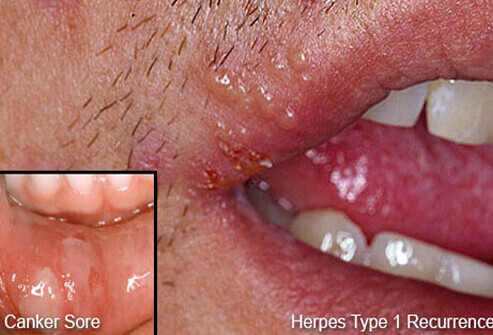
    Sometimes cold sores are confused with canker sores. Canker sores affect the inside of the mouth and are not caused by the herpes virus. In contrast to canker sores, cold sores usually develop on the lip and not inside the mouth. The cause of canker sores is poorly understood, and canker sores are not contagious like cold sores.

    When You're Contagious

    HSV is contagious from the time the skin turns itchy or red until the sores heal. Sometimes, the virus can even be spread through the saliva of an infected person, even if that person does not get cold sores. The most contagious period is the time when blisters are present and just after the blisters have ruptured.

    How Does the Virus Spread?

    HSV spreads through contact with sores or body fluids. Even without obvious sores, the virus is usually present on the lips of an infected person. So kissing remains a major way that the virus is transmitted to other people. HSV-1 is also found in saliva, so sharing drinking glasses or eating utensils can spread the infection. Genital infection with HSV-1 can occur after oral sex.

    How to Avoid Spreading Cold Sores

    Although it may not be completely possible to eliminate the chance of getting cold sores, using caution when sores are present can reduce the possibility of spreading the virus. This means no kissing, no oral sex, and no sharing of toothbrushes, eating utensils, or drinking glasses.

    Relieving Cold Sore Pain

    The initial outbreak of cold sores is usually most severe and can last up to two weeks. Recurrent outbreaks typically last about a week. Some over-the-counter creams or gels can offer pain relief, and some people find hot or cold compresses to be helpful in relief of burning and pain.

    Antiviral Creams

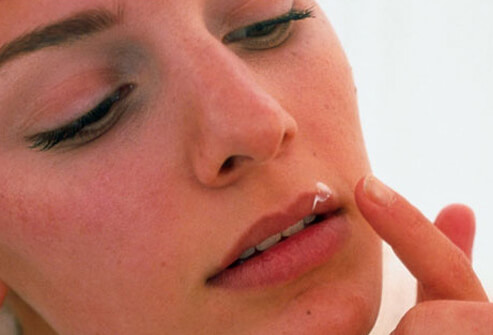
    Antiviral creams may reduce healing time, but these must be applied at the very first sign of an outbreak. Docosanol cream (Abreva) is available over the counter. Prescription creams include acyclovir (Zovirax) and penciclovir (Denavir).

    Prescription Cold Sore Medications

    Oral antiviral drugs can also speed healing time, but like their topical counterparts, they must be taken at the very first sign of an outbreak. Acyclovir (Zovirax) is taken at the first sign of the cold sore, then orally five times daily. Valacyclovir (Valtrex) is taken immediately at the first sign of a cold sore and then 12 hours later. Famciclovir (Famvir) is given as a single dose.

    Is This a Cold Sore?

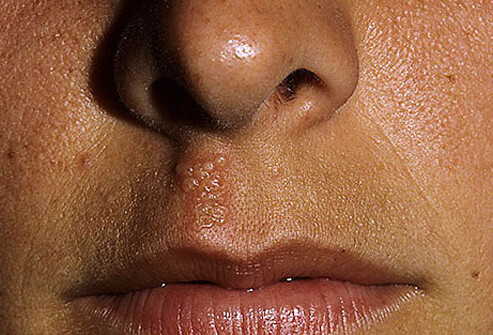
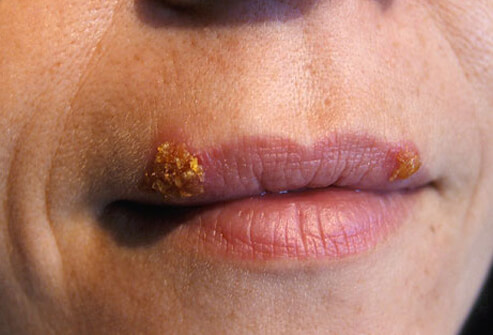
    Cold sores don't always appear on the lips. They can develop in other areas of the face, including the cheek, nose, or chin. Recurrent outbreaks tend to occur at the same location each time.

    Can You Spread It Around Your Body?

    Spread of a cold sore to another part of your body is not common, but it is possible. It can happen by touching a cold sore and then touching an area of broken skin or a mucus membrane (moist lining tissue, as is found in the eyes or vagina). You can prevent this self-spread (known as autoinoculation) by careful hand washing and not touching the cold sore.

    Herpes Eye Infections

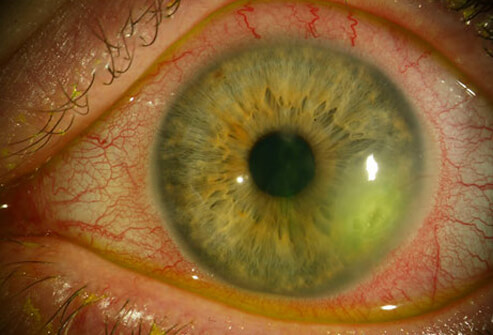
    HSV can infect the eye (ocular herpes) or the finger (herpetic whitlow). Ocular herpes usually involves the cornea and can cause eye damage, including blindness if not treated promptly. Herpetic whitlow usually occurs because of finger or thumb sucking in children with cold sores, or when adults touch the lips or mouth of someone who has cold sores without wearing gloves.

    Outbreak Prevention

    Limiting your exposure to triggers can help reduce cold-sore outbreaks. Use sunscreen and UV-blocking lip protection to avoid sun exposure. Relaxation and stress-management techniques can help reduce stress. Getting plenty of sleep and exercise can ensure your immune system is as healthy as possible.

    When to Visit a Doctor

    If you have frequent or severe outbreaks of cold sores, discuss the condition with your doctor. He or she can recommend medications to reduce the severity of the symptoms and speed the healing process.

    0 comment
    0
    Facebook Twitter Google + Pinterest
    explainingmedicine

    previous post
    Acne: Quick Cover-ups, Do’s and Don’ts
    next post
    Fungal Infections: Fungus Among Us

    Related Articles

    Senior Health: Exercise for Successful Aging

    October 14, 2016

    Urinary Tract Infection: Bladder Infection Symptoms, Causes and Treatments

    October 14, 2016

    Sleep Disorders: Insomnia, Sleep Apnea, and More

    October 14, 2016

    Carpal Tunnel Syndrome: Causes, Symptoms, and Treatment

    October 14, 2016

    ADHD: Daily Living Tips for Adult ADHD

    October 14, 2016

    Dental Health: The Ugly Truth About Your Toothbrush

    October 14, 2016

    Diet Mistakes: 10 Diet Mistakes and How to Avoid Them

    October 14, 2016

    Diet and Weight Loss: 25 Ways to Get Ready for Swimsuit Season

    October 14, 2016

    Lowering Blood Pressure: Exercise Tips for Getting Started

    October 14, 2016

    Baby Health: The Facts About Bottle Feeding

    October 14, 2016

    Recent Posts

    • Flu shot recommendation for kids dropped just as the illness rages

      January 12, 2026
    • The CDC just sidelined these childhood vaccines. Here’s what they prevent

      January 9, 2026
    • Your next primary care doctor could be online only, accessed through an AI tool

      January 9, 2026
    • In Lodge Grass, Montana, a Crow community works to rebuild from meth’s destruction

      January 8, 2026
    • RFK Jr.’s new dietary guidelines go all in on meat and dairy

      January 7, 2026

    Keep in touch

    Facebook Twitter Google + RSS

    Recent Posts

    • Flu shot recommendation for kids dropped just as the illness rages

      January 12, 2026
    • The CDC just sidelined these childhood vaccines. Here’s what they prevent

      January 9, 2026
    • Your next primary care doctor could be online only, accessed through an AI tool

      January 9, 2026
    • In Lodge Grass, Montana, a Crow community works to rebuild from meth’s destruction

      January 8, 2026
    • RFK Jr.’s new dietary guidelines go all in on meat and dairy

      January 7, 2026
    • Terms of Service
    • Privacy Policy

    @2026 - Explaining Medicine. All Right Reserved.


    Back To Top
    Explaining Medicine
    Proudly powered by WordPress Theme: soledad child.