Explaining Medicine
  • News
  • Health & Lifestyle
    • Diet & Weight Management
    • Exercise & Fitness
    • Nutrition, Food & Recipes
    • Prevention & Wellness
  • Conditions
    • Custom1
      • Conditions A-Z
      • Procedures A-Z
      • Allergies
      • Alzheimer’s
      • Arthritis
      • Asthma
      • Blood Pressure
      • Cholesterol
      • Cancer
    • Custom2
      • Chronic Pain
      • Cold Flu
      • Depression
      • Diabetes
      • Digestion
      • Eyesight
      • Health Living
      • Healthy Kids
      • Hearing Ear
    • Custom3
      • Heart
      • HIV/AIDS
      • Infectious Disease
      • Lung Conditions
      • Menopause
      • Men’s Health
      • Mental Health
      • Migraine
      • Neurology
    • Custom4
      • Oral Health
      • Pregnancy
      • Senior Health
      • Sexual Health
      • Skin Problems
      • Sleep
      • Thyroid
      • Travel Health
      • Women’s Health
  • Medications
    • Medications
    • Supplements and Vitamins
  • Medical Dictionary
  • Health Alerts
Flu shot recommendation for kids dropped just as...
The CDC just sidelined these childhood vaccines. Here’s...
Your next primary care doctor could be online...
In Lodge Grass, Montana, a Crow community works...
RFK Jr.’s new dietary guidelines go all in...
More seniors are becoming homeless. Shelters are trying...
Health officials slash the number of vaccines recommended...
Wegovy obesity pill now available at pharmacies
In the U.S., hunger is often hidden. But...
One doctor’s experience shows the battle for the...
Top Posts

Explaining Medicine

  • News
  • Health & Lifestyle
    • Diet & Weight Management
    • Exercise & Fitness
    • Nutrition, Food & Recipes
    • Prevention & Wellness
  • Conditions
    • Custom1
      • Conditions A-Z
      • Procedures A-Z
      • Allergies
      • Alzheimer’s
      • Arthritis
      • Asthma
      • Blood Pressure
      • Cholesterol
      • Cancer
    • Custom2
      • Chronic Pain
      • Cold Flu
      • Depression
      • Diabetes
      • Digestion
      • Eyesight
      • Health Living
      • Healthy Kids
      • Hearing Ear
    • Custom3
      • Heart
      • HIV/AIDS
      • Infectious Disease
      • Lung Conditions
      • Menopause
      • Men’s Health
      • Mental Health
      • Migraine
      • Neurology
    • Custom4
      • Oral Health
      • Pregnancy
      • Senior Health
      • Sexual Health
      • Skin Problems
      • Sleep
      • Thyroid
      • Travel Health
      • Women’s Health
  • Medications
    • Medications
    • Supplements and Vitamins
  • Medical Dictionary
  • Health Alerts
  • Slideshows

    Gout: See & Learn About Gouty Arthritis Attacks

    by explainingmedicine October 14, 2016

    What Is Gout?

    Gout is one of the most frequently referenced medical disorders in the history of mankind. Gout is the result of an abnormality of the body's ability to process uric acid. Uric acid builds up either because of too much uric acid intake (from rich foods such as chocolate, seafood, or red wine) or the body's inability to process it. The uric acid then crystalizes in the joints - mainly the toes, ankles, hands and wrists - causing the painful inflammation of a gouty attack (gouty arthritis). In severe cases, increased uric acid can cause kidney stones and blockages of the kidney filtration system (tubules), and permanent damage to the kidney or even kidney failure.
    Who Is Affected by Gout?

    Gout is more common in men than in women. It is also more common later in life with most patients having attacks after the age of 50. If your parents have gout then you are also at increased risk of getting gout yourself.

    What Are the Risk Factors of Gout?

    Risk factors for gout include:

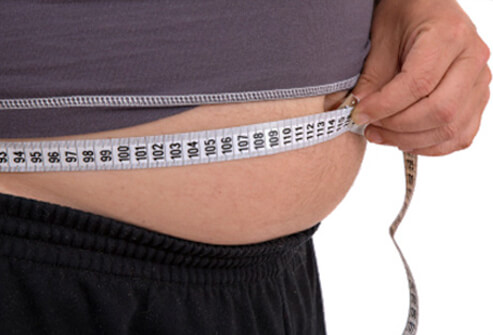
    • Obesity
    • Excessive weight gain
    • Moderate to heavy alcohol intake
    • High blood pressure
    • Abnormal kidney function

    Some medications such as diuretics (water pills), and having low thyroid hormones may also be risk factors for getting gouty attacks.

    What Are Symptoms of Gout?

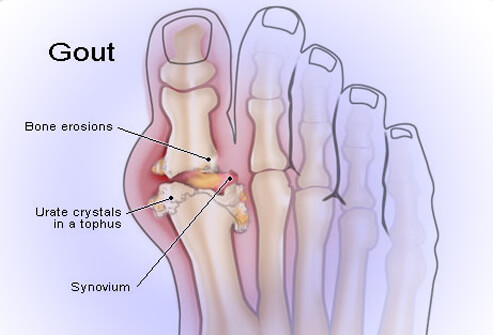
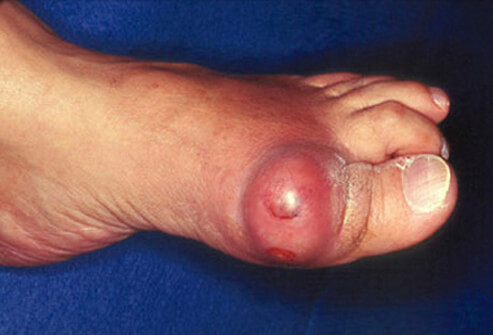
    The large joint at the base of the big toe (first metatarsalphylangeal joint) is the most common site for a gout attack, however, any other joint can be affected. Most commonly other joints affected are the ankles, knees, wrists, fingers, and elbows.

    Patients with gout attacks suffer a rapid onset of pain in the affected joint followed by swelling, redness, and severe tenderness. Some experience pain so intense that even the light touch of a bed sheet on the joint is excruciating. These painful attacks can last from hours to several days. In cases of chronic inflammation the attack may last for weeks. Unfortunately, patients with gout are at risk for repeated attacks of gouty arthritis.

    Gout (Big Toe)

    The large joint at the base of the big toe (first metatarsalphylangeal joint) is the most common site for a gout attack but other joints commonly affected are the ankles, knees, wrists, fingers, and elbows.

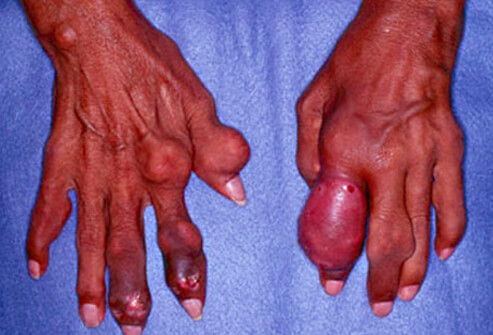
    Gout (Fingers)

    Inflamed lumps of tissue may form in the joint with repeated bouts of gout or prolonged cases. These lumps are called tophi.

    Gout (Elbow)

    Some of the larger joints of the body have a fluid-filled sac around them that act as a shock absorber called a bursa. A bursa also helps with the movement mechanics of the joint. If gout causes inflammation and swelling of the bursa it is called bursitis.

    What Procedure Is Used to Diagnose Gouty Arthritis?

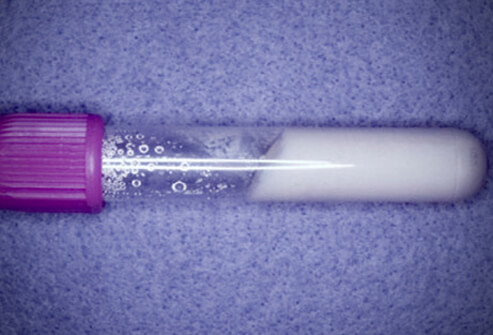
    Gout is usually diagnosed by a doctor based on the location of the inflamed joint and a history of having similar non-traumatic attacks of pain and swelling. The most reliable (but not always necessary) test for confirming gout is an arthrocentesis. Arthrocentes is a procedure where fluid is withdrawn (aspirated) from an inflamed joint with a needle and syringe, using a sterile technique and a local anesthetic such as lidocaine. The fluid is sent to a lab where it is analyzed for the presence of uric acid crystals.

    How Is Gout Diagnosed?

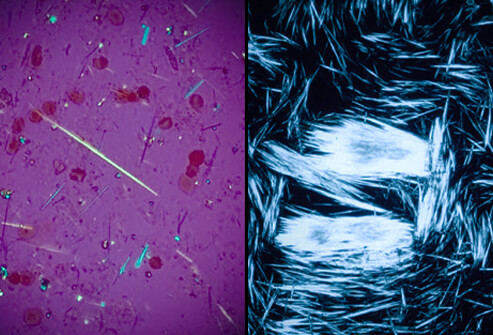
    The fluid withdrawn by an arthrocentesis is analyzed in a lab under a microscope for the presence of uric acid crystals. The fluid analysis can also rule out other causes of inflammation including bacterial infections.

    What Do Uric Acid Crystals Look Like?

    Needle-like uric acid crystals are best viewed with a microscope.

    How Are Gout Attacks Prevented?

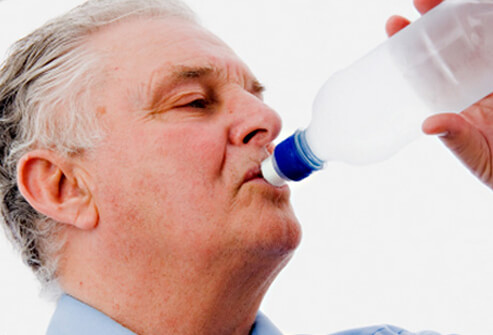
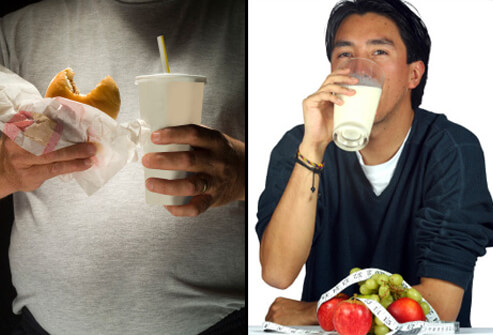
    Staying well hydrated is the best way to prevent gout attacks. Drink plenty of water throughout the day. Proper hydration also decreases the risk of kidney stones or kidney dysfunction as a result of built-up uric acid.

    Avoid alcohol or only drink in extreme moderation if you have had gout attacks in the past. Alcohol affects the body's metabolism of uric acid and can cause it to build up (hyperuricemia). If levels of uric acid build up in your system it can precipitate a gout attack in your joints.

    Additional Prevention Techniques

    Foods rich in purines such as shellfish or organ meats (liver, kidneys, brains, sweetbreads) can lead to gout attacks. The body converts purines into uric acid, which in turn leads to gout attacks.

    Overall weight reduction is also a way to avoid gout attacks. A diet low in fats and calories, combined with a regular exercise regime can help decrease the likelihood of a gout attack.

    What Are the Medical Treatments for Gout?

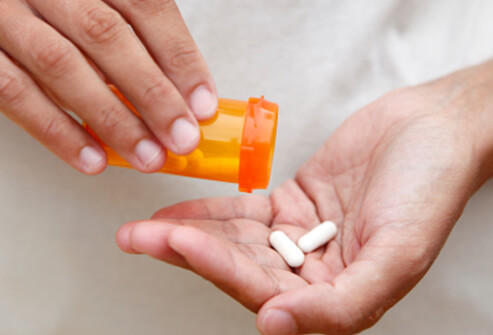
    Gout is a very painful condition. Pain relievers and anti-inflammatory medications are the mainstay of treatment for gout. Nonsteroidal anti-inflammatory drugs (NSAIDs), colchicine (Colcrys), and corticosteroids are used to decrease joint inflammation.

    Other medications such as probenecid (which helps the body excrete excess uric acid) and allopurinol (Zyloprim, Aloprim), (which decreases the amount of uric acid formed by the body) are used for managing the underlying metabolic derangement that causes hyperuricemia and gout. These medicines decrease the elevated levels of uric acid in the blood.

    What Does the Future Hold for Gout?

    Research is ongoing to find new strategies to prevent gout. New drugs are being developed to keep the body from having high uric acid levels and decrease the likelihood of a painful gout attack.

    0 comment
    0
    Facebook Twitter Google + Pinterest
    explainingmedicine

    previous post
    Chronic Fatigue Syndrome: Symptoms, Diagnosis, and Treatment
    next post
    Osteoarthritis (OA): Treatment, Symptoms, Diagnosis

    Related Articles

    Cat Health: Taking Care of Your Kitten

    October 14, 2016

    Cold & Flu : The 13 Germiest Places You Need to Know

    October 14, 2016

    Ringworm: Does Ringworm Mean I Have Worms?

    October 14, 2016

    Weight Gain Shockers: Surprising Reasons You’re Gaining Weight

    October 14, 2016

    Thyroid: Common Thyroid Problems Explained

    October 14, 2016

    Stress Relief: 10 Ways to Stop Stress

    October 14, 2016

    Diabetic Peripheral Neuropathy: Exercises to Improve Diabetes Nerve Pain

    October 14, 2016

    Respiratory Health: 10 Worst Smog Cities in America

    October 14, 2016

    Exercise and Fitness: The 7-Minute Workout

    October 14, 2016

    Cat Health: Foods Harmful to Cats

    October 15, 2016

    Recent Posts

    • Flu shot recommendation for kids dropped just as the illness rages

      January 12, 2026
    • The CDC just sidelined these childhood vaccines. Here’s what they prevent

      January 9, 2026
    • Your next primary care doctor could be online only, accessed through an AI tool

      January 9, 2026
    • In Lodge Grass, Montana, a Crow community works to rebuild from meth’s destruction

      January 8, 2026
    • RFK Jr.’s new dietary guidelines go all in on meat and dairy

      January 7, 2026

    Keep in touch

    Facebook Twitter Google + RSS

    Recent Posts

    • Flu shot recommendation for kids dropped just as the illness rages

      January 12, 2026
    • The CDC just sidelined these childhood vaccines. Here’s what they prevent

      January 9, 2026
    • Your next primary care doctor could be online only, accessed through an AI tool

      January 9, 2026
    • In Lodge Grass, Montana, a Crow community works to rebuild from meth’s destruction

      January 8, 2026
    • RFK Jr.’s new dietary guidelines go all in on meat and dairy

      January 7, 2026
    • Terms of Service
    • Privacy Policy

    @2026 - Explaining Medicine. All Right Reserved.


    Back To Top
    Explaining Medicine
    Proudly powered by WordPress Theme: soledad child.