Explaining Medicine
  • News
  • Health & Lifestyle
    • Diet & Weight Management
    • Exercise & Fitness
    • Nutrition, Food & Recipes
    • Prevention & Wellness
  • Conditions
    • Custom1
      • Conditions A-Z
      • Procedures A-Z
      • Allergies
      • Alzheimer’s
      • Arthritis
      • Asthma
      • Blood Pressure
      • Cholesterol
      • Cancer
    • Custom2
      • Chronic Pain
      • Cold Flu
      • Depression
      • Diabetes
      • Digestion
      • Eyesight
      • Health Living
      • Healthy Kids
      • Hearing Ear
    • Custom3
      • Heart
      • HIV/AIDS
      • Infectious Disease
      • Lung Conditions
      • Menopause
      • Men’s Health
      • Mental Health
      • Migraine
      • Neurology
    • Custom4
      • Oral Health
      • Pregnancy
      • Senior Health
      • Sexual Health
      • Skin Problems
      • Sleep
      • Thyroid
      • Travel Health
      • Women’s Health
  • Medications
    • Medications
    • Supplements and Vitamins
  • Medical Dictionary
  • Health Alerts
Flu shot recommendation for kids dropped just as...
The CDC just sidelined these childhood vaccines. Here’s...
Your next primary care doctor could be online...
In Lodge Grass, Montana, a Crow community works...
RFK Jr.’s new dietary guidelines go all in...
More seniors are becoming homeless. Shelters are trying...
Health officials slash the number of vaccines recommended...
Wegovy obesity pill now available at pharmacies
In the U.S., hunger is often hidden. But...
One doctor’s experience shows the battle for the...
Top Posts

Explaining Medicine

  • News
  • Health & Lifestyle
    • Diet & Weight Management
    • Exercise & Fitness
    • Nutrition, Food & Recipes
    • Prevention & Wellness
  • Conditions
    • Custom1
      • Conditions A-Z
      • Procedures A-Z
      • Allergies
      • Alzheimer’s
      • Arthritis
      • Asthma
      • Blood Pressure
      • Cholesterol
      • Cancer
    • Custom2
      • Chronic Pain
      • Cold Flu
      • Depression
      • Diabetes
      • Digestion
      • Eyesight
      • Health Living
      • Healthy Kids
      • Hearing Ear
    • Custom3
      • Heart
      • HIV/AIDS
      • Infectious Disease
      • Lung Conditions
      • Menopause
      • Men’s Health
      • Mental Health
      • Migraine
      • Neurology
    • Custom4
      • Oral Health
      • Pregnancy
      • Senior Health
      • Sexual Health
      • Skin Problems
      • Sleep
      • Thyroid
      • Travel Health
      • Women’s Health
  • Medications
    • Medications
    • Supplements and Vitamins
  • Medical Dictionary
  • Health Alerts
  • Slideshows

    Multiple Sclerosis: Diagnosing Multiple Sclerosis (MS)

    by explainingmedicine October 14, 2016

    What Is MS?

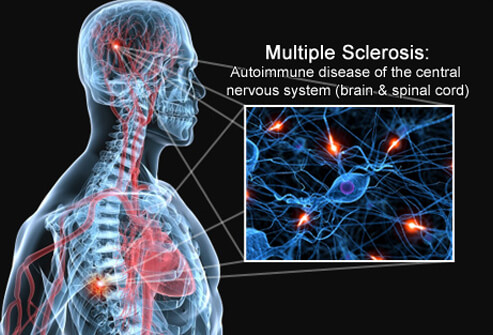
    Multiple sclerosis (MS) is an autoimmune disease in which the body's immune system attacks its own central nervous system (the brain and spinal cord). In MS, the immune system attacks and damages or destroys the myelin, a substance that surrounds and insulates the nerves. The myelin destruction causes a distortion or interruption in nerve impulses traveling to and from the brain. This results in a wide variety of symptoms.


    Who Can Get Multiple Sclerosis?

    Multiple sclerosis is estimated to affect 2.3 million people worldwide. Most people are diagnosed between the ages of 20 to 50, though it can also occur in young children and the elderly.


    MS in Women

    Multiple sclerosis is three times more common in women than in men. In addition, nearly all women afflicted with MS get the condition before menopause. This could mean that hormones play an important role in the disease’s development.


    MS in Men

    Usually, MS in men is more severe than it is in women. They typically get MS in their 30s and 40s, just as their testosterone levels begin to decline.

    Although MS is more common in women than men overall, one form of the disease contradicts this pattern. People with primary progressive (PP) MS are about as likely to be male as female. (The four main types of MS are described later).


    Multiple Sclerosis and Smoking

    People who smoke are more likely to develop MS, and to develop it more severely and with a faster progression.

    MS is more prevalent among Caucasians than other ethnicities. MS is believed to have a genetic component as people with a first-degree relative with the disease have a higher incidence than the general population.

    Multiple Sclerosis Causes

    The exact cause of multiple sclerosis is unknown, but it is believed to be some combination of immunologic, environmental, infectious, or genetic factors. Researchers are examining the possible role of viruses in the cause of MS, but this is still unproven.


    Finding the MS Cause: Many Approaches

    A range of scientific disciplines are being employed to find the cause of MS. Immunologists, epidemiologists and geneticists are all working to narrow in on the cause of multiple sclerosis.

    One unusual finding that has emerged is that MS occurs more frequently the farther people live from the equator. This suggests a possible connection between the condition and vitamin D deficiency.

    How MS Attacks the Body

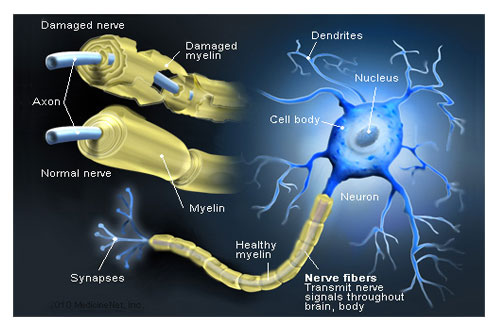
    Multiple sclerosis (MS) is an autoimmune disorder where the immune system mistakenly perceives its own myelin (the sheath around the nerves) as an intruder and attacks it, as it would a virus or other foreign infectious agent. To understand how this harms the body, it helps to understand how nerves work.


    Nerve Anatomy

    A nerve can be seen by the naked eye, but it is made up of hundreds or even thousands of microscopic nerve fibers wrapped by connective tissue. Nerves conduct messages to and from the brain by way of electrical impulses.

    Often the nerve fibers that make up a nerve are all individually wrapped in myelin, a protective sheath that causes electric impulses to conduct down the nerve much faster than fibers that lack myelin. (The same principle is used to improve electric wires by covering them with a plastic outer layer.)


    How Does MS Destroy Myelin?

    In multiple sclerosis, the immune system’s T cells attack the myelin sheath. By attacking myelin, the immune system in a person with MS causes inflammation and degeneration of the myelin that can lead to demyelination, or stripping of the myelin covering of the nerves. It can also cause scarring (the “sclerosis” in the name “multiple sclerosis”). This causes electrical impulses to travel more slowly along the nerves resulting in deterioration of function in body processes such as vision, speech, walking, writing, and memory.

    Is Multiple Sclerosis Inherited?

    While multiple sclerosis is not hereditary, genetics are believed to play a role. In the U.S., the chances of developing MS are one in 750. Having a first-degree relative (parent, sibling) increases the risk to up to 5%. An identical twin of someone with MS has a 25% chance of being diagnosed with the disorder. It is thought there is an outside trigger and genetics only makes certain people susceptible to getting MS. which is why the disease is not considered hereditary. Genes may make a person more likely to develop the disease, but it is believed that there still is an additional outside trigger that makes it happen.

    Types of MS

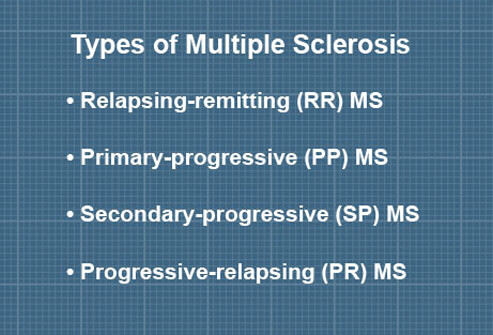
    There are four different types of multiple sclerosis that have been identified and each type can have symptoms ranging from mild to severe. The different types of MS can help predict the course of the disease and the patient's response to treatment. The four types of MS are discussed on the next four slides.

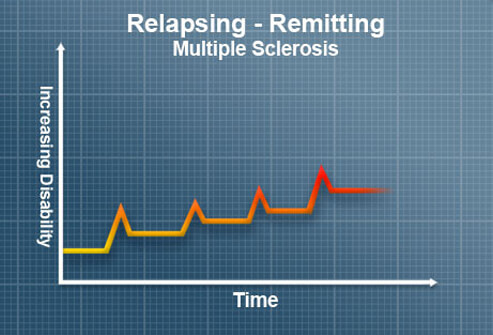
    Relapsing-Remitting (RR) MS

    Relapsing-remitting multiple sclerosis (RR-MS) is the most common type of MS, affecting about 85% of MS sufferers. RR-MS is defined by inflammatory attacks on the myelin and nerve fibers causing a worsening of neurologic function. Symptoms vary from patient to patient, and symptoms can flare up (called relapses or exacerbations) unexpectedly, and then disappear (remission).


    Common Symptoms of RR MS

    • Fatigue
    • Numbness
    • Vision problems
    • Muscle spasms or stiffness
    • Bowel and bladder function problems
    • Cognitive difficulties

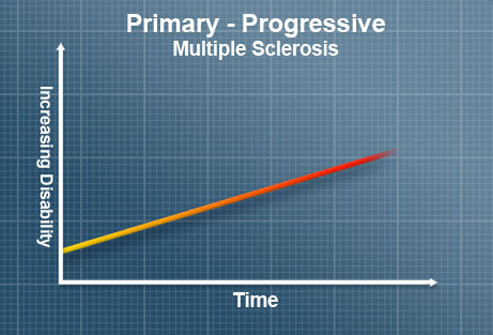
    Primary-Progressive (PP) MS

    Primary-progressive multiple sclerosis (PP-MS) is characterized by steady worsening of neurologic functioning, without any relapses or remissions. There may be occasional plateaus, but overall the progression of the disability is continuous. This form of MS occurs equally in men and women, and the age of onset is about 10 years later than in relapsing-remitting MS.

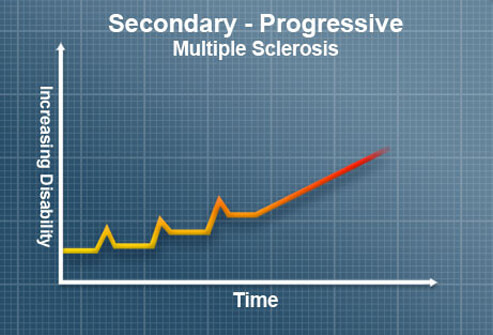
    Secondary-Progressive (SP) MS

    Secondary-progressive multiple sclerosis (SP-MS) is a form of MS that follows relapsing-remitting MS. The majority of people diagnosed with RR-MS will eventually transition to having SP-MS. After a period of relapses (also called attacks, or exacerbations) and remissions the disease will start to progress steadily. People with SP-MS may or may not experience remissions.

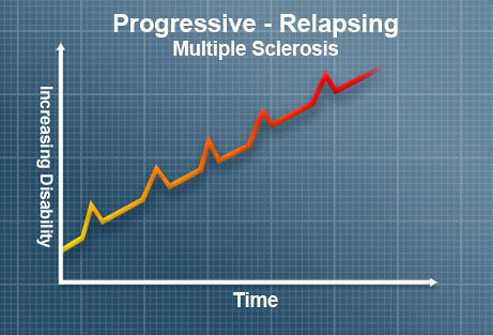
    Progressive-Relapsing (PR) MS

    Progressive-relapsing multiple sclerosis (PR-MS) is the least common form of MS, occurring in about 5% of MS patients. People with PR-MS experience steady disease progression and worsening neurological function as seen in primary-progressive multiple sclerosis (PP-MS), along with occasional relapses like people with relapsing-remitting multiple sclerosis (RR-MS).

    MS Symptoms

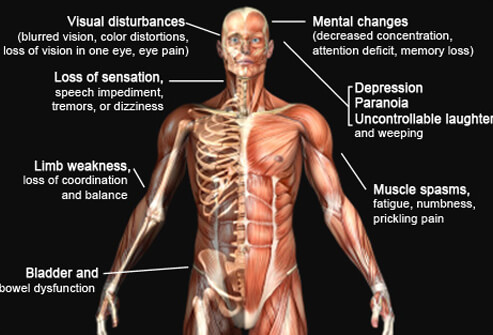
    Symptoms of multiple sclerosis may be single or multiple and may range from mild to severe in intensity and from short to long in duration.

    List of MS Symptoms

    • Fatigue
    • Numbness or tingling
    • Weakness
    • Dizziness or vertigo
    • Sexual dysfunction
    • Pain
    • Emotional instability
    • Difficulty walking
    • Muscle spasms
    • Vision problems
    • Bladder or bowel problems
    • Cognitive changes
    • Depression

    Multiple Sclerosis Diagnosis

    Multiple sclerosis is often difficult to diagnose as symptoms are so varied and can resemble other diseases. It is often diagnosed by a process of exclusion – that is, by ruling out other neurological diseases – so the diagnosis of MS may take months to years. A physician will do a complete history and neurological exam, along with tests to evaluate mental, emotional and language functions, strength, coordination, balance, reflexes, gait, and vision.


    Tests to Confirm a Multiple Sclerosis Diagnosis

    • MRI
    • Electrophysiological test
    • Cerebrospinal fluid exam (spinal tap, lumbar puncture)
    • Evoked potential (EP) tests
    • Blood tests

    Multiple Sclerosis Diagnosis and MRIs

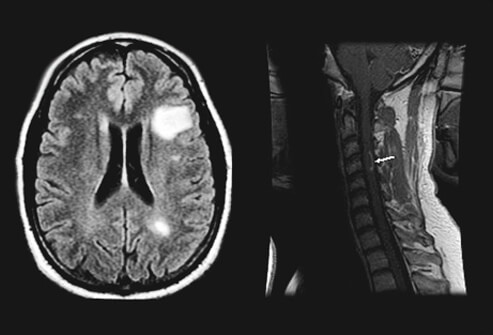
    One of the main ways to diagnose multiple sclerosis is an MRI (magnetic resonance imaging) scan. Characteristic areas of demyelination will show up as lesions on an MRI scan. On the left is a brain MRI scan of a 35-year-old man with relapsing remitting multiple sclerosis that reveals multiple lesions with high T2 signal intensity and one large white matter lesion. The right image shows the cervical spinal cord of a 27-year-old woman representing a multiple sclerosis demyelination and plaque (see arrow).

    Multiple Sclerosis Treatment

    There are several aspects to treating multiple sclerosis.

    • Modifying the disease – there are several drugs that can reduce the severity and frequency of relapses
    • Treating exacerbations (or attacks) with high dose corticosteroids
    • Managing symptoms
    • Rehabilitation both for fitness and to manage energy levels
    • Emotional support

    Multiple Sclerosis Drug Treatment

    Treatment for multiple sclerosis may include drugs to manage attacks, symptoms, or both. Many medications carry the risk of some side effects so patients need to manage their treatment with their doctors.


    Corticosteroids for MS

    Corticosteroids are drugs that reduce inflammation in the body and affect the function of the immune system. They are often used to manage MS attacks, but can have numerous side effects.


    Side Effects of Short-Term Corticosteroid Use

    • Fluid retention
    • Potassium loss
    • Stomach distress
    • Weight gain
    • Changes in emotions

    Side Effects of Long-Term Corticosteroid Use

    • Osteoporosis
    • Adrenal insufficiency
    • Psychosis
    • Immunosuppression
    • Peptic ulcer
    • High blood pressure (hypertension)
    • Insomnia
    • Menstrual irregularities
    • Acne
    • Skin atrophy
    • Elevated blood sugar
    • Abnormal appearance of the face (Cushingoid face)
    • Increased risk of infection
    • Cataracts

    Multiple Sclerosis Drug Treatment: Medications

    There are currently 10 medications approved for disease modification

    Interferons for relapsing MS

    • Interferon beta-1b (Betaseron and Extavia)
    • Interferon beta-1a (Rebif)
    • Interferon beta-1a (Avonex)

    Other medications approved for relapsing MS

    • Glatiramer acetate (Copaxone)
    • Natalizumab (Tysabri)
    • Mitoxantrone (Novantrone)
    • Fingolimod (Gilenya)
    • Teriflunomide (Aubagio)
    • Dimethyl fumarate (Tecfidera)

    Treating Emotional and Physical MS Symptoms

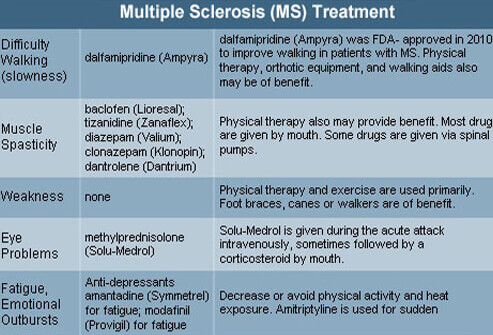
    Many medications are used to treat and manage symptoms associated with multiple sclerosis. Here are some common multiple sclerosis symptoms, followed by the medical treatments often used to treat them.


    Difficulty (Slowness) Walking

    • Dalfampridine (Ampyra)

    Muscle Spasticity

    • Baclofen (Lioresal)
    • Tizanidine (Zanaflex)
    • Diazepam (Valium)
    • Clonazepam (Klonopin)
    • Dantrolene (Dantrium)

    Weakness

    • No treatment

    Eye Problems

    • Methylprednisolone (Solu-Medrol): Solu-Medrol is given intravenously during the acute attack, sometimes followed up with an oral corticosteroid.

    Emotional Outbursts

    • Various anti-depressants

    Fatigue

    • Amantadine (Symmetrel)
    • Modafinil (Provigil)

    Treating Physical MS Symptoms (Continued)

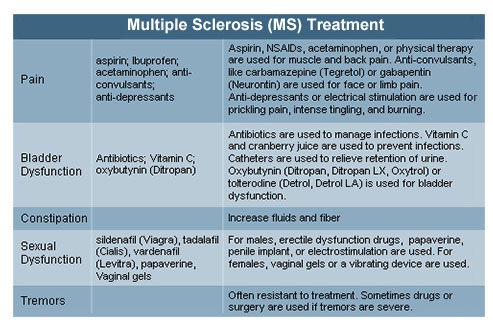
    Continued from the last slide, here are some common multiple sclerosis symptoms, followed by the medical treatments often used to treat them.

    Pain

    • Aspirin
    • Ibuprofen
    • Acetaminophen
    • Anti-convulsants: Anti-convulsants like carbamazepine (Tegretol) or gabapentin (Neurontin) are used for face or limb pain.
    • Anti-depressants: Anti-depressants or electrical stimulation are used for pricking pain, intense tingling, and burning.

    Bladder Dysfunction

    • Antibiotics: Antibiotics are used to manage infections
    • Vitamin C: Vitamin C and cranberry juice are used to prevent infections
    • Oxybutynin (Ditropan): Used for bladder dysfunction

    Constipation

    • This is usually treated by increasing fluids and fiber to the diet

    Sexual Dysfunction

    • Sildenafil (Viagra)
    • Tadalafil (Cialis)
    • Vardenafil (Levitra)
    • Papaverine
    • Vaginal gels

    Tremors

    • Often resistant to treatment. Sometimes drugs or surgery are used if tremors are severe

    Current Research Into MS

    There has been a lot of progress over the years in managing multiple sclerosis, and research is ongoing into new therapies. There are several new avenues of research including techniques to allow brain cells to generate new myelin or prevent the death of nerves. Other research involves use of stem cells that might be implanted into the brain or spinal cord to regrow the cells that have been destroyed by the disease. Some therapies being investigated include methods that would improve the nerve impulse signals. In addition the effects of diet and the environment on multiple sclerosis are being investigated.

    Fast Facts About MS

    • Multiple sclerosis (MS) is an autoimmune disease that progressively damages the nerves of the brain and spinal cord.
    • Any sensory or motor (muscular) function in the body may be affected by the nerves damaged from MS.
    • The cause of multiple sclerosis is unknown, but it is believed to be a combination of genetic, immunological, infectious, and/or environmental factors.
    • There are four different types of multiple sclerosis and symptoms range from mild to severe. The different types of MS can help predict the course of the disease and, to some degree, the patient's response to treatment.
    0 comment
    0
    Facebook Twitter Google + Pinterest
    explainingmedicine

    previous post
    Epilepsy: Symptoms, Stages and Treatment
    next post
    Breast Cancer: 10 Things Young Women Should Know

    Related Articles

    Pain: Surprising Reasons You’re in Pain

    October 14, 2016

    Parenting: 10 Principles of Good Parenting

    October 14, 2016

    Cholesterol Levels: Lowering Your Cholesterol

    October 14, 2016

    Sexual Health: Your Sex Life After Baby

    October 14, 2016

    Pet Health & You: Best Dog Breed for Your Health and Personality

    October 14, 2016

    Cosmetic Surgery: Before and After Pictures

    October 14, 2016

    Home Health: Surprising Sources of Indoor Air Pollution

    October 14, 2016

    Eye Diseases: Recognize These Common Eye Conditions

    October 14, 2016

    Hair and Beauty: Best Hairstyles for Your Hair Type

    October 15, 2016

    Celebrities With Migraines: See how they cope and relieve the pain

    October 14, 2016

    Recent Posts

    • Flu shot recommendation for kids dropped just as the illness rages

      January 12, 2026
    • The CDC just sidelined these childhood vaccines. Here’s what they prevent

      January 9, 2026
    • Your next primary care doctor could be online only, accessed through an AI tool

      January 9, 2026
    • In Lodge Grass, Montana, a Crow community works to rebuild from meth’s destruction

      January 8, 2026
    • RFK Jr.’s new dietary guidelines go all in on meat and dairy

      January 7, 2026

    Keep in touch

    Facebook Twitter Google + RSS

    Recent Posts

    • Flu shot recommendation for kids dropped just as the illness rages

      January 12, 2026
    • The CDC just sidelined these childhood vaccines. Here’s what they prevent

      January 9, 2026
    • Your next primary care doctor could be online only, accessed through an AI tool

      January 9, 2026
    • In Lodge Grass, Montana, a Crow community works to rebuild from meth’s destruction

      January 8, 2026
    • RFK Jr.’s new dietary guidelines go all in on meat and dairy

      January 7, 2026
    • Terms of Service
    • Privacy Policy

    @2026 - Explaining Medicine. All Right Reserved.


    Back To Top
    Explaining Medicine
    Proudly powered by WordPress Theme: soledad child.