Explaining Medicine
  • News
  • Health & Lifestyle
    • Diet & Weight Management
    • Exercise & Fitness
    • Nutrition, Food & Recipes
    • Prevention & Wellness
  • Conditions
    • Custom1
      • Conditions A-Z
      • Procedures A-Z
      • Allergies
      • Alzheimer’s
      • Arthritis
      • Asthma
      • Blood Pressure
      • Cholesterol
      • Cancer
    • Custom2
      • Chronic Pain
      • Cold Flu
      • Depression
      • Diabetes
      • Digestion
      • Eyesight
      • Health Living
      • Healthy Kids
      • Hearing Ear
    • Custom3
      • Heart
      • HIV/AIDS
      • Infectious Disease
      • Lung Conditions
      • Menopause
      • Men’s Health
      • Mental Health
      • Migraine
      • Neurology
    • Custom4
      • Oral Health
      • Pregnancy
      • Senior Health
      • Sexual Health
      • Skin Problems
      • Sleep
      • Thyroid
      • Travel Health
      • Women’s Health
  • Medications
    • Medications
    • Supplements and Vitamins
  • Medical Dictionary
  • Health Alerts
Flu shot recommendation for kids dropped just as...
The CDC just sidelined these childhood vaccines. Here’s...
Your next primary care doctor could be online...
In Lodge Grass, Montana, a Crow community works...
RFK Jr.’s new dietary guidelines go all in...
More seniors are becoming homeless. Shelters are trying...
Health officials slash the number of vaccines recommended...
Wegovy obesity pill now available at pharmacies
In the U.S., hunger is often hidden. But...
One doctor’s experience shows the battle for the...
Top Posts

Explaining Medicine

  • News
  • Health & Lifestyle
    • Diet & Weight Management
    • Exercise & Fitness
    • Nutrition, Food & Recipes
    • Prevention & Wellness
  • Conditions
    • Custom1
      • Conditions A-Z
      • Procedures A-Z
      • Allergies
      • Alzheimer’s
      • Arthritis
      • Asthma
      • Blood Pressure
      • Cholesterol
      • Cancer
    • Custom2
      • Chronic Pain
      • Cold Flu
      • Depression
      • Diabetes
      • Digestion
      • Eyesight
      • Health Living
      • Healthy Kids
      • Hearing Ear
    • Custom3
      • Heart
      • HIV/AIDS
      • Infectious Disease
      • Lung Conditions
      • Menopause
      • Men’s Health
      • Mental Health
      • Migraine
      • Neurology
    • Custom4
      • Oral Health
      • Pregnancy
      • Senior Health
      • Sexual Health
      • Skin Problems
      • Sleep
      • Thyroid
      • Travel Health
      • Women’s Health
  • Medications
    • Medications
    • Supplements and Vitamins
  • Medical Dictionary
  • Health Alerts
  • Slideshows

    Baby Health: The Facts About Bottle Feeding

    by explainingmedicine October 14, 2016

    Glass or Plastic Bottles?

    Your baby may give you clues about which he likes better. Some things to consider: Plastic bottles are lighter than glass and are shatterproof. But they may not last as long as glass. In the past, some parents chose glass to avoid a chemical called bisphenol A (BPA) that is used in some plastic bottles. Now, all plastic bottles sold in the U.S. are BPA-free.


    What to Know About Nipples

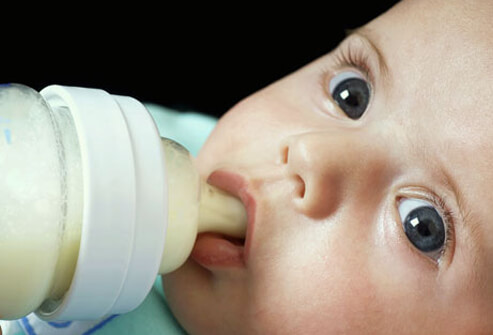
    Most are made of silicone or latex, and they come in various shapes. They sometimes have different "flow rates," based on the size of the nipple's hole. You may want to try several types to see what your baby likes and can drink easily from. Check nipples often for signs of wear or cracking. Replace any that are worn or discolored.

    Wash Bottles and Nipples

    You can wash them with detergent and hot water, by hand or in the dishwasher. Do it each time you use them. You may prefer to wash plastic bottles by hand, since some studies show that chemicals leak from plastic when it's exposed to hot temperatures. Most experts feel there's no need to boil bottles.

    Stick to Breast Milk or Formula

    Give your newborn only pumped breast milk or formula in the bottle -- no water or juice. Mix formula exactly as it says on the label. Adding too much water thins the formula, skimping on nutrition. And it may cause low salt in the baby, which can lead to seizures. Too little water may be hard for your little one's stomach and kidneys.

    How to Choose a Formula

    Most parents start with one made from cow's milk. You can also buy soy and hypoallergenic kinds. Make sure you use one that's iron-fortified. You can buy formula in powdered, concentrated, or ready-to-use forms. By 6 months, your baby should be drinking between 6 and 8 ounces per feeding.

    Warm or Room Temperature?

    It's fine to give your baby a cool or room-temperature bottle. If he prefers warm formula, put the filled bottle in warm water or run hot tap water over it for 1-2 minutes. Or you could use a bottle warmer. Don't use the microwave. It can cause hot spots that could burn your baby's mouth. Shake the formula and put a drop on the top of your hand to test the temperature. Don't test it on your wrist -- it's less sensitive to heat.

    How to Hold Your Baby

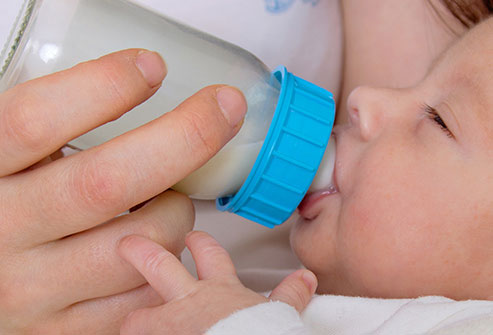
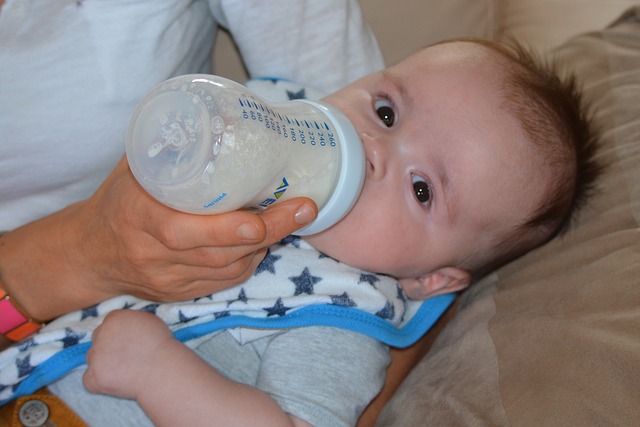
    Put a bib on him, and have a cloth ready to clean any spit-up breast milk or formula. Now, cradle him with his head a bit higher than the rest of his body. Hold the bottle and watch him eat. Watching your baby will help you know when he’s finished. Try to burp him halfway through the feed to help limit spit-up.

    Keep a Grip on the Bottle

    When you're tired, it can be tempting to prop up the bottle on a pillow and let your baby feed herself. But there are lots of perks if you hold the bottle while she eats. It’s great for bonding, and it’s safer. Leaving your baby with a propped-up bottle makes choking and tooth decay more likely. It can also cause ear infections. So enjoy your bottle time!

    How Do You Know When Baby's Done?

    Your little one will let you know when she's finished feeding. She may stop sucking, turn away from the bottle, or, if she's old enough, push the bottle away. Give her a chance to change her mind, but don't make her finish what's in the bottle. If your baby tends to spit up after feeds, you may need to give her less.

    How to Burp Her

    If your baby needs a burp during or after feeding, hold her on your lap or rest her on your shoulder. Gently pat or rub her back. You can also lay her tummy-down on your lap, supporting her head, while you pat her back. She may spit up some milk, so have a cloth handy. If she doesn't burp after a few minutes but seems content, don't worry. Not every baby burps after every feeding.

    Cut Down on Spit Up

    If your baby spits up a lot, burp her every few minutes during feedings. Don't lay her down or play with her for 45 minutes after she eats. Hold her upright or prop her up in a car seat after the meal. Spitting up often gets better when a baby starts sitting up. If you're worried about how much she spits up, talk to her pediatrician.

    Should You Switch Formulas?

    If your baby spits up a lot or is fussy, you might blame the formula. Sometimes, babies can have allergies that can cause things like diarrhea, vomiting, or dry, red skin. If you see this, talk to your little one's doctor. He'll tell you if you need to change formulas -- and if so, how to do it best. Don't make a change before you talk to the doctor.

    How Long Can You Store Milk?

    Always throw out formula that's left over in the bottle. Refrigerate opened packages of liquid formula right away, and use them within 48 hours. If you have mixed formula from powder, you can store it for 24 hours in the fridge. If formula is left out more than 2 hours, throw it out. Make formula as needed. Don't mix big batches. Refrigerate breast milk for use within 7 days. Or freeze it. Breast milk can last 3 months in a regular freezer that’s kept at 0o F, or 6 months in a deep freezer.

    0 comment
    0
    Facebook Twitter Google + Pinterest
    explainingmedicine

    previous post
    Baby Food & Nutrition: What to Feed Your Baby in Year 1
    next post
    Parenting: Parents’ Guide to Soothing Your Crying Baby

    Related Articles

    Food Frauds: Foods That Can Wreck Your Diet

    October 14, 2016

    Eye Diseases: Recognize These Common Eye Conditions

    October 14, 2016

    Cataracts: A Visual Guide to Causes, Symptoms and Surgery

    October 14, 2016

    Rocky Mountain Spotted Fever: Causes, Symptoms and Treatment

    October 14, 2016

    Eye Health: Eyewear Guide for Vision, Sport & Fashion

    October 14, 2016

    Cold and Flu: Treating Your Child’s Cold or Fever

    October 14, 2016

    Immune Boosting Foods: Eat These Foods to Stay Healthy and Fight Illness

    October 14, 2016

    Pet Health & You: 27 Ways Pets Improve Your Health

    October 14, 2016

    First Aid: Caring for Wounds

    October 14, 2016

    Cat Health: Taking Care of Your Kitten

    October 14, 2016

    Recent Posts

    • Flu shot recommendation for kids dropped just as the illness rages

      January 12, 2026
    • The CDC just sidelined these childhood vaccines. Here’s what they prevent

      January 9, 2026
    • Your next primary care doctor could be online only, accessed through an AI tool

      January 9, 2026
    • In Lodge Grass, Montana, a Crow community works to rebuild from meth’s destruction

      January 8, 2026
    • RFK Jr.’s new dietary guidelines go all in on meat and dairy

      January 7, 2026

    Keep in touch

    Facebook Twitter Google + RSS

    Recent Posts

    • Flu shot recommendation for kids dropped just as the illness rages

      January 12, 2026
    • The CDC just sidelined these childhood vaccines. Here’s what they prevent

      January 9, 2026
    • Your next primary care doctor could be online only, accessed through an AI tool

      January 9, 2026
    • In Lodge Grass, Montana, a Crow community works to rebuild from meth’s destruction

      January 8, 2026
    • RFK Jr.’s new dietary guidelines go all in on meat and dairy

      January 7, 2026
    • Terms of Service
    • Privacy Policy

    @2026 - Explaining Medicine. All Right Reserved.


    Back To Top
    Explaining Medicine
    Proudly powered by WordPress Theme: soledad child.