Explaining Medicine
  • News
  • Health & Lifestyle
    • Diet & Weight Management
    • Exercise & Fitness
    • Nutrition, Food & Recipes
    • Prevention & Wellness
  • Conditions
    • Custom1
      • Conditions A-Z
      • Procedures A-Z
      • Allergies
      • Alzheimer’s
      • Arthritis
      • Asthma
      • Blood Pressure
      • Cholesterol
      • Cancer
    • Custom2
      • Chronic Pain
      • Cold Flu
      • Depression
      • Diabetes
      • Digestion
      • Eyesight
      • Health Living
      • Healthy Kids
      • Hearing Ear
    • Custom3
      • Heart
      • HIV/AIDS
      • Infectious Disease
      • Lung Conditions
      • Menopause
      • Men’s Health
      • Mental Health
      • Migraine
      • Neurology
    • Custom4
      • Oral Health
      • Pregnancy
      • Senior Health
      • Sexual Health
      • Skin Problems
      • Sleep
      • Thyroid
      • Travel Health
      • Women’s Health
  • Medications
    • Medications
    • Supplements and Vitamins
  • Medical Dictionary
  • Health Alerts
Flu shot recommendation for kids dropped just as...
The CDC just sidelined these childhood vaccines. Here’s...
Your next primary care doctor could be online...
In Lodge Grass, Montana, a Crow community works...
RFK Jr.’s new dietary guidelines go all in...
More seniors are becoming homeless. Shelters are trying...
Health officials slash the number of vaccines recommended...
Wegovy obesity pill now available at pharmacies
In the U.S., hunger is often hidden. But...
One doctor’s experience shows the battle for the...
Top Posts

Explaining Medicine

  • News
  • Health & Lifestyle
    • Diet & Weight Management
    • Exercise & Fitness
    • Nutrition, Food & Recipes
    • Prevention & Wellness
  • Conditions
    • Custom1
      • Conditions A-Z
      • Procedures A-Z
      • Allergies
      • Alzheimer’s
      • Arthritis
      • Asthma
      • Blood Pressure
      • Cholesterol
      • Cancer
    • Custom2
      • Chronic Pain
      • Cold Flu
      • Depression
      • Diabetes
      • Digestion
      • Eyesight
      • Health Living
      • Healthy Kids
      • Hearing Ear
    • Custom3
      • Heart
      • HIV/AIDS
      • Infectious Disease
      • Lung Conditions
      • Menopause
      • Men’s Health
      • Mental Health
      • Migraine
      • Neurology
    • Custom4
      • Oral Health
      • Pregnancy
      • Senior Health
      • Sexual Health
      • Skin Problems
      • Sleep
      • Thyroid
      • Travel Health
      • Women’s Health
  • Medications
    • Medications
    • Supplements and Vitamins
  • Medical Dictionary
  • Health Alerts
  • Slideshows

    Diabetes & Exercise: Weight Training for Diabetes and Blood Sugar Control

    by explainingmedicine October 14, 2016

    Why Do Strength Training?

    Because you have diabetes, you know how important it is to control your blood sugar. Strength training helps. Simple moves done regularly can prompt your muscles to absorb more glucose. You'll also burn more calories, day and night, as you get stronger. Your mood, cholesterol levels, and blood pressure may improve, too.
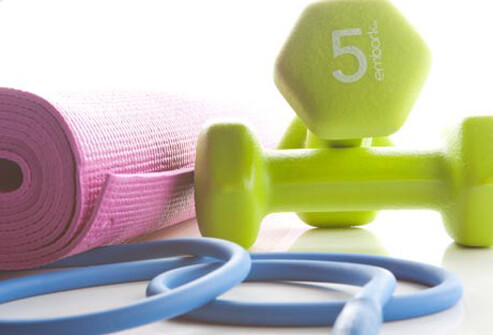
    Let's Get Started!

    Most people with diabetes can work out safely. Ask your doctor first to be sure. You should aim for strength training at least twice a week. Also do heart-pumping cardio exercise -- like jogging, swimming, and biking -- either 5 days a week for 30 minutes each time or 3 days for 50 minutes each. Stretch a bit afterward to become more flexible. Want a solid routine or tips on technique? Check with a certified trainer.

    Your Strength Training Routine

    Get ready to learn 10 at-home exercises that work your major muscle groups. For each one, begin with one set where you do the move 8-15 times, or "reps." Rest for at least 30 seconds before you do the next exercise. Start with resistance bands or light dumbbells, so you can focus on lifting and lowering the weights with smooth, controlled movements. When you can do two or three sets easily, switch to slightly heavier weights.

    Upper Body: Standing Biceps Curl

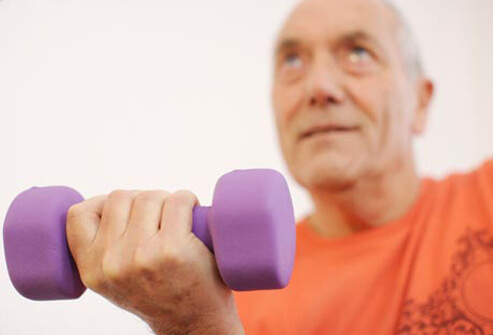
    Hold a dumbbell in each hand and stand with your palms facing your thighs. Squeeze your biceps as you lift the weights. On the way up, your forearm should rotate so your palms end up facing your shoulders at the top. Lower the weights slowly to the starting position. Try to avoid using momentum on the way down. Control the motion from start to finish.

    Upper Body: Triceps Extension

    Stand with one foot slightly in front of the other, and hold a single dumbbell with both hands wrapped around the handle. Slowly raise the dumbbell overhead. Straighten your elbows as you raise the weight toward the ceiling. Slowly bend your elbows and lower the weight behind your head. Keep your upper arms still and vertical to the floor. Keep your shoulder blades down and back as you repeat.

    Upper Body: Shoulder Press

    You can do this move while you sit or stand. Hold a dumbbell in each hand and raise them until they are level with your ears. Your elbows should be bent at a 90-degree angle. This is your starting position. Now push the weights up, until your arms are fully extended. Slowly lower to the starting position.

    Upper Body: Chest Press

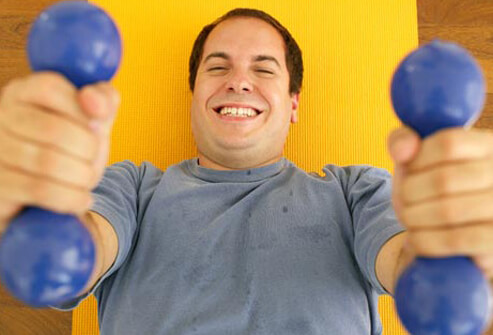
    Lie on your back with your knees bent and your feet flat on the floor. Hold a dumbbell in each hand at chest level and raise them above your chest until your elbows are straight but not locked. Pause for a second and then slowly lower the weights toward your chest.

    Upper Body: Seated Row

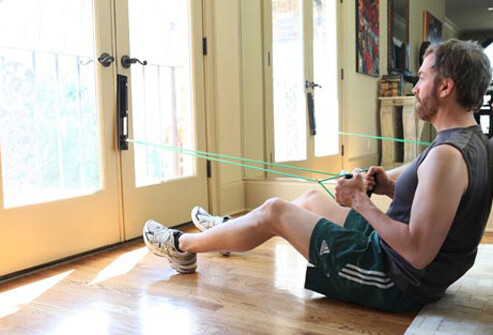
    Sit on the floor with your feet together and your knees bent. Hold a dumbbell or the end of a resistance band in each hand with your arms straight in front of you, palms facing each other. Keeping your back straight, bend the elbows as you pull the weights or bands to your sides. Keep your elbows close to your body and slowly straighten your arms.

    Core: Classic Crunch

    Lie on your back, feet flat on the floor, knees bent. Put your hands behind your head. Pull your shoulder blades together and your elbows back. The elbows should aim sideways and stay there throughout the exercise. Squeeze your abs and curl your shoulders and upper back off the floor. Lower down slowly. Keep your lower back pressed to the floor at all times.

    Core: Plank

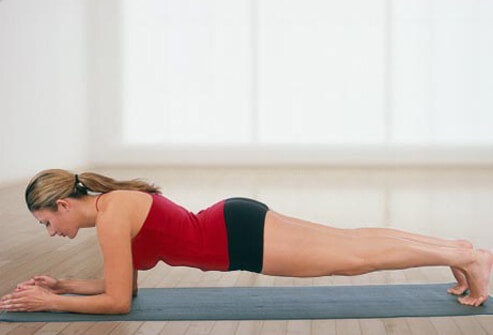
    Lie face-down with your elbows directly under your shoulders, palms down and your toes tucked under. From this starting position, tighten your abs, glutes, and back muscles as you lift your torso and thighs off the floor. You'll be supported by your toes and forearms. Hold this position for 5 seconds or more. Keep the back straight as you slowly lower to the starting position.

    Lower Body: Squat

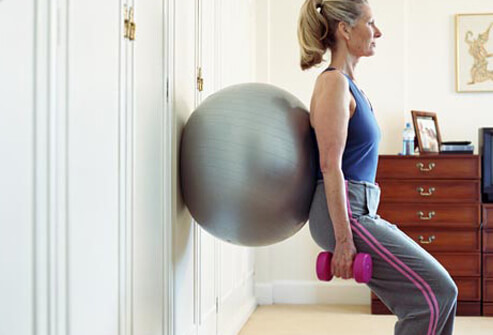
    Stand with your feet shoulder-width apart. Bend your knees and lower yourself as if you were sitting in an imaginary chair. Your thighs should be parallel to the ground and your knees should not push forward past your toes. Lean forward slightly as you stand back up. You can also do squats while leaning against a stability ball placed between your back and a wall.

    Lower Body: Lunges

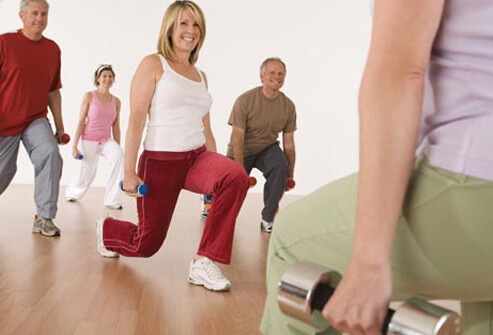
    Stand with your legs shoulder-width apart and step your right leg back, bending the knee toward the floor without allowing it to touch. Your left thigh should be nearly parallel with the floor. Press down on the left heel and bring the right leg back to a neutral stance. Do 8-12 reps and then change sides, stepping back on the left leg. To make the lunges more challenging, hold a dumbbell in each hand.

    Lower Body: Hamstring Curl

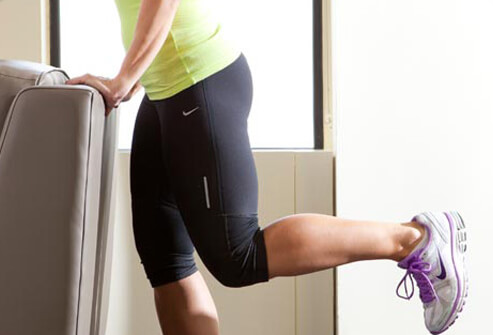
    Hold onto the back of a chair. Flex your left foot and bend the knee, bringing your heel toward your butt. Keep your right leg slightly bent. Lower your left foot back to the floor. Do 8-12 reps and then repeat with the right leg. To make this exercise harder, ask your doctor if it's safe for you to wear ankle weights.

    Strength Training and Blood Sugar

    If you take certain diabetes medications, you may need to take precautions to avoid a dangerous drop in your blood sugar levels (hypoglycemia). Ask your doctor if you should check your levels or eat a snack before working out. Keep snacks or glucose tablets with you when you exercise in case you get symptoms of low blood sugar, such as shaking or weakness.

    Strength Training and Insulin

    You may need to adjust the dose before and after exercise. Do an easy workout to see how it affects your blood sugar. Check your levels before, during, and after exercise. If you work out within an hour or two of a meal, you may need to lower your meal-time insulin dose. Talk with your doctor, who can also tell you if you need to adjust doses of any other diabetes medicines when you work out.

    Who Should Not Lift Weights?

    Weight-lifting is not recommended for people with diabetes-related eye problems (such as retinopathy) that aren’t being treated. Likewise, intense cardio workouts are not a good idea with untreated retinopathy. Both can raise pressure in the eyes. If you have nerve damage in your feet, you may need to exercise while you sit or lie on the floor, or swim. Your doctor can tell you what’s OK for you.

    0 comment
    0
    Facebook Twitter Google + Pinterest
    explainingmedicine

    previous post
    Viral Infections: Types, Treatment, and Prevention
    next post
    Chocolate: The History and Our Infatuation With Chocolate

    Related Articles

    Non-Surgical Cosmetic Facial Procedures: Before and After Pictures

    October 14, 2016

    Salt Shockers: High-Sodium Surprises

    October 14, 2016

    Lowering Blood Pressure: Exercise Tips for Getting Started

    October 14, 2016

    Skin and Beauty: How to Get Perfect Eyebrows and Eyelashes

    October 14, 2016

    Emergency Preparedness: Winter Weather

    October 14, 2016

    STD Facts: Learn About Sexually Transmitted Diseases

    October 14, 2016

    Drug Abuse: Commonly Abused Prescription and OTC Drugs

    October 14, 2016

    A Cold or The Flu? : How to Tell the Difference

    October 14, 2016

    ADHD: Diagnosing ADHD in Children

    October 14, 2016

    ADHD in Adults: A Visual Guide to ADHD in Adults

    October 14, 2016

    Recent Posts

    • Flu shot recommendation for kids dropped just as the illness rages

      January 12, 2026
    • The CDC just sidelined these childhood vaccines. Here’s what they prevent

      January 9, 2026
    • Your next primary care doctor could be online only, accessed through an AI tool

      January 9, 2026
    • In Lodge Grass, Montana, a Crow community works to rebuild from meth’s destruction

      January 8, 2026
    • RFK Jr.’s new dietary guidelines go all in on meat and dairy

      January 7, 2026

    Keep in touch

    Facebook Twitter Google + RSS

    Recent Posts

    • Flu shot recommendation for kids dropped just as the illness rages

      January 12, 2026
    • The CDC just sidelined these childhood vaccines. Here’s what they prevent

      January 9, 2026
    • Your next primary care doctor could be online only, accessed through an AI tool

      January 9, 2026
    • In Lodge Grass, Montana, a Crow community works to rebuild from meth’s destruction

      January 8, 2026
    • RFK Jr.’s new dietary guidelines go all in on meat and dairy

      January 7, 2026
    • Terms of Service
    • Privacy Policy

    @2026 - Explaining Medicine. All Right Reserved.


    Back To Top
    Explaining Medicine
    Proudly powered by WordPress Theme: soledad child.