Explaining Medicine
  • News
  • Health & Lifestyle
    • Diet & Weight Management
    • Exercise & Fitness
    • Nutrition, Food & Recipes
    • Prevention & Wellness
  • Conditions
    • Custom1
      • Conditions A-Z
      • Procedures A-Z
      • Allergies
      • Alzheimer’s
      • Arthritis
      • Asthma
      • Blood Pressure
      • Cholesterol
      • Cancer
    • Custom2
      • Chronic Pain
      • Cold Flu
      • Depression
      • Diabetes
      • Digestion
      • Eyesight
      • Health Living
      • Healthy Kids
      • Hearing Ear
    • Custom3
      • Heart
      • HIV/AIDS
      • Infectious Disease
      • Lung Conditions
      • Menopause
      • Men’s Health
      • Mental Health
      • Migraine
      • Neurology
    • Custom4
      • Oral Health
      • Pregnancy
      • Senior Health
      • Sexual Health
      • Skin Problems
      • Sleep
      • Thyroid
      • Travel Health
      • Women’s Health
  • Medications
    • Medications
    • Supplements and Vitamins
  • Medical Dictionary
  • Health Alerts
Flu shot recommendation for kids dropped just as...
The CDC just sidelined these childhood vaccines. Here’s...
Your next primary care doctor could be online...
In Lodge Grass, Montana, a Crow community works...
RFK Jr.’s new dietary guidelines go all in...
More seniors are becoming homeless. Shelters are trying...
Health officials slash the number of vaccines recommended...
Wegovy obesity pill now available at pharmacies
In the U.S., hunger is often hidden. But...
One doctor’s experience shows the battle for the...
Top Posts

Explaining Medicine

  • News
  • Health & Lifestyle
    • Diet & Weight Management
    • Exercise & Fitness
    • Nutrition, Food & Recipes
    • Prevention & Wellness
  • Conditions
    • Custom1
      • Conditions A-Z
      • Procedures A-Z
      • Allergies
      • Alzheimer’s
      • Arthritis
      • Asthma
      • Blood Pressure
      • Cholesterol
      • Cancer
    • Custom2
      • Chronic Pain
      • Cold Flu
      • Depression
      • Diabetes
      • Digestion
      • Eyesight
      • Health Living
      • Healthy Kids
      • Hearing Ear
    • Custom3
      • Heart
      • HIV/AIDS
      • Infectious Disease
      • Lung Conditions
      • Menopause
      • Men’s Health
      • Mental Health
      • Migraine
      • Neurology
    • Custom4
      • Oral Health
      • Pregnancy
      • Senior Health
      • Sexual Health
      • Skin Problems
      • Sleep
      • Thyroid
      • Travel Health
      • Women’s Health
  • Medications
    • Medications
    • Supplements and Vitamins
  • Medical Dictionary
  • Health Alerts
  • Slideshows

    Drug Abuse: Commonly Abused Prescription and OTC Drugs

    by explainingmedicine October 14, 2016

    Drug Abuse

    Prescription and nonprescription (over-the-counter) drug abuse involves using a drug for a purpose or in a way other than what is prescribed by a doctor, or recommended on the package. For example, drugs may be taken by people who were not prescribed the medication, people may take more of the drug than prescribed, or they may crush pills and inhale them rather than swallowing them as directed. Some commonly abused prescription drugs include depressants, pain relievers, and stimulants.


    Barbiturates

    Depressants, or "downers," are drugs that slow the central nervous system. One type of depressant is a barbiturate, commonly prescribed for anxiety or insomnia. Barbiturates can be addictive, and when mixed with other drugs or alcohol the effects can be fatal. Types of barbiturates include phenobarbital (Nembutal), mephobarbital (Mebaral), and secobarbital (Seconal). Slang terms used for barbiturates includes "barbs," "reds," red birds," "phennies," "tooies," "yellows," and "yellow jackets."

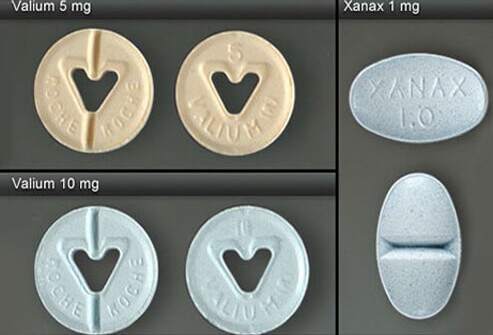
    Benzodiazepines: Valium, Xanax

    Another type of depressant is a benzodiazepine. Drugs in this class include tranquilizers such as diazepam (Valium) and alprazolam (Xanax), often prescribed for anxiety, sleep disorders, and panic attacks. They are usually only prescribed short-term for these conditions, and even with short-term use patients can have withdrawal symptoms when they stop taking the drugs.

    Sleep Medicines

    Sedative medicines to treat sleep disorders such as insomnia are also types of depressants. Hypnotic sedatives such as zolpidem (Ambien, Ambien CR), zaleplon (Sonata), and eszopiclone (Lunesta) are classified as nonbenzodiazapines. These drugs do have a risk for dependence and withdrawal symptoms, though it is thought to potentially be less than benzodiazepine-type medicines.

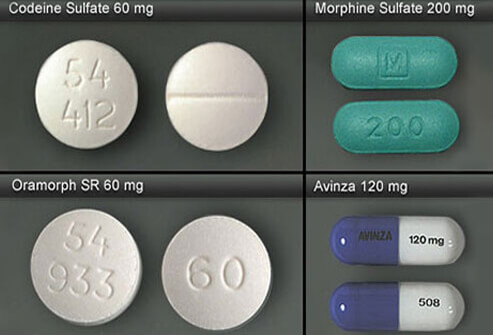
    Codeine and Morphine

    According to the National Institute on Drug Abuse, the most commonly abused type of prescription drug is narcotic, or opioid, pain relievers, including codeine and morphine. These drugs are usually prescribed for moderate to severe pain. Drugs such as these can be highly addictive, and abuse can lead to fatal overdose. Injecting these drugs may also lead to higher risk for contracting HIV.

    OxyContin, Percocet

    Oxycodone is another type of opioid pain reliever. It is found in drugs such as OxyContin (which goes by the street names "oxy," "O.C.," and "oxycotton"), Percocet and Percodan ("percs"), and Roxicodone ("roxys"). These narcotic analgesics (pain relievers) are often misused by crushing pills so the time-release coatings are broken and abusers get the full narcotic effects of the drug. Addiction rates are high and withdrawal symptoms can be severe.

    Vicodin, Lortab, Lorcet

    Another opioid is hydrocodone, found in drugs such as Vicodin (street name, "vike," or "Watson-387"), Lortab, and Lorcet. These drugs also contain the pain reliever acetaminophen, the main ingredient in Tylenol. Opioids are abused for their potential to produce feelings of euphoria, but opioid side effects include drowsiness, nausea or vomiting, constipation, and slowed breathing.

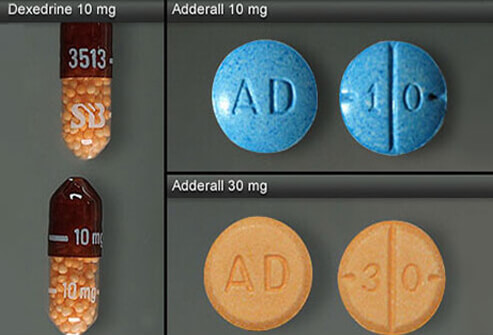
    Amphetamines

    Stimulants are drugs can increase heart rate and open up breathing, causing users to feel more alert and energetic. When prescribed and used properly, they can be effective aids in treatment of narcolepsy, attention deficit hyperactivity disorder (ADHD), and depression that doesn't respond to other treatments. Commonly abused stimulants include amphetamines such as dextroamphetamine (Dexedrine) and amphetamine and dextroamphetamine (Adderall, Adderall XR), used to treat ADHD. Side effects can include tremors, headache, heart palpitations, panic, hallucinations, and paranoia. Overdosage can be fatal.

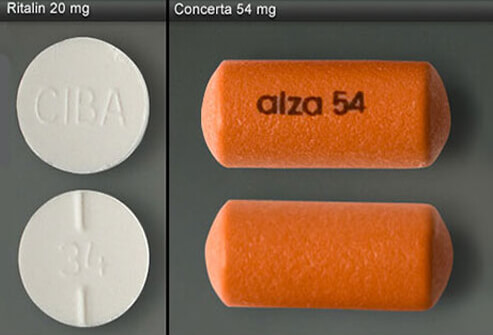
    Methylphenidate

    Stimulant drugs such as methylphenidate are commonly used to treat attention deficit hyperactivity disorder (ADHD). Examples of ADHD drugs that are abused include methylphenidate (Ritalin, Concerta, Metadate, Methylin). When prescribed for ADHD, the doses are usually low. However, abusers often take high doses, which can cause irregular heartbeat, seizures, or even heart failure. Street names include "MPH," R-ball," "Skippy," "the smart drug," and "vitamin R."

    Dextromethorphan (DXM)

    An ingredient found in over-the-counter cough and cold medicines, dextromethorphan (DXM), is usually safe when taken as recommended. However, very large doses can cause nausea and vomiting, rapid heart rate, confusion, dizziness, and even hallucinogenic effects similar to PCP. Many parents are unaware their children could be abusing this common nonprescription medication.

    Pseudoephedrine

    The illegal drug methamphetamine ("meth") is made using an ingredient called pseudoephedrine, commonly found in over-the-counter cold medicines such as Sudafed. Because of this, the Food and Drug Administration (FDA) limits the amount of pseudoephedrine that can be purchased by individuals. While you do not need a prescription, the drug usually must be purchased from a pharmacist and you must present identification to buy it.

    Identifying a Suspicious Pill

    Medication errors can have serious consequences. If you have any pills in your home and you are unsure what they are, use RxList’s Pill Identification Tool to identify generic and brand name drugs by pill color, size, shape, and drug imprint. Match your Pill ID to the pictures and quickly identify your medications. If you do not find a match, call your doctor or pharmacist.

    Abuse of Prescription Painkillers on the Rise Among High School Athletes: Survey

    HealthDay news article on MedicineNet

    MONDAY, August 4, 2014 -- "Abuse of prescription painkillers is on the rise among high school athletes, and football players are among the worst offenders, a new study shows..." Read full article on MedicineNet

    Drug Abuse: What to Do

    If you suspect someone you know is abusing drugs, call the Substance Abuse and Mental Health Services Administration Treatment Routing Referral Service at 800-662-HELP to find a treatment center. Remember, prescription and over-the-counter drugs can be abused just like street drugs.

    Parents, if you suspect your child may be using or abusing prescription or nonprescription medicines, there are some steps you can take:

    • Come right out and ask.
    • Look for signs and symptoms of drug use (such as doing poorly in school, engaging in risky behaviors, frequent fighting with family and friends, getting into trouble with the law).
    • Learn the risk factors for drug use, like a family history of addiction or having friends who drink or use drugs.
    • Monitor their activities and provide consequences when they use drugs.
    0 comment
    0
    Facebook Twitter Google + Pinterest
    explainingmedicine

    previous post
    Breast Cancer Deaths Continue to Decline in U.S.
    next post
    Gout: See & Learn About Gouty Arthritis Attacks

    Related Articles

    First Aid : Care and Pain Relief for Bumps, Bruises, Sprains, and Strains

    October 14, 2016

    Rheumatoid Arthritis: Learn About RA Symptoms & Treatment

    October 14, 2016

    Lyme Disease: Find Out How to Protect Yourself

    October 14, 2016

    Concussions & Brain Injuries: Symptoms, Tests & Treatment

    October 14, 2016

    Heartburn: Foods to Eat, Foods to Avoid

    October 14, 2016

    Men’s Health: Embarrassing Male Body Problems

    October 14, 2016

    First Aid: Bandaging Injuries From Head to Toe

    October 14, 2016

    Causes of Fatigue: Find Out Why You’re So Tired

    October 14, 2016

    Exercise and Fitness: Top 10 Fitness Facts

    October 14, 2016

    Menopause and Sex: 10 Ways to Deal With Menopause Symptoms

    October 15, 2016

    Recent Posts

    • Flu shot recommendation for kids dropped just as the illness rages

      January 12, 2026
    • The CDC just sidelined these childhood vaccines. Here’s what they prevent

      January 9, 2026
    • Your next primary care doctor could be online only, accessed through an AI tool

      January 9, 2026
    • In Lodge Grass, Montana, a Crow community works to rebuild from meth’s destruction

      January 8, 2026
    • RFK Jr.’s new dietary guidelines go all in on meat and dairy

      January 7, 2026

    Keep in touch

    Facebook Twitter Google + RSS

    Recent Posts

    • Flu shot recommendation for kids dropped just as the illness rages

      January 12, 2026
    • The CDC just sidelined these childhood vaccines. Here’s what they prevent

      January 9, 2026
    • Your next primary care doctor could be online only, accessed through an AI tool

      January 9, 2026
    • In Lodge Grass, Montana, a Crow community works to rebuild from meth’s destruction

      January 8, 2026
    • RFK Jr.’s new dietary guidelines go all in on meat and dairy

      January 7, 2026
    • Terms of Service
    • Privacy Policy

    @2026 - Explaining Medicine. All Right Reserved.


    Back To Top
    Explaining Medicine
    Proudly powered by WordPress Theme: soledad child.