by

What Is Ebola?
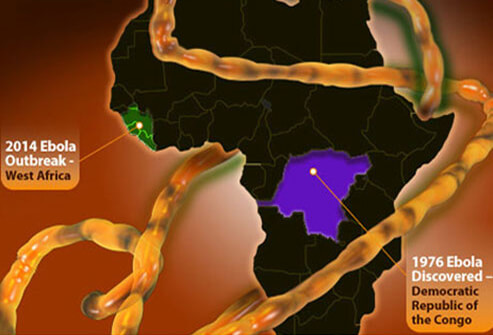
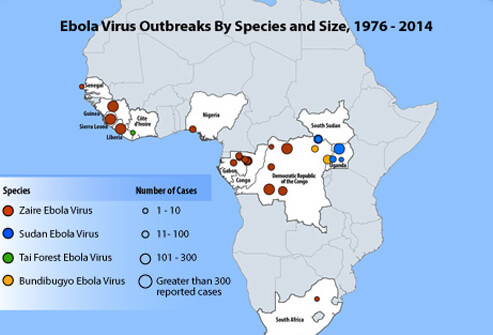
Ebola is a viral hemorrhagic (bleeding) illness that has a high fatality rate. The virus was discovered in 1976 near the Ebola River in the present day Democratic Republic of Congo. There are five strains of the Ebola virus -- Tai Forest, Sudan, Bundibugyo, Zaire, and Reston. Four of the strains (Reston is the exception) are responsible for outbreaks in humans. The Ebola virus is harbored by fruit bats, gorillas, monkeys, forest antelope, chimpanzees, and porcupines. Humans can contract the virus by coming into close contact with the body or bodily fluids (including blood) of an infected animal. Once the virus spreads to a human, person-to-person transmission is possible.