Explaining Medicine
  • News
  • Health & Lifestyle
    • Diet & Weight Management
    • Exercise & Fitness
    • Nutrition, Food & Recipes
    • Prevention & Wellness
  • Conditions
    • Custom1
      • Conditions A-Z
      • Procedures A-Z
      • Allergies
      • Alzheimer’s
      • Arthritis
      • Asthma
      • Blood Pressure
      • Cholesterol
      • Cancer
    • Custom2
      • Chronic Pain
      • Cold Flu
      • Depression
      • Diabetes
      • Digestion
      • Eyesight
      • Health Living
      • Healthy Kids
      • Hearing Ear
    • Custom3
      • Heart
      • HIV/AIDS
      • Infectious Disease
      • Lung Conditions
      • Menopause
      • Men’s Health
      • Mental Health
      • Migraine
      • Neurology
    • Custom4
      • Oral Health
      • Pregnancy
      • Senior Health
      • Sexual Health
      • Skin Problems
      • Sleep
      • Thyroid
      • Travel Health
      • Women’s Health
  • Medications
    • Medications
    • Supplements and Vitamins
  • Medical Dictionary
  • Health Alerts
Flu shot recommendation for kids dropped just as...
The CDC just sidelined these childhood vaccines. Here’s...
Your next primary care doctor could be online...
In Lodge Grass, Montana, a Crow community works...
RFK Jr.’s new dietary guidelines go all in...
More seniors are becoming homeless. Shelters are trying...
Health officials slash the number of vaccines recommended...
Wegovy obesity pill now available at pharmacies
In the U.S., hunger is often hidden. But...
One doctor’s experience shows the battle for the...
Top Posts

Explaining Medicine

  • News
  • Health & Lifestyle
    • Diet & Weight Management
    • Exercise & Fitness
    • Nutrition, Food & Recipes
    • Prevention & Wellness
  • Conditions
    • Custom1
      • Conditions A-Z
      • Procedures A-Z
      • Allergies
      • Alzheimer’s
      • Arthritis
      • Asthma
      • Blood Pressure
      • Cholesterol
      • Cancer
    • Custom2
      • Chronic Pain
      • Cold Flu
      • Depression
      • Diabetes
      • Digestion
      • Eyesight
      • Health Living
      • Healthy Kids
      • Hearing Ear
    • Custom3
      • Heart
      • HIV/AIDS
      • Infectious Disease
      • Lung Conditions
      • Menopause
      • Men’s Health
      • Mental Health
      • Migraine
      • Neurology
    • Custom4
      • Oral Health
      • Pregnancy
      • Senior Health
      • Sexual Health
      • Skin Problems
      • Sleep
      • Thyroid
      • Travel Health
      • Women’s Health
  • Medications
    • Medications
    • Supplements and Vitamins
  • Medical Dictionary
  • Health Alerts
  • Slideshows

    Heat Rash: Symptoms, Causes and Treatment

    by explainingmedicine October 14, 2016

    The Skin's Function

    Your skin is your first line of defense from the outside world. It protects you from infections, chemical exposures, and harmful ultraviolet light. It also helps regulate the temperature inside your body by producing sweat. Sweat on your skin comes from sweat glands located all over your body (except in your fingers, toenails, and ear canals). These small glands are regulated by the brain and produce sweat that comes to the surface via ducts on your skin, which then evaporates and helps cool you down.

    What Is Heat Rash?

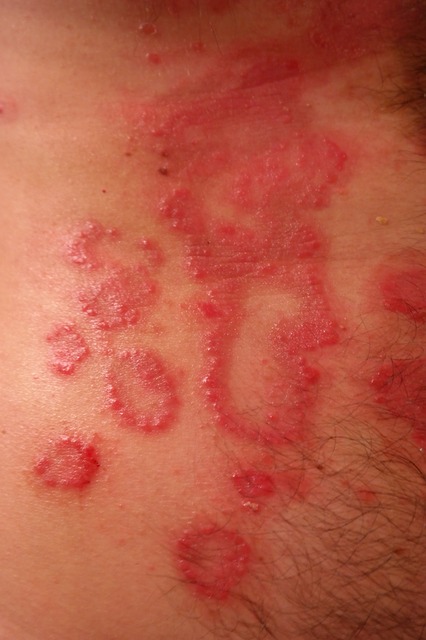
    Heat rash (prickly heat or miliaria) is a mild inflammation of clogged sweat ducts. When the sweat ducts are blocked the sweat cannot come to the skin surface to evaporate and becomes trapped under the skin. The rash is characterized by small, raised bumps (like coarse sandpaper) spread evenly across small patches of skin. The rash usually goes away on it's own and resolves in hours to a few days.

    What Are the Symptoms of Heat Rash in Children and Adults?

    The common symptoms of heat rash include a fine, bumpy, itchy rash, skin burning, and a "prickly" feeling (like something is crawling on skin). The most common body parts affected are areas commonly exposed to the sun such as the hands, face, neck, and elbow folds. Heat rash may also affect areas covered by tight clothing such as the abdominal wall, groin, thigh creases, buttocks, and the area under the breasts.

    Heat Rash Types

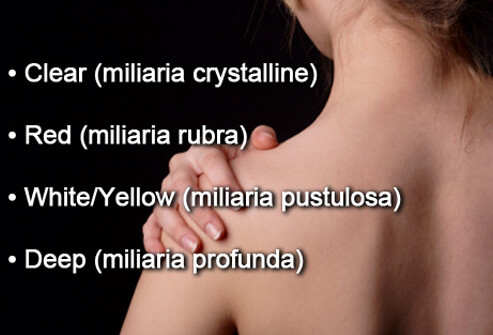
    The four types of heat rash (miliaria) are named by the way they look on the skin (visual characteristics) and are discussed on the following slides:

    1. Clear (miliaria crystallina),
    2. Red (miliaria rubra),
    3. White/Yellow (miliaria pustulosa),
    4. Deep (miliaria profunda).

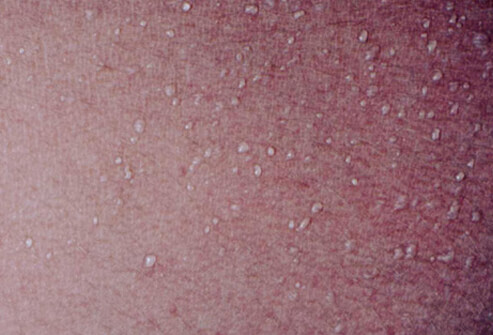
    Clear Heat Rash (Miliaria Crystallina)

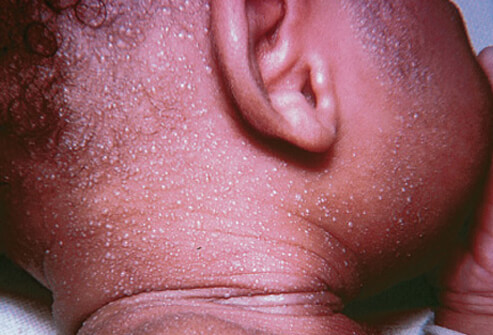
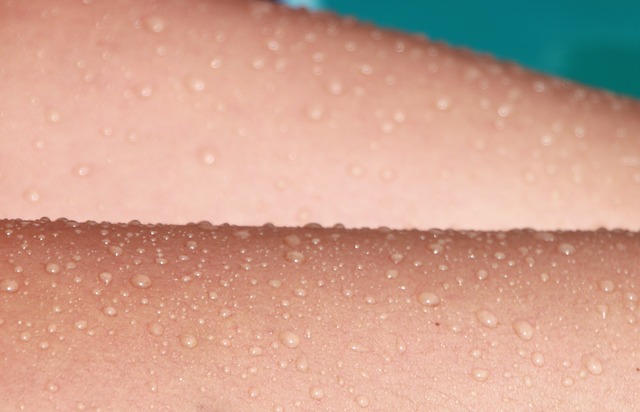
    Miliaria crystallina, or clear heat rash, looks like small, clear beads of sweat on the top layer of skin. It is usually very mild and doesn't produce many uncomfortable symptoms.

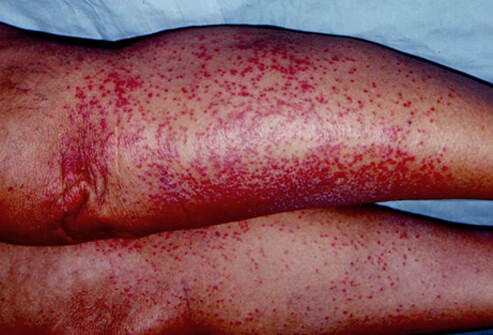
    Red Heat Rash (Miliaria Rubra)

    Red heat rash (miliaria rubra) is the most common form of heat rash. This type is also called "prickly heat" because of its intense itching and burning symptoms. The sweat glands are blocked and the inflammation causes a red color to the rash known as "rubra" (hence the name miliaria rubra).

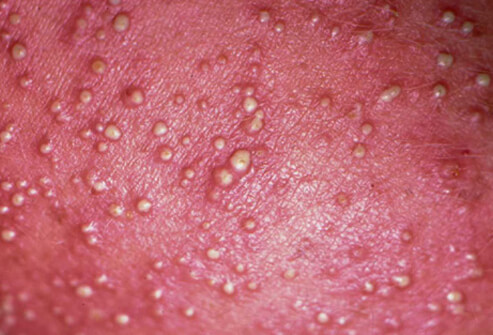
    White/Yellow Heat Rash (Miliaria Pustulosa)

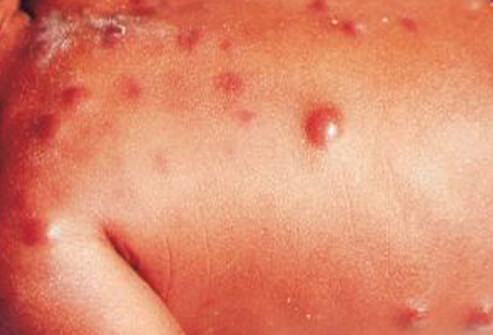
    When pustules form on a case of red heat rash it is called white/yellow heat rash (miliaria pustulosa). These pustules may be the first signs of a skin infection and should be checked by your doctor.

    Deep Heat Rash (Miliaria Profunda)

    With repeated episodes of heat rash, sweat glands in larger areas of the skin may be chronically inflamed and cause damage to deeper layers of the skin. When this happens, large, firm bumps may appear especially after exercise or exposure to heat. This is called deep heat rash (miliaria profunda).

    What Are the Causes of Heat Rash?

    Blocked sweat glands are the main cause of heat rash. Sweat glands can get blocked for many reasons but the most common reasons include:

    • Skin around the neck, armpit, or groin that touches or rubs adjacent skin prevents sweat evaporation.
    • Tight clothing around the waist, abdomen, chest, or groin that prevents evaporation of sweat.
    • Bundling up in heavy clothing where sweat can accumulate on the skin.
    • Heavy creams, oily lotions, or adhesive bandages can clog sweat ducts.

    Who Is At Risk for Heat Rash?

    Some situations can make heat rash more likely, these include:

    • Newborns or infants (especially wearing diapers or tight-fitting clothes)
    • Elderly people who may not realize how much they are sweating or don't frequently change their clothes
    • Living in hot and humid climates
    • Working in hot, confined spaces where sweat is prevalent

    Why Are Babies So Prone to Heat Rash?

    Small children frequently get heat rash because their sweat glands are immature and they cannot get rid of the sweat they produce. This is common when children are overdressed, bundled up for cold weather, or have a fever.

    How Is Heat Rash Diagnosed?

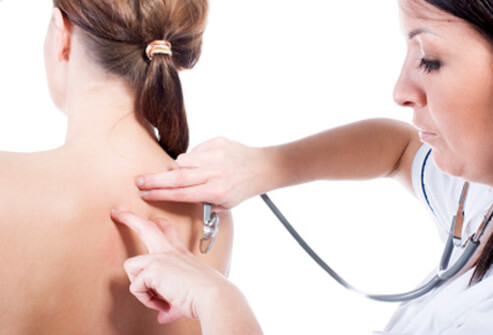
    The diagnosis of heat rash is made by seeing the characteristic rash in certain common skin locations, especially after known heat exposure. A doctor can usually make the diagnosis with a visual examination of the rash. However, complicated or atypical cases may need confirmation from skin culture, skin scrapings, or biopsy. Other skin conditions can mimic a heat rash including allergic reactions, bacterial infections, fungal infections, or eczema.

    Home Remedy Treatments for Heat Rash

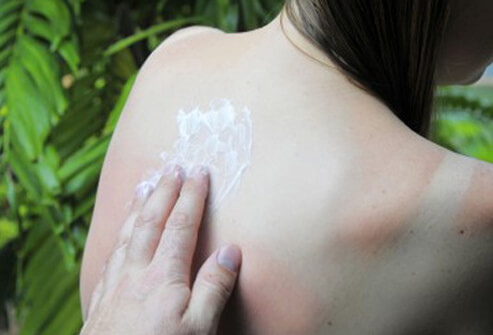
    Heat rash is usually self-limited, meaning it resolves on its own without treatment. Over-the-counter treatments such as calamine, hydrocortisone cream, itch preparations (such as Benadryl spray), or sunburn lotions can be used to treat the itching and burning symptoms.. Excessive use of heavy creams or lotions may make the heat rash worse.

    Medical Treatment for Heat Rash

    Occasionally the heat rash may get infected, especially if it has been scratched open. Bacteria can invade the skin and cause cellulitisinfections. Symptoms such as redness, swelling, increased pain, fever, or pustules should be checked by your doctor. Antibiotic treatment with topical creams or medications taken by mouth may be necessary to treat infections associated with heat rash.

    How Can Heat Rash Be Prevented?

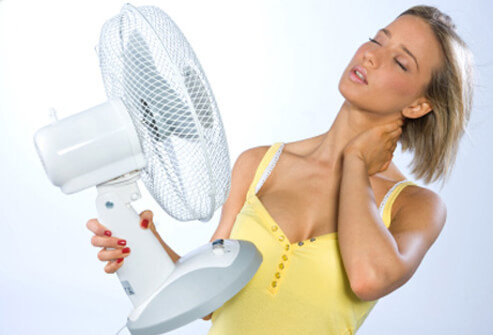
    Keeping sweat glands from becoming clogged is the best way to prevent heat rash. Wear loose-fitting and breathable clothing. Avoid exercising in hot, humid weather. Keep skin dry, especially areas like skin folds or creases where sweat can accumulate. Stay in air conditioning whenever possible if you are prone to heat rash.

    How to Protect Yourself When Temperatures Are Extremely High

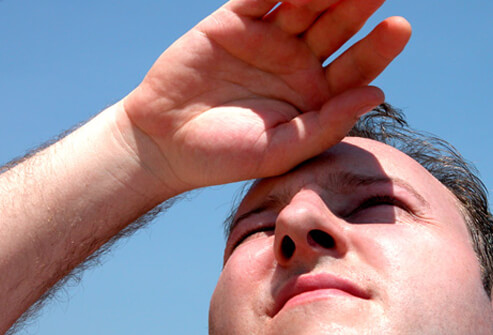
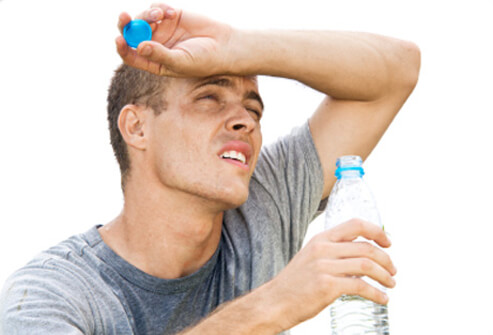
    To an extent, your body can acclimate to hot and humid weather over time. Try to avoid working or exercising during times of extreme heat. Take frequent cooling breaks, drink plenty of fluids, and stop activities if you feel over-heated, lightheaded, dizzy, or faint.

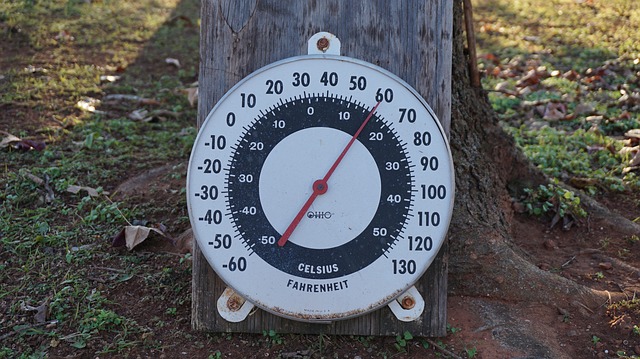
    Before exercise in hot and humid climates take into account the temperature and also the heat index. The heat index is a calculated measurement of the overall feeling of heat and humidity. Since sweat cannot evaporate if the water content in the air (humidity) is high, sweating alone cannot cool the body.

    How Much Water Should I Drink in Hot Weather?

    It is hard to tell if you are dehydrated and need to drink more water just by how much you sweat. If you are dehydrated, your kidneys will try to retain as much water in your body as possible. This results in decreased urine output and the urine you do eliminate may be dark or concentrated. In hot environments, a good rule of thumb is to drink enough liquids to make your urine appear clear or just slightly yellow.

    Should I Take Salt Tablets During Hot Weather?

    Do not take salt tablets to replace your electrolytes when you sweat excessively. They may be harmful or replace too much sodium, which may cause problems with your blood pressure, kidneys or heart. Plain water will help hydrate best.

    What Is the Best Clothing for Hot Weather or a Heat Wave?

    Sweating cools the body by evaporation which pulls heat away from your skin. If sweat is not allowed to evaporate due to tight clothing or certain non-breathable fabrics, this leaves you at risk to overheat or get a heat rash. Wear clothes made of fabrics such as cotton or synthetic fabrics designed to "wick" sweat away from skin to help it evaporate when you work out or expect to be exposed to heat.

    0 comment
    0
    Facebook Twitter Google + Pinterest
    explainingmedicine

    previous post
    Foot Problems: Ingrown Toenails
    next post
    Ringworm: Does Ringworm Mean I Have Worms?

    Related Articles

    Lupus: Symptoms, Rash, and Treatment

    October 14, 2016

    Women’s Hair Loss: Thinning Hair Causes, Treatments and Solutions

    October 14, 2016

    Depression: Tips for Exercise Diet and Stress Reduction

    October 14, 2016

    Bipolar Disorder: Do You Have Extreme Mood Shifts?

    October 14, 2016

    Skin and Beauty : 12 Ways to Wreck Your Skin

    October 14, 2016

    Women’s Health: Embarrassing Beauty Questions and Answers

    October 14, 2016

    Vegetarian Diet: Becoming a Vegetarian

    October 14, 2016

    Foot Problems: Ingrown Toenails

    October 14, 2016

    Hepatitis: A Visual Guide to Hepatitis

    October 14, 2016

    Bad Bugs: Identify Bugs and Their Bites

    October 14, 2016

    Recent Posts

    • Flu shot recommendation for kids dropped just as the illness rages

      January 12, 2026
    • The CDC just sidelined these childhood vaccines. Here’s what they prevent

      January 9, 2026
    • Your next primary care doctor could be online only, accessed through an AI tool

      January 9, 2026
    • In Lodge Grass, Montana, a Crow community works to rebuild from meth’s destruction

      January 8, 2026
    • RFK Jr.’s new dietary guidelines go all in on meat and dairy

      January 7, 2026

    Keep in touch

    Facebook Twitter Google + RSS

    Recent Posts

    • Flu shot recommendation for kids dropped just as the illness rages

      January 12, 2026
    • The CDC just sidelined these childhood vaccines. Here’s what they prevent

      January 9, 2026
    • Your next primary care doctor could be online only, accessed through an AI tool

      January 9, 2026
    • In Lodge Grass, Montana, a Crow community works to rebuild from meth’s destruction

      January 8, 2026
    • RFK Jr.’s new dietary guidelines go all in on meat and dairy

      January 7, 2026
    • Terms of Service
    • Privacy Policy

    @2026 - Explaining Medicine. All Right Reserved.


    Back To Top
    Explaining Medicine
    Proudly powered by WordPress Theme: soledad child.