Explaining Medicine
  • News
  • Health & Lifestyle
    • Diet & Weight Management
    • Exercise & Fitness
    • Nutrition, Food & Recipes
    • Prevention & Wellness
  • Conditions
    • Custom1
      • Conditions A-Z
      • Procedures A-Z
      • Allergies
      • Alzheimer’s
      • Arthritis
      • Asthma
      • Blood Pressure
      • Cholesterol
      • Cancer
    • Custom2
      • Chronic Pain
      • Cold Flu
      • Depression
      • Diabetes
      • Digestion
      • Eyesight
      • Health Living
      • Healthy Kids
      • Hearing Ear
    • Custom3
      • Heart
      • HIV/AIDS
      • Infectious Disease
      • Lung Conditions
      • Menopause
      • Men’s Health
      • Mental Health
      • Migraine
      • Neurology
    • Custom4
      • Oral Health
      • Pregnancy
      • Senior Health
      • Sexual Health
      • Skin Problems
      • Sleep
      • Thyroid
      • Travel Health
      • Women’s Health
  • Medications
    • Medications
    • Supplements and Vitamins
  • Medical Dictionary
  • Health Alerts
Flu shot recommendation for kids dropped just as...
The CDC just sidelined these childhood vaccines. Here’s...
Your next primary care doctor could be online...
In Lodge Grass, Montana, a Crow community works...
RFK Jr.’s new dietary guidelines go all in...
More seniors are becoming homeless. Shelters are trying...
Health officials slash the number of vaccines recommended...
Wegovy obesity pill now available at pharmacies
In the U.S., hunger is often hidden. But...
One doctor’s experience shows the battle for the...
Top Posts

Explaining Medicine

  • News
  • Health & Lifestyle
    • Diet & Weight Management
    • Exercise & Fitness
    • Nutrition, Food & Recipes
    • Prevention & Wellness
  • Conditions
    • Custom1
      • Conditions A-Z
      • Procedures A-Z
      • Allergies
      • Alzheimer’s
      • Arthritis
      • Asthma
      • Blood Pressure
      • Cholesterol
      • Cancer
    • Custom2
      • Chronic Pain
      • Cold Flu
      • Depression
      • Diabetes
      • Digestion
      • Eyesight
      • Health Living
      • Healthy Kids
      • Hearing Ear
    • Custom3
      • Heart
      • HIV/AIDS
      • Infectious Disease
      • Lung Conditions
      • Menopause
      • Men’s Health
      • Mental Health
      • Migraine
      • Neurology
    • Custom4
      • Oral Health
      • Pregnancy
      • Senior Health
      • Sexual Health
      • Skin Problems
      • Sleep
      • Thyroid
      • Travel Health
      • Women’s Health
  • Medications
    • Medications
    • Supplements and Vitamins
  • Medical Dictionary
  • Health Alerts
  • Slideshows

    Kidney Stones: A Visual Guide to Kidney Stones

    by explainingmedicine October 14, 2016

    What are kidney stones?

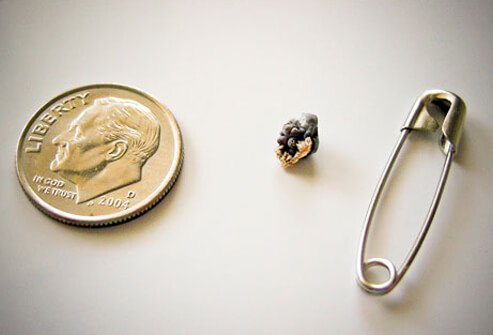
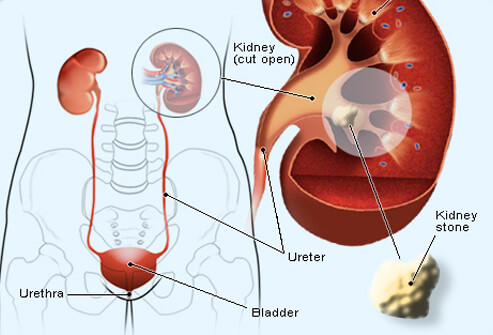
    Kidney stones are small masses of salts and minerals that form inside the kidneys and may travel down the urinary tract. Kidney stones range in size from just a speck to as large as a ping pong ball. Signs and symptoms of kidney stones include blood in the urine, and pain in the abdomen, groin, or flank. About 5% of people develop a kidney stone in their lifetime.
    What causes kidney stones?

    The kidneys regulate levels of fluid, minerals, salts, and other substances in the body. When the balance of these compounds changes, kidney stones may form. There are four types of kidney stones, each made of different substances. Uric acid and cystine are two compounds that may comprise kidney stones. Factors known to increase the risk of kidney stones include dehydration, family history, genetics, and the presence of certain medical conditions. Having one or more family members with a history of kidney stones increases the risk of the condition.

    Who is likely to develop a kidney stone?

    The rate of people who develop kidney stones is increasing in the U.S. The reasons for the trend are unknown. The prevalence of kidney stones was 3.8% in the late 1970s. In the late 1980s and early 1990s, the number rose to 5.2%. Caucasian ethnicity and male gender are associated with higher rates of kidney stones. Men tend to develop kidney stones in their 40s through 70s; rates increase with age. Women are most likely to experience kidney stones in their 50s. A person who has suffered from one kidney stone is likely to develop others.

    What are symptoms of kidney stones?

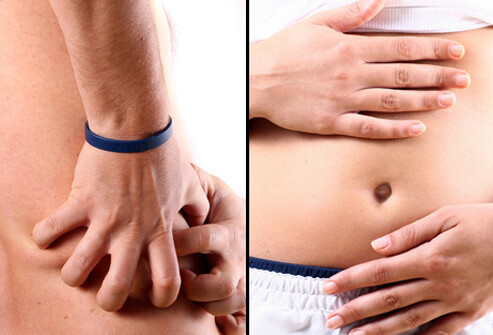
    Many kidney stones are painless until they travel from the kidney, down the ureter, and into the bladder. Depending on the size of the stone, movement of the stone through the urinary tract can cause severe pain with sudden onset. People who have kidney stones often describe the pain as excruciating. The lower back, abdomen, and sides are frequent sites of pain and cramping. Those who have kidney stones may see blood in their urine. Fever and chills are present when there is an infection. Seek prompt medical treatment in the event of these symptoms.

    How are kidney stones diagnosed?

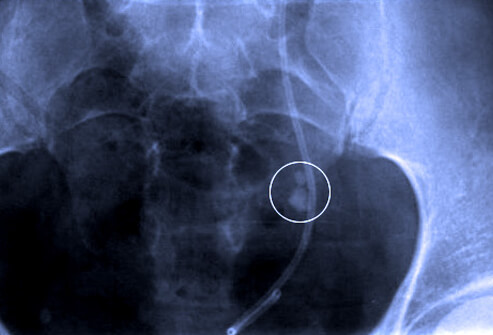
    Kidney stones are diagnosed by excluding other possible causes of abdominal pain and associated symptoms. Imaging tests including an X-ray called a KUB view (kidney, ureter, bladder), or a helical CT scan are often used to confirm the diagnosis of kidney stones. Although the amount of radiation exposure associated with these tests are minimal, pregnant women and others may need to avoid even these low levels of radiation. In these cases, an ultrasound may be used to diagnose the kidney stone.

    What is the treatment for kidney stones?

    Most people with kidney stones are able to pass them on their own within 48 hours by drinking plenty of fluids. Pain medication can ease the discomfort. The smaller the stone, the more likely it is to pass without intervention. Other factors that influence the ability to pass a stone include pregnancy, prostate size, and patient size. Stones that are 9 mm or larger usually do not pass on their own and require intervention. Stones that are 5 mm in size have a 20% chance of passing on their own while 80% of stones that are 4 mm in size have a chance of passing without treatment.

    What is the treatment for stones that do not pass on their own?

    Lithotripsy is a procedure that uses shock waves to break a kidney stone into smaller pieces that can be more easily expelled from the body. The device used for this procedure is called a Lithotripter. Kidney stones can also be removed surgically. A percutaneous nephrolithotomy is a procedure in which a kidney stone is removed via a small incision in the skin. A kidney stone may also be removed with a ureteroscope, an instrument that is advanced up through the urethra and bladder to the ureter.

    How can kidney stones be prevented?

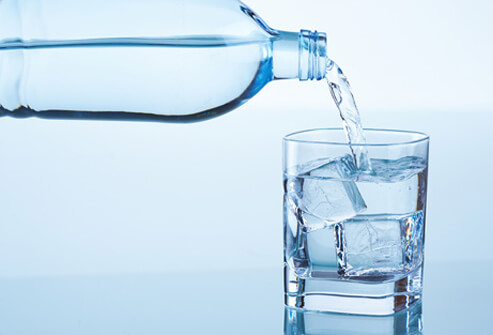
    The best way to avoid kidney stones is to prevent the most common cause – dehydration. You are adequately hydrated when your urine is clear. Most people require between 8 to 10 glasses of water per day. Avoid grapefruit juice which is linked to the development of kidney stones.

    What are risk factors you can control?

    Diet is a factor in some cases of kidney stones. A dietician can recommend foods to reduce the risk of kidney stones. Higher than recommended amounts of vitamin D, vitamin C, salt, protein, and foods containing high oxalates (dark green vegetables) may increase the risk of stone formation. Eating a low-protein, low-sodium diet with adequate calcium decreases the chance of developing stones.

    Learn about additional risk factors you can control.

    Excess weight is linked to kidney stones. In one study, weight gain from early adulthood on was linked to an increased risk of stone formation. Other factors linked to kidney stone risk were increased waist circumference and high body mass index (BMI). Physical inactivity may increase risk. Certain medications such as acetazolamide (Diamox) and indinavir (Crixivan) are linked to kidney stone formation.

    0 comment
    0
    Facebook Twitter Google + Pinterest
    explainingmedicine

    previous post
    Weight Loss: Top 10 Habits That Can Help You Lose Weight
    next post
    Pinworms: Symptoms, Treatments, and Medication

    Related Articles

    Weight Loss: Top 10 Habits That Can Help You Lose Weight

    October 14, 2016

    Diabetic Peripheral Neuropathy: Exercises to Improve Diabetes Nerve Pain

    October 14, 2016

    Lyme Disease: Find Out How to Protect Yourself

    October 14, 2016

    Diet and Weight Loss: Low-Carb Snacks

    October 14, 2016

    Breast Cancer: 10 Things Young Women Should Know

    October 14, 2016

    Osteoporosis: Are Your Bones at Risk?

    October 14, 2016

    Back Pain: Myths and Facts About Back Pain

    October 14, 2016

    Abdominal Pain: Causes, Symptoms and Diagnosis

    October 14, 2016

    Pet Health: Pet Treats Dos and Don’ts

    October 14, 2016

    Dental Health: 19 Habits That Wreck Your Teeth

    October 14, 2016

    Recent Posts

    • Flu shot recommendation for kids dropped just as the illness rages

      January 12, 2026
    • The CDC just sidelined these childhood vaccines. Here’s what they prevent

      January 9, 2026
    • Your next primary care doctor could be online only, accessed through an AI tool

      January 9, 2026
    • In Lodge Grass, Montana, a Crow community works to rebuild from meth’s destruction

      January 8, 2026
    • RFK Jr.’s new dietary guidelines go all in on meat and dairy

      January 7, 2026

    Keep in touch

    Facebook Twitter Google + RSS

    Recent Posts

    • Flu shot recommendation for kids dropped just as the illness rages

      January 12, 2026
    • The CDC just sidelined these childhood vaccines. Here’s what they prevent

      January 9, 2026
    • Your next primary care doctor could be online only, accessed through an AI tool

      January 9, 2026
    • In Lodge Grass, Montana, a Crow community works to rebuild from meth’s destruction

      January 8, 2026
    • RFK Jr.’s new dietary guidelines go all in on meat and dairy

      January 7, 2026
    • Terms of Service
    • Privacy Policy

    @2026 - Explaining Medicine. All Right Reserved.


    Back To Top
    Explaining Medicine
    Proudly powered by WordPress Theme: soledad child.