Explaining Medicine
  • News
  • Health & Lifestyle
    • Diet & Weight Management
    • Exercise & Fitness
    • Nutrition, Food & Recipes
    • Prevention & Wellness
  • Conditions
    • Custom1
      • Conditions A-Z
      • Procedures A-Z
      • Allergies
      • Alzheimer’s
      • Arthritis
      • Asthma
      • Blood Pressure
      • Cholesterol
      • Cancer
    • Custom2
      • Chronic Pain
      • Cold Flu
      • Depression
      • Diabetes
      • Digestion
      • Eyesight
      • Health Living
      • Healthy Kids
      • Hearing Ear
    • Custom3
      • Heart
      • HIV/AIDS
      • Infectious Disease
      • Lung Conditions
      • Menopause
      • Men’s Health
      • Mental Health
      • Migraine
      • Neurology
    • Custom4
      • Oral Health
      • Pregnancy
      • Senior Health
      • Sexual Health
      • Skin Problems
      • Sleep
      • Thyroid
      • Travel Health
      • Women’s Health
  • Medications
    • Medications
    • Supplements and Vitamins
  • Medical Dictionary
  • Health Alerts
Flu shot recommendation for kids dropped just as...
The CDC just sidelined these childhood vaccines. Here’s...
Your next primary care doctor could be online...
In Lodge Grass, Montana, a Crow community works...
RFK Jr.’s new dietary guidelines go all in...
More seniors are becoming homeless. Shelters are trying...
Health officials slash the number of vaccines recommended...
Wegovy obesity pill now available at pharmacies
In the U.S., hunger is often hidden. But...
One doctor’s experience shows the battle for the...
Top Posts

Explaining Medicine

  • News
  • Health & Lifestyle
    • Diet & Weight Management
    • Exercise & Fitness
    • Nutrition, Food & Recipes
    • Prevention & Wellness
  • Conditions
    • Custom1
      • Conditions A-Z
      • Procedures A-Z
      • Allergies
      • Alzheimer’s
      • Arthritis
      • Asthma
      • Blood Pressure
      • Cholesterol
      • Cancer
    • Custom2
      • Chronic Pain
      • Cold Flu
      • Depression
      • Diabetes
      • Digestion
      • Eyesight
      • Health Living
      • Healthy Kids
      • Hearing Ear
    • Custom3
      • Heart
      • HIV/AIDS
      • Infectious Disease
      • Lung Conditions
      • Menopause
      • Men’s Health
      • Mental Health
      • Migraine
      • Neurology
    • Custom4
      • Oral Health
      • Pregnancy
      • Senior Health
      • Sexual Health
      • Skin Problems
      • Sleep
      • Thyroid
      • Travel Health
      • Women’s Health
  • Medications
    • Medications
    • Supplements and Vitamins
  • Medical Dictionary
  • Health Alerts
  • Slideshows

    Spider & Varicose Veins: See The Before-and-After Photos

    by explainingmedicine October 14, 2016

    Spider and Varicose Veins

    Spider veins and varicose veins are common conditions that affect many adults. These abnormally enlarged vessels, which affect women more often than men, appear most often on the legs and become more prevalent with age. Spider veins and varicose veins affect up to 50% of the adult population. The following slideshow will highlight the important facts about spider veins and varicose veins, with accompanying pictures to better understand what they look like, what they are, and how to treat them.

    What Are Spider Veins?

    Spider veins (also called telangiectasias) are clusters of tiny blood vessels that develop close to the surface of the skin. They are often red, blue, or purple; and they have the appearance of a spiderweb. They are commonly found on the face and legs.

    What Are Varicose Veins?

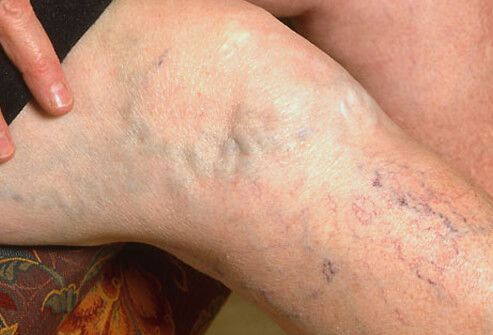
    Varicose veins are abnormally enlarged veins that appear most often on the legs. They are typically blue, purple, or skin-colored; and they appear as dilated, twisting and bulging vessels that may be raised above the surface of the skin.

    What Causes Spider and Varicose Veins?

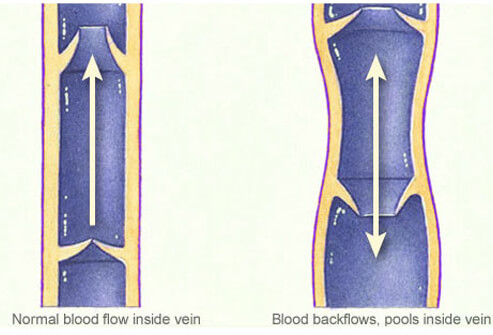
    Spider veins and varicose veins are caused by structural abnormalities of blood vessels. Veins carry blood back to the heart from other parts of the body. They utilize a series of one-way valves to avoid backflow of blood. For a variety of reasons, these valves can become defective, allowing the backflow of blood within veins. The subsequent pooling of blood and pressure increase within the vein, and weakens the blood vessel wall. Spider veins and varicose veins then develop from the engorgement and dilation of the affected blood vessels.

    Who Gets Spider and Varicose Veins?

    Spider veins and varicose veins are very common in adults, though women tend to develop them more frequently than men. There are a variety of different risk factors that increase the chances of a person getting spider veins and varicose veins. Risk factors include advanced age, prolonged sitting/standing, obesity, pregnancy, hormone therapy (HT), birth control pills, injury, prior vein surgery, a history of blood clots, and a family history.

    Spider/Varicose Vein Symptoms

    Spider veins and varicose veins often cause no symptoms or signs other than their undesirable cosmetic appearance. However, certain individuals may experience problematic symptoms from varicose veins. Symptoms may include swelling, throbbing, aching, burning, itching, heaviness, tingling, or cramping of the legs. These symptoms often worsen after prolonged sitting or standing. Individuals can also develop a brown discoloration of the skin and skin ulcers.

    Spider and Varicose Vein Complications

    Though spider veins and varicose veins rarely cause serious complications, some individuals may develop skin ulcers. These open wounds usually appear on the lower leg, and they may sometimes lead to soft tissue infections. Some individuals with varicose veins can also develop blood clots within the veins (superficial thrombophlebitis). Localized bleeding from varicose veins also can occur.

    Spider and Varicose Vein Diagnosis

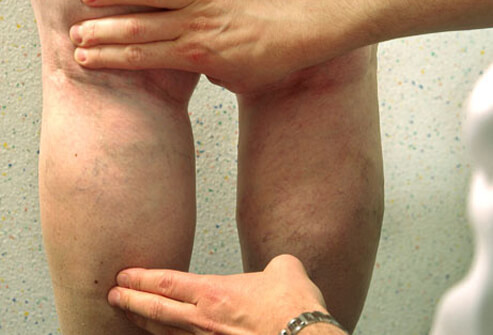
    Your health care professional can diagnose spider veins and varicose veins by closely examining the affected areas, which are usually on the legs. The exam will consist of a visual inspection, and palpation of the areas of concern. Special attention will be given to areas of redness, swelling, skin discoloration, and skin ulcers. Though most cases of spider veins and varicose veins do not require treatment, those individuals who develop complications should seek medical care and treatment. The treatment of spider veins and varicose veins also is sought for cosmetic reasons. There are various measures that can be used at home to help alleviate some of the symptoms should they develop. These conservative measures also can help prevent any potential complications.

    Treatment: Support Stockings

    Support stockings, also called compression stockings, are an easy intervention to use at home to help alleviate symptoms in the legs. Compression stockings improve circulation by increasing the pressure in the legs. These stockings come in a variety of styles and compression strengths. Your health care professional can recommend the proper pair for you. They are typically sold in drug stores and medical supply facilities.

    Treatment: Lifestyle Changes

    A regular exercise program and weight loss can help relieve the symptoms of spider veins and varicose veins. Affected individuals should avoid standing or sitting for prolonged periods of time, and elevate the legs while sitting or sleeping to improve the circulation and decrease swelling in the legs.

    Treatment: Sclerotherapy

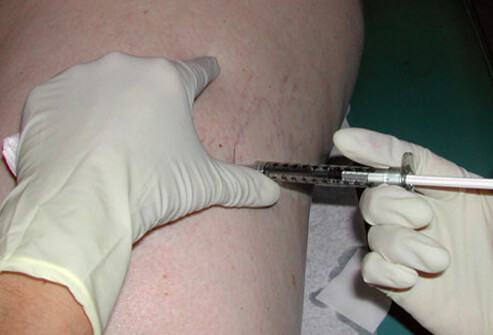
    Sometimes the conservative management of spider veins and varicose veins at home may not yield the desired results. In these cases, more specialized medical procedures may be available, depending on the location and size of the abnormal veins. These medical procedures are often undertaken for cosmetic reasons. Sclerotherapy is a common procedure that can be performed in your physician’s office, and it is very effective in eliminating the majority of spider veins and some varicose veins. During this procedure, which requires no anesthesia, your physician will inject a liquid solution directly into the affected vein, which causes the vein to collapse and eventually fade away. Several sessions may be required for optimal results. Potential side effects include bruising, swelling, bleeding, infection, and skin discoloration.

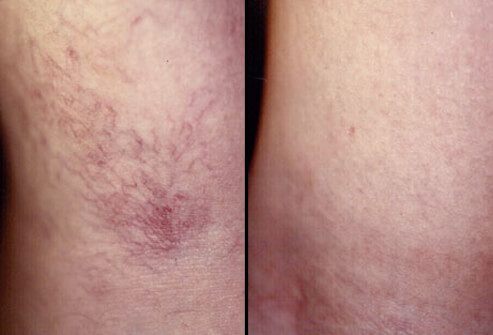
    Sclerotherapy: Before and After

    Treatment with sclerotherapy can require multiple treatment sessions, and healing time may vary from individual to individual. Generally, spider veins will begin to fade within three to six weeks after treatment, while varicose veins may require several months to respond.

    Treatment: Laser Therapy

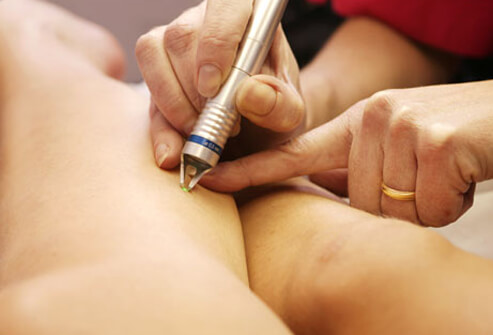
    Laser therapy is another alternative medical procedure that also can be performed in your physician's office. It is sometimes used as a complement to sclerotherapy in order to maximize results. It is most effective for spider veins and tiny varicose veins. For those individuals who do not like needles, this provides an alternative option, though your physician will counsel you on which treatment modality is best given your particular situation. Laser therapy uses a focused beam of light that heats and damages the affected blood vessel, which eventually fades. Potential side effects include minor redness or swelling around the treated area, skin discoloration, blisters, and rarely scarring. Intense Pulsed Light (IPL) therapy is a recently developed treatment for spider veins. IPL delivers pulses of different bands of light to targeted areas.

    Laser Therapy: Before and After

    As with sclerotherapy, several sessions are frequently necessary for optimal results with laser therapy. Resolution can take anywhere from several weeks to several months after treatment.

    Treatment: Vein Surgery

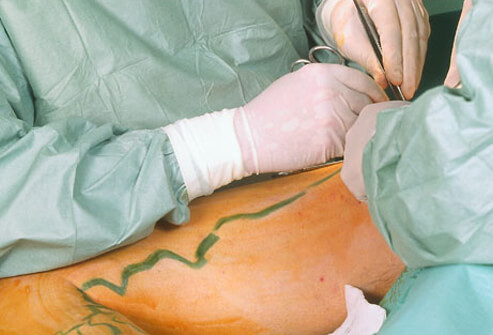
    Surgery is an option for more severe cases of varicose veins. Your physician will discuss with you the various surgical procedures available in order to help you determine which treatment is optimal for varicose veins. One of the surgical procedures available is vein ligation and stripping, which involves cutting and tying off the affected vein (ligation) and surgically removing (stripping) it through small incisions in the skin.

    Vein Surgery: Before and After

    Vein ligation and stripping is frequently successful at resolving both the symptoms and cosmetic appearance of varicose veins. This procedure is done under local, spinal, or general anesthesia in a hospital or outpatient surgical center. An overnight stay is rarely necessary. Full recovery from this procedure usually takes about two to four weeks. Potential complications may include infection, bleeding, scarring, nerve injury, a deep vein blood clot, or an adverse reaction to anesthesia.

    Treatment: Endovenous Laser

    Endovenous laser treatment is a minimally invasive surgical procedure which involves the emission of laser light through a thin fiber inserted into the affected vein, causing the vein to contract. Endovenous laser treatment has a 98% initial success rate. This procedure is performed as an outpatient procedure under local anesthesia or using light sedation. Patients report less pain and a faster recovery time with endovenous laser treatment when compared to vein ligation and stripping.

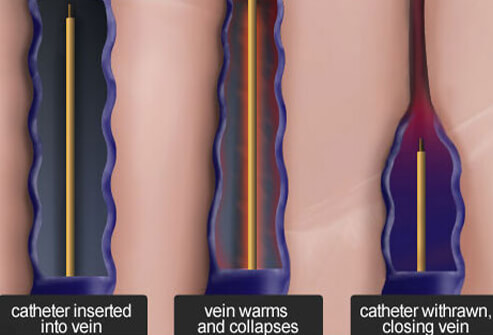
    Treatment: Radiofrequency Ablation

    Endovenous radiofrequency ablation is a minimally invasive procedure that is similar to endovenous laser treatment. Instead of using a laser light, a catheter is inserted into the vein and using radiofrequency energy, the affected vein is heated and contracts. As with endovenous laser treatment, patients report less pain and quicker recovery times compared to vein ligation and stripping.

    Preventing Spider and Varicose Veins

    Although spider veins and varicose veins may not always be entirely preventable, there are various measures you can take to reduce your chances of developing them. Prevention tips include:

    • exercising regularly,
    • maintain a healthy weight,
    • avoid prolonged sitting or standing,
    • avoid crossing your legs while seated,
    • elevate your legs when resting, and
    • avoid wearing tight-fitting clothing around your waist, groin and legs.
    0 comment
    0
    Facebook Twitter Google + Pinterest
    explainingmedicine

    previous post
    Reduce Wrinkles: Surprising Ways to Reduce Them
    next post
    Summer Skin Hazards: Stay Safe This Summer

    Related Articles

    Diabetic Peripheral Neuropathy: Exercises to Improve Diabetes Nerve Pain

    October 14, 2016

    Low Blood Pressure (Hypotension): How Low is Too Low?

    October 14, 2016

    Pain: Surprising Reasons You’re in Pain

    October 14, 2016

    Hyperhidrosis (Sweating): What Makes You Sweat

    October 14, 2016

    Stress Relief: 10 Ways to Stop Stress

    October 14, 2016

    Heartburn: Foods to Eat, Foods to Avoid

    October 14, 2016

    Viral Infections: Types, Treatment, and Prevention

    October 14, 2016

    Hepatitis: A Visual Guide to Hepatitis

    October 14, 2016

    Children’s Health: Top 10 Brain Foods for Children

    October 14, 2016

    Gout: See & Learn About Gouty Arthritis Attacks

    October 14, 2016

    Recent Posts

    • Flu shot recommendation for kids dropped just as the illness rages

      January 12, 2026
    • The CDC just sidelined these childhood vaccines. Here’s what they prevent

      January 9, 2026
    • Your next primary care doctor could be online only, accessed through an AI tool

      January 9, 2026
    • In Lodge Grass, Montana, a Crow community works to rebuild from meth’s destruction

      January 8, 2026
    • RFK Jr.’s new dietary guidelines go all in on meat and dairy

      January 7, 2026

    Keep in touch

    Facebook Twitter Google + RSS

    Recent Posts

    • Flu shot recommendation for kids dropped just as the illness rages

      January 12, 2026
    • The CDC just sidelined these childhood vaccines. Here’s what they prevent

      January 9, 2026
    • Your next primary care doctor could be online only, accessed through an AI tool

      January 9, 2026
    • In Lodge Grass, Montana, a Crow community works to rebuild from meth’s destruction

      January 8, 2026
    • RFK Jr.’s new dietary guidelines go all in on meat and dairy

      January 7, 2026
    • Terms of Service
    • Privacy Policy

    @2026 - Explaining Medicine. All Right Reserved.


    Back To Top
    Explaining Medicine
    Proudly powered by WordPress Theme: soledad child.