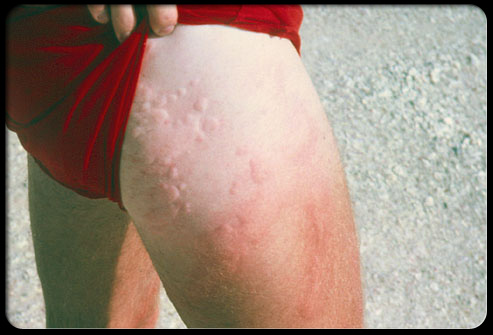
Their tentacles contain venom, so getting stung can be painful or sometimes life-threatening. Stings usually happen by accident when you carelessly handle a jellyfish, or swim or wade among them.
Jellyfish Stings
They can set off intense pain, rashes, and welts. Some get worse and lead to vomiting and muscle spasms. Severe reactions can cause trouble breathing, coma, and death. For most people, it helps to put vinegar on the stung areas, which can deactivate the so-called stingers. Most lifeguard stands keep it on hand.
Stingrays
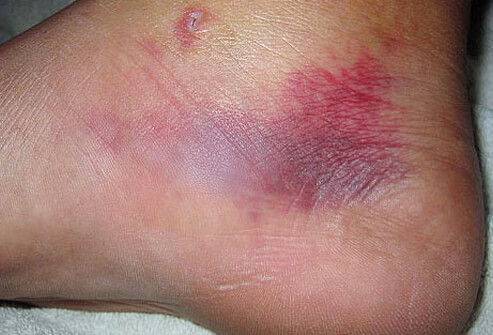
Their tails have notched, venomous spines that can cause cuts and puncture wounds. Stingrays aren’t aggressive, so it's unlikely they'll try to hurt you unless you accidentally step on one.
Stingray Sting
Symptoms can include sharp pain, bleeding from the wound, vomiting, chills, and paralysis. In some cases it can lead to death. You should get medical care right away for stingray injuries. If help isn't around, submerge the injured area in hot water, remove the stingers, and scrub the wound with soap and fresh water. Apply pressure to stop the bleeding.
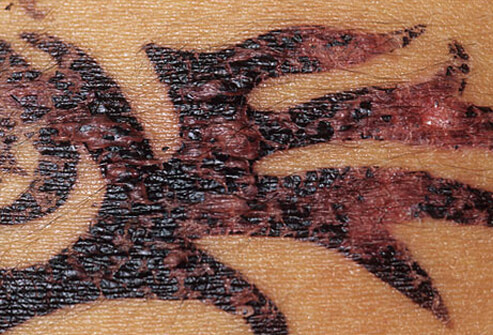
Skin Reactions to Henna Tattoos
The FDA has received complaints of skin irritations and allergic reactions from henna temporary tattoos, especially so-called "black henna." It may contain the "coal tar" color p-phenylenediamine, which can blister or even scar your skin. Henna comes from a plant and produces a brown or reddish-brown tint. Other ingredients are added to produce other colors, or to make the stain darker and last longer.
Poisonous Ivy, Oak, and Sumac
Have an accidental brush with sap from any of these plants and chances are you'll get a rash. You have about 10 minutes to wash it off your skin to prevent a reaction. It begins with redness and swelling on the part of your body that made contact with it, and then it becomes intensely itchy. Blisters appear within hours or a few days. The rash lasts up to 2 to 3 weeks. Prescription or over-the-counter medication can soothe a mild rash. For a severe reaction, your doctor might prescribe a medication called cortisone, which you take by mouth. You might need antibiotics if your skin gets infected.
Seen here (left to right) are poison ivy, oak, and sumac.
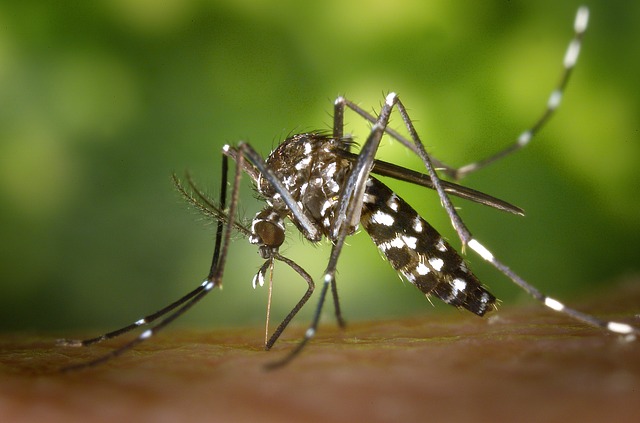
Mosquito Bites
These are more than annoying -- scratching one can cause a skin infection. Mosquitoes can also carry West Nile virus, dengue fever, and other diseases. To protect yourself:
Apply insect repellent and cover up when you go outdoors.
Use door and window screens.
Ticks
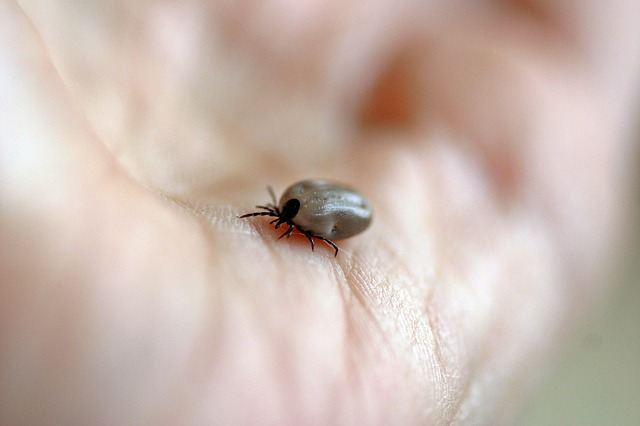
Check your body for these insects. They can jump on you as you brush past grass and plants. Ticks don't always carry diseases, and most bites aren’t serious. But they can carry illnesses like Lyme disease and Rocky Mountain spotted fever. A bite can also trigger an allergic reaction. If one's on you, don't just yank it off -- remove it properly. To prevent bites, keep your arms, legs, and head covered when you're in grassy areas, and use tick repellent.
Bee Stings
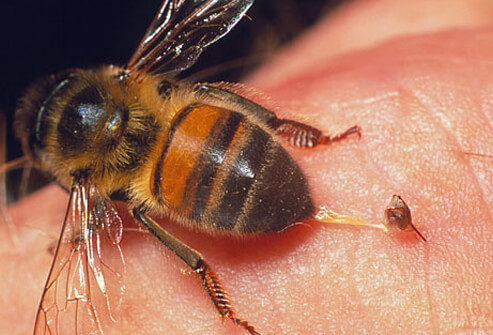
Most people get minor swelling, pain, and itching. But some have what's known as an anaphylactic reaction, which is more severe and can be fatal. Symptoms include hives, swelling of the mouth or throat, and trouble breathing. If this happens to you, lie down and remove the stinger. Give yourself an epinephrine shot if you have one, and get immediate medical care. If you don't have a severe response, remove the stinger, clean the site, apply ice, and take an antihistamine for itching. The longer you wait to remove the stinger, the more venom you get.
Chiggers
These tiny mites live in tall grass or weeds. They attach to your body by inserting mouth parts that pierce and liquefy the skin cells on which they feed. Their bites are painless. After a few days of being attached they fall off, leaving itchy red welts. Over-the-counter products can help relieve the itch, but see a doctor if your skin looks infected or the welts seem to be spreading.
Flip-Flop Hazards
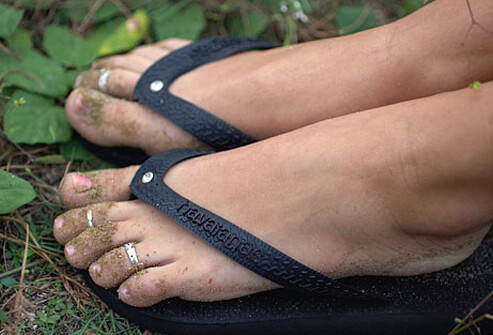
They may be fun and fashionable, but these summer standbys offer little protection against stubbed toes, glass cuts, puncture wounds, or heavy objects that can smash a foot. They're also useless against insect and snake bites. Consider wearing close-toed shoes that offer better protection, especially if you're in the great outdoors.
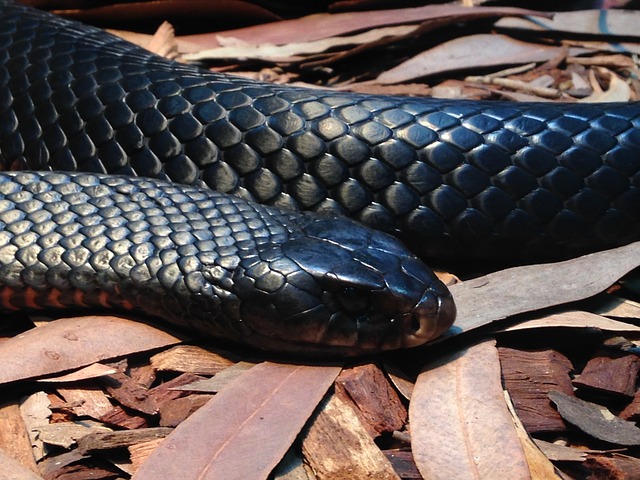
Poisonous Snake Bites
The U.S. is home to many dangerous snakes. Their bites can cause severe burning pain at the bite site, swelling that spreads out from the wound, weakness, trouble breathing, and changes in your heart rate. How bad a bite is depends on many things, including the amount of venom injected, which body part got chomped, and your age and health. Get immediate medical care if you think you’ve been bitten.
Pictured here (clockwise from top left): coral snake, rattlesnake, water moccasin, copperhead.
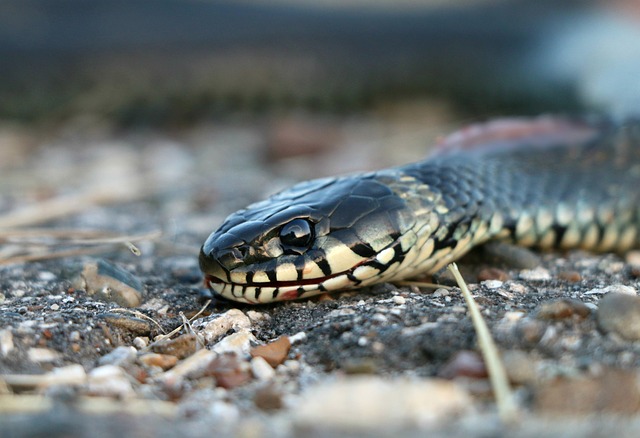
Nonpoisonous Snake Bites
Most snakes that live in the U.S. aren’t a threat. Their bites don't cause serious health problems. A bite may leave fang marks or other puncture wounds, but home treatment should relieve your symptoms and help you avoid an infection. Bites from large snakes with powerful jaws, like pythons or boa constrictors, can damage skin, joints, bones, and muscles. See a doctor if one of these sinks its fangs into you.
Seen here is an adult shorthead garter snake.
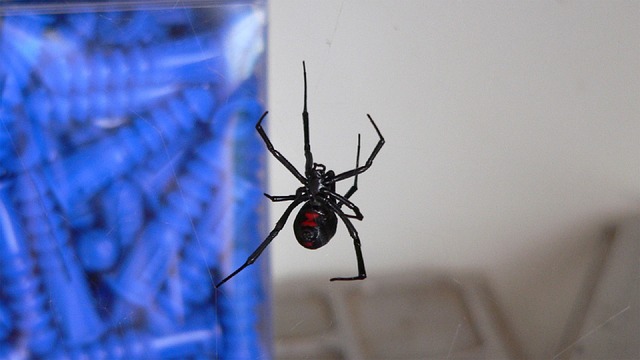
Black Widow Spiders
Wood piles and tree stumps -- that's where a female black widow hides. You can spot her by the bright-colored "hourglass" on her underside. A bite may cause sharp, shooting pain -- or you might feel nothing at all. Look for one or two red fang marks, redness, tenderness, and a nodule at the site. The venom can cause muscle cramps, nausea, vomiting, seizures, and high blood pressure may follow soon after a bite, so seek medical care ASAP.
Brown Recluse Spiders
Hiding in attics and closets -- in Midwestern and South Central states -- is where you'll find these spiders. They range in color from yellowish-tan to dark brown, with darker legs. Brown recluses have a "violin" pattern in the upper body, where the legs attach. Their venom is extremely toxic, and can cause serious wounds and infections. The bite itself is often painless -- at first. Then your skin reddens, turns white, develops a red "bull's-eye," blisters, and becomes painful. You need to get immediate medical care if that describes your symptoms.
Burns from Fireworks
About 9,000 people wind up in the emergency room every year for injuries related to fireworks. Most involve the hands, eyes, head, face, and ears. Burns are the most common. You can treat a minor burn smaller than your palm at home. Run it under cool water until the burning feeling stops. Cover it with a clean, dry cloth. Larger burns, and ones to the hands, feet, face, genitals, and major joints, usually mean you need to go to the ER.
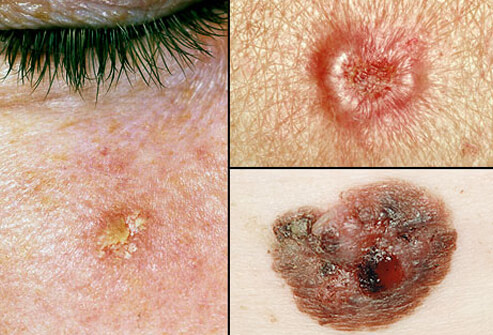
Skin Cancer
It's the most common kind of cancer in the U.S. There are three main types of skin cancer: basal cell carcinoma, squamous cell carcinoma, and melanoma. See your doctor if a mole or spot changes in size, shape, or color, has irregular edges, is more than one color, is asymmetrical, or it itches, oozes, or bleeds.
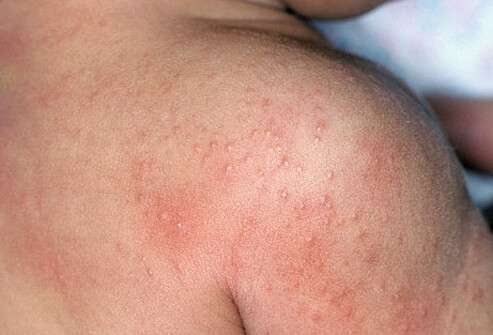
Heat Rash
You get this due to blocked sweat ducts, and it looks like small, pinkish pimples. You usually find it on body areas covered by clothing. It's most common in children, but it can affect adults in hot, humid climates. Most rashes heal on their own. You can apply cold compresses or take a cool bath to ease your symptoms. Air dry, and don't use lotions. If your baby's skin is so irritated it hurts for you to touch her, ask the doctor about calamine or hydrocortisone cream.
Sunburn
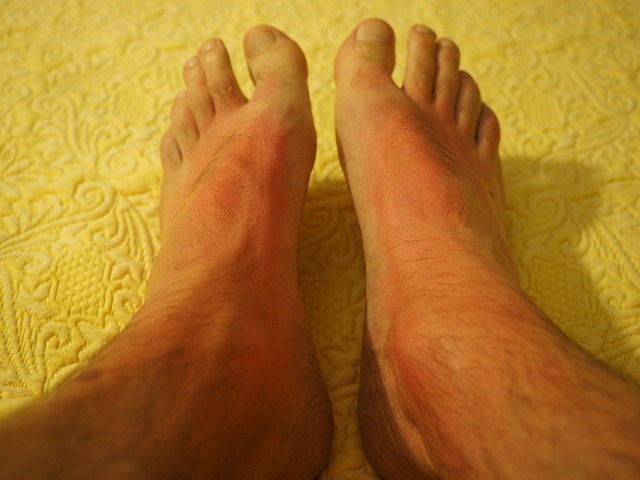
Too much time in the sun's UV rays causes reddened, painful skin. A sunburn usually appears within a few hours, and it can take weeks to fade. Pain relievers, cold compresses, aloe, hydrocortisone, or moisturizing creams may ease your symptoms. Second-degree sunburn, which tends to give you redness, swelling, and blisters, is usually more painful and takes longer to heal. See a doctor if you have this type of burn. Avoid getting scorched again by applying a shot-glass-sized amount of sunscreen -- SPF 30 or higher -- to exposed skin. Put more on every 2 hours, and after you sweat or swim.