Explaining Medicine
  • News
  • Health & Lifestyle
    • Diet & Weight Management
    • Exercise & Fitness
    • Nutrition, Food & Recipes
    • Prevention & Wellness
  • Conditions
    • Custom1
      • Conditions A-Z
      • Procedures A-Z
      • Allergies
      • Alzheimer’s
      • Arthritis
      • Asthma
      • Blood Pressure
      • Cholesterol
      • Cancer
    • Custom2
      • Chronic Pain
      • Cold Flu
      • Depression
      • Diabetes
      • Digestion
      • Eyesight
      • Health Living
      • Healthy Kids
      • Hearing Ear
    • Custom3
      • Heart
      • HIV/AIDS
      • Infectious Disease
      • Lung Conditions
      • Menopause
      • Men’s Health
      • Mental Health
      • Migraine
      • Neurology
    • Custom4
      • Oral Health
      • Pregnancy
      • Senior Health
      • Sexual Health
      • Skin Problems
      • Sleep
      • Thyroid
      • Travel Health
      • Women’s Health
  • Medications
    • Medications
    • Supplements and Vitamins
  • Medical Dictionary
  • Health Alerts
Flu shot recommendation for kids dropped just as...
The CDC just sidelined these childhood vaccines. Here’s...
Your next primary care doctor could be online...
In Lodge Grass, Montana, a Crow community works...
RFK Jr.’s new dietary guidelines go all in...
More seniors are becoming homeless. Shelters are trying...
Health officials slash the number of vaccines recommended...
Wegovy obesity pill now available at pharmacies
In the U.S., hunger is often hidden. But...
One doctor’s experience shows the battle for the...
Top Posts

Explaining Medicine

  • News
  • Health & Lifestyle
    • Diet & Weight Management
    • Exercise & Fitness
    • Nutrition, Food & Recipes
    • Prevention & Wellness
  • Conditions
    • Custom1
      • Conditions A-Z
      • Procedures A-Z
      • Allergies
      • Alzheimer’s
      • Arthritis
      • Asthma
      • Blood Pressure
      • Cholesterol
      • Cancer
    • Custom2
      • Chronic Pain
      • Cold Flu
      • Depression
      • Diabetes
      • Digestion
      • Eyesight
      • Health Living
      • Healthy Kids
      • Hearing Ear
    • Custom3
      • Heart
      • HIV/AIDS
      • Infectious Disease
      • Lung Conditions
      • Menopause
      • Men’s Health
      • Mental Health
      • Migraine
      • Neurology
    • Custom4
      • Oral Health
      • Pregnancy
      • Senior Health
      • Sexual Health
      • Skin Problems
      • Sleep
      • Thyroid
      • Travel Health
      • Women’s Health
  • Medications
    • Medications
    • Supplements and Vitamins
  • Medical Dictionary
  • Health Alerts
  • Slideshows

    Pet Health: The Truth About Cat People and Dog People

    by explainingmedicine October 14, 2016

    Can a Pet Predict Your Personality?

    Are you a cat person or a dog person? The answer may say a lot about your personality. A survey done by the University of Texas at Austin found that some common ideas about pet lovers may be true. You may also be a lot more like your furry friend than you ever realized. Browse our gallery to see where you stand -- and how other Americans divide into cat people vs. dog people.


    Personality Trait: Conscientious

    The online survey asked people to rate themselves as "cat people" or "dog people." Then people answered questions designed to reveal their true personality. Dog people were 11% more conscientious than cat people. What it means:

    • Self-disciplined
    • Strong sense of duty
    • Tend to be "planners"

    Personality Trait: Extroverted

    Do you seize the day? If you’re a dog person, it’s likely that you do. Dog people were 15% more extroverted than cat people in the survey. What it means:

    • Outgoing
    • Enthusiastic
    • Positive
    • Energetic

    Personality Trait: Open

    Are you open to trying new things? Cat people were 11% more likely to be open, according to the survey. Open people tend to be:

    • Curious
    • Creative
    • Artistic
    • Nontraditional thinkers

    Personality Trait: Agreeable

    According to the survey, if you're a dog person, you're 13% more likely to be agreeable than a cat person. Agreeable people tend to be:

    • Trusting
    • Altruistic
    • Kind
    • Affectionate
    • Sociable

    Personality Trait: Neurotic

    If you get stressed out easily, you may be a cat person. Cat people were 12% more neurotic than dog people. Neurotic people are:

    • Easily stressed
    • Anxious
    • Worriers

    The Typical Dog Person

    If dogs tend to be energetic, faithful, and easy to get along with, well, so do the people who love them. But survey author and psychologist Sam Gosling, PhD, admits that the differences between cat and dog people aren't huge. "There are certainly many, many cat people who are extroverts and many, many dog people who aren't," Gosling says.

    The Typical Cat Person

    Do you prefer to spend time on your own? Always game to try new things? Then you could be a cat person. The survey found that cat owners were more likely to be curious, unconventional in thinking and actions, and more prone to worry than dog people.

    Dog People Outnumber Cat People

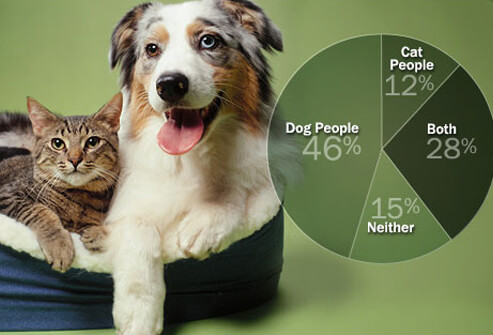
    Nearly half of those who took the survey call themselves dog people. Just 12% say they are cat people. How many people love both cats and dogs? A little more than a quarter of the group. Overall, pet lovers rule the nation. Just 15% of people said they don't like cats or dogs.

    Doggie Upside: Loving and Loyal

    Dogs have rightfully earned their reputation as man’s best friend. No matter the size or breed, a dog provides a lifetime of love and loyalty. Dogs are social animals, and they thrive on human companionship. Certain breeds, such as Rottweilers, also make excellent protectors.

    Doggie Downside: Must Be Trained

    Even the best dog can have some not-so-cute behaviors. Dogs bark, jump up, dig, tug at the leash, or even growl and bite. To curb bad behavior, you need to teach your dog what’s OK and what’s not. Some dogs are easy to train, while others take more time and practice. Either way, your time and money spent on obedience classes will make your dog a delightful pal for years to come.

    Kitty Upside: Independent

    Cats are famously low-maintenance. They don't need to be bathed or taken for walks. They can be left on their own for hours at a time. Even though cats like to do their own thing, they still need plenty of love and attention. Devote some time each day to playing with your cat, grooming her, or just giving her some TLC.

    Kitty Downside: Can Be Standoffish

    Some cats love to socialize, but others prefer to stay hidden, especially when new people visit. In fact, your friends may not even realize you have a cat! Cats who weren’t around people enough as kittens may be skittish. Even the friendliest cat will jump off your lap and sashay off when he’s had enough of your attention.

    Doggie Upside: Boundless Energy

    If you’re looking for a playmate, it doesn’t get much better than a dog. Most breeds are playful and love to be outdoors. A dog can be a great companion for jogging, hiking, or a leisurely stroll in the park. If you’re trying to get in shape, Fido is a fantastic exercise companion. Exercise is as important for dogs as it is for people.

    Doggie Downside: Hair Everywhere

    All dogs shed at least a little, even the breeds thought to be better for people with allergies. The longer and thicker the coat, the more dog hair you'll find on your clothes, rugs, and furniture. Dogs' coats can also get dirty and matted, so expect to bathe and brush your dog or pay someone to do it for you.

    Kitty Upside: Cozy Companion

    When it comes to cuddling, cats take the prize. And most cat owners will tell you the sound of a purring cat is deeply soothing. In fact, when researchers looked closely they found stress levels and blood pressure dropped slightly in people who snuggled up to a purring kitty.

    Kitty Downside: The Litter Box

    Nobody likes cleaning the litter box. But having one is essential if you have an indoor cat. Your cat’s litter box will need to be cleaned at least once a day. The litter should be changed weekly to avoid unpleasant odors. If you have more than one cat, you may need multiple litter boxes to accommodate them.

    What Is Your Dog Saying?

    If you know dog body language, you can tell how he's feeling and what he's trying to say. Dogs may:

    • Widen their eyes if they feel threatened
    • "Grin" as a sign of submission
    • Pull ears back when they're feeling friendly
    • Make themselves look smaller when they're scared

    What Is Your Cat Saying?

    Watch your cat's behavior to figure out her state of mind. Cats may:

    • Let the tail droop when sick or unhappy
    • Twitch their ears when agitated
    • Flutter their eyelids to show trust
    • Knead their paws to show contentment

    Other Pets to Consider: Rabbits

    Rabbits can make great house pets. Besides being soft and adorable, they are quite social and affectionate and can use a litter box. However, they generally don't like to be picked up, which means they may not be ideal for young children. Rabbits also love to chew, and if they're allowed to roam freely in your house they may damage furniture or electrical cords.

    Other Pets to Consider: Reptiles

    Do your research before getting a lizard, turtle, or snake. Reptiles are not low-maintenance pets. Many can live 15 years or longer, and snakes and lizards can grow to be quite large. Reptiles also need special habitats, and this can be expensive. Carnivorous types need live food, like worms, crickets, or mice.

    Other Pets to Consider: Fish

    An aquarium full of fish can be fun to watch and a great stress reliever. Choose the type that fits your time and budget. Two goldfish and a fishbowl is an easy start. A saltwater tank full of tropical fish takes more time but can be an absorbing hobby.

    Other Pets to Consider: Birds

    If you want a pet you can talk to, a bird is the only way to go. Parrots can put together meaningful phrases and may have a vocabulary of 100 words or more. Even birds that can’t talk are highly intelligent and entertaining – with a long lifespan that offers you companionship for 10 to 40 years, depending on the species.

    Should You Keep an Exotic Animal?

    Monkeys and sugar gliders have become popular as pets in recent years. Unfortunately, most people don’t realize what they’re getting into when they bring an exotic pet home. Animals may become malnourished or obese if they're not fed the proper diet. They may be destructive or dangerous. Bottom line: Bringing an exotic animal into your home takes extraordinary research and commitment.

    0 comment
    0
    Facebook Twitter Google + Pinterest
    explainingmedicine

    previous post
    Dog Health: Skin Problems in Dogs
    next post
    Stages of Pregnancy: 1st, 2nd and 3rd Trimesters of Mom & Baby

    Related Articles

    Sleep: Jobs That Wreck Your Sleep

    October 14, 2016

    Women’s Cancer: 15 Cancer Symptoms Women Ignore

    October 14, 2016

    Heart Disease: The No. 1 Killer in the U.S.

    October 14, 2016

    Restless Legs Syndrome: Home Remedies for RLS and Better Sleep

    October 14, 2016

    Ear Infections: Treatments for Children & Adults

    October 14, 2016

    Pet Health: 20 Things You Can Learn from Your Pets

    October 14, 2016

    Teen Girls: DIY Skin and Hair Care for Girls

    October 14, 2016

    Acne: Causes, Solutions and Treatments for Adults

    October 14, 2016

    Insomnia: 20 Tips for Better Sleep

    October 14, 2016

    First Aid: 8 First Aid Essentials for Car or Purse

    October 14, 2016

    Recent Posts

    • Flu shot recommendation for kids dropped just as the illness rages

      January 12, 2026
    • The CDC just sidelined these childhood vaccines. Here’s what they prevent

      January 9, 2026
    • Your next primary care doctor could be online only, accessed through an AI tool

      January 9, 2026
    • In Lodge Grass, Montana, a Crow community works to rebuild from meth’s destruction

      January 8, 2026
    • RFK Jr.’s new dietary guidelines go all in on meat and dairy

      January 7, 2026

    Keep in touch

    Facebook Twitter Google + RSS

    Recent Posts

    • Flu shot recommendation for kids dropped just as the illness rages

      January 12, 2026
    • The CDC just sidelined these childhood vaccines. Here’s what they prevent

      January 9, 2026
    • Your next primary care doctor could be online only, accessed through an AI tool

      January 9, 2026
    • In Lodge Grass, Montana, a Crow community works to rebuild from meth’s destruction

      January 8, 2026
    • RFK Jr.’s new dietary guidelines go all in on meat and dairy

      January 7, 2026
    • Terms of Service
    • Privacy Policy

    @2026 - Explaining Medicine. All Right Reserved.


    Back To Top
    Explaining Medicine
    Proudly powered by WordPress Theme: soledad child.