Explaining Medicine
  • News
  • Health & Lifestyle
    • Diet & Weight Management
    • Exercise & Fitness
    • Nutrition, Food & Recipes
    • Prevention & Wellness
  • Conditions
    • Custom1
      • Conditions A-Z
      • Procedures A-Z
      • Allergies
      • Alzheimer’s
      • Arthritis
      • Asthma
      • Blood Pressure
      • Cholesterol
      • Cancer
    • Custom2
      • Chronic Pain
      • Cold Flu
      • Depression
      • Diabetes
      • Digestion
      • Eyesight
      • Health Living
      • Healthy Kids
      • Hearing Ear
    • Custom3
      • Heart
      • HIV/AIDS
      • Infectious Disease
      • Lung Conditions
      • Menopause
      • Men’s Health
      • Mental Health
      • Migraine
      • Neurology
    • Custom4
      • Oral Health
      • Pregnancy
      • Senior Health
      • Sexual Health
      • Skin Problems
      • Sleep
      • Thyroid
      • Travel Health
      • Women’s Health
  • Medications
    • Medications
    • Supplements and Vitamins
  • Medical Dictionary
  • Health Alerts
Flu shot recommendation for kids dropped just as...
The CDC just sidelined these childhood vaccines. Here’s...
Your next primary care doctor could be online...
In Lodge Grass, Montana, a Crow community works...
RFK Jr.’s new dietary guidelines go all in...
More seniors are becoming homeless. Shelters are trying...
Health officials slash the number of vaccines recommended...
Wegovy obesity pill now available at pharmacies
In the U.S., hunger is often hidden. But...
One doctor’s experience shows the battle for the...
Top Posts

Explaining Medicine

  • News
  • Health & Lifestyle
    • Diet & Weight Management
    • Exercise & Fitness
    • Nutrition, Food & Recipes
    • Prevention & Wellness
  • Conditions
    • Custom1
      • Conditions A-Z
      • Procedures A-Z
      • Allergies
      • Alzheimer’s
      • Arthritis
      • Asthma
      • Blood Pressure
      • Cholesterol
      • Cancer
    • Custom2
      • Chronic Pain
      • Cold Flu
      • Depression
      • Diabetes
      • Digestion
      • Eyesight
      • Health Living
      • Healthy Kids
      • Hearing Ear
    • Custom3
      • Heart
      • HIV/AIDS
      • Infectious Disease
      • Lung Conditions
      • Menopause
      • Men’s Health
      • Mental Health
      • Migraine
      • Neurology
    • Custom4
      • Oral Health
      • Pregnancy
      • Senior Health
      • Sexual Health
      • Skin Problems
      • Sleep
      • Thyroid
      • Travel Health
      • Women’s Health
  • Medications
    • Medications
    • Supplements and Vitamins
  • Medical Dictionary
  • Health Alerts
  • Slideshows

    Psoriasis: See Moderate to Severe Forms of this Common Skin Condition

    by explainingmedicine October 14, 2016

    What Is Psoriasis?

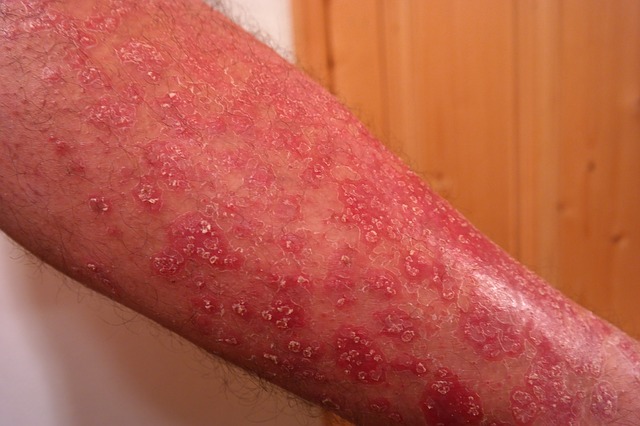
    Psoriasis is an autoimmune disorder where rapid skin cell reproduction results in raised, red and scaly patches of skin. It is not contagious. It most commonly affects the skin on the elbows, knees, and scalp, though it can appear anywhere on the body.


    Who Can Get Psoriasis?

    Anyone can have psoriasis. About 7.5 million people in the U.S. are affected, and it occurs equally in men and women. Psoriasis can occur at any age but is most often diagnosed between the ages of 15 to 25. It is more frequent in Caucasians.

    Psoriasis is a non-curable, chronic skin condition and there will be periods where the condition will improve, and other times it will worsen. The symptoms can range from mild, small, faint dry skin patches where a person may not suspect they have a skin condition to severe psoriasis where a person's entire body may be nearly covered with thick, red, scaly skin plaques.

    What Causes Psoriasis?

    The cause of psoriasis is unknown but a number of risk factors are suspected. There seems to be a genetic predisposition to inheriting the illness, as psoriasis is often found in family members. Environmental factors may play a part in conjunction with the immune system. The triggers for psoriasis – what causes certain people to develop it – remain unknown.

    What Does Psoriasis Look Like?

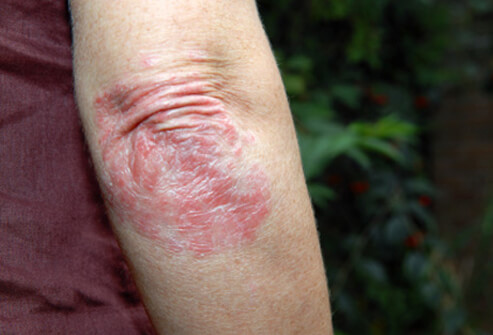
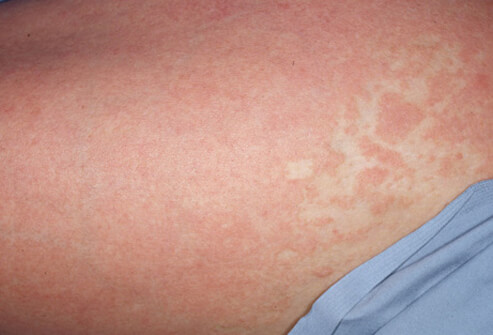
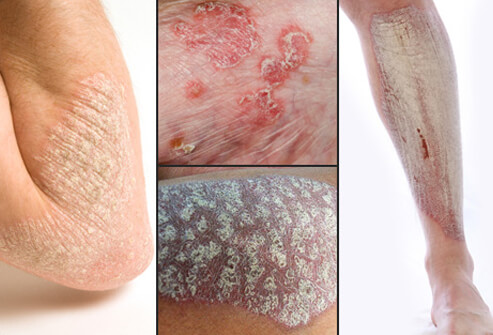
    Psoriasis usually appears as red or pink plaques of raised, thick, scaly skin. However it can also appear as small flat bumps, or large thick plaques, ,. It most commonly affects the skin on the elbows, knees, and scalp, though it can appear anywhere on the body. The following slides will review some of the different types of psoriasis.
    Psoriasis Vulgaris

    The most common form of psoriasis that affects about 80% of all sufferers is psoriasis vulgaris ("vulgaris" means common). It is also referred to as plaque psoriasis because of the well-defined areas of raised red skin that characterize this form. These raised red plaques have a flaky, silver-white buildup on top called scale, made up of dead skin cells. The scale loosens and sheds frequently.

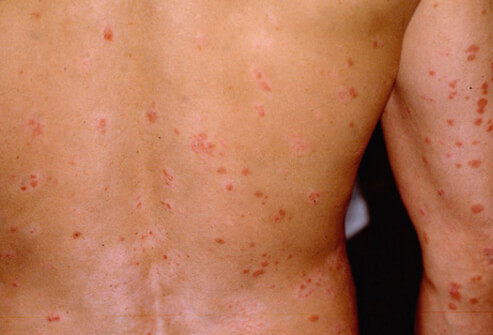
    Guttate Psoriasis

    Psoriasis that has small, salmon-pink colored drops on the skin is guttate psoriasis, affecting about 10% of people with psoriasis. There is usually a fine silver-white buildup (scale) on the drop-like lesion that is finer than the scale in plaque psoriasis. This type of psoriasis if commonly triggered by a streptococcal (bacterial) infection. About two to three weeks following a bout of strep throat, a person's lesions may erupt. This outbreak can go away and may never recur.

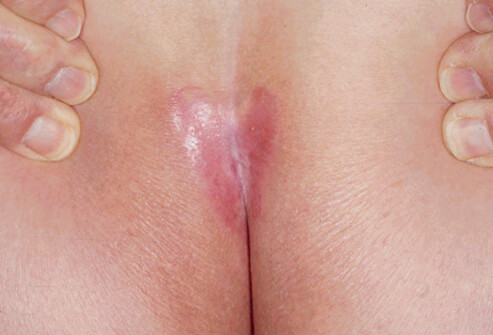
    Inverse Psoriasis

    Inverse psoriasis (also called intertriginous psoriasis) appears as very red lesions in body skin folds, most commonly under the breasts, in the armpits, near the genitals, under the buttocks, or in abdominal folds. Sweat and skin rubbing together irritate these inflamed areas.

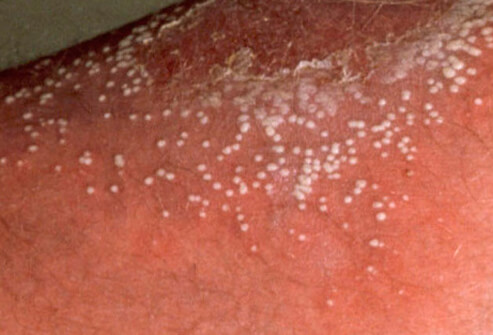
    Pustular Psoriasis

    Pustular psoriasis consists of well-defined, white pustules on the skin. These are filled with pus that is non-infectious. The skin around the bumps is reddish and large portions of the skin may redden as well. It can follow a cycle of redness of the skin, followed by pustules and scaling.

    Erythrodermic Psoriasis

    Erythrodermic psoriasis is a rare type of psoriasis that is extremely inflammatory and can affect most of the body's surface causing the skin to become bright red. It appears as a red, peeling rash that often itches or burns.

    Psoriasis of the Scalp

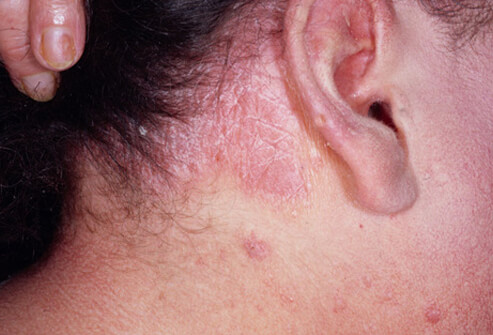
    Psoriasis commonly occurs on the scalp, which may cause fine, scaly skin or heavily crusted plaque areas. This plaque may flake or peel off in clumps. Scalp psoriasis may resemble seborrheic dermatitis, but in that condition the scales are greasy.

    Psoriatic Arthritis

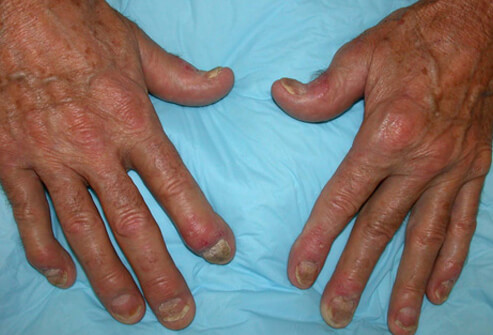
    Psoriatic arthritis is a type of arthritis (inflammation of the joints) accompanied by inflammation of the skin (psoriasis). Psoriatic arthritis is an autoimmune disorder where the body's defenses attack the joints of the body causing inflammation and pain. Psoriatic arthritis usually develops about 5 to 12 years after psoriasis begins and about 5-10% of people with psoriasis will develop psoriatic arthritis.

    Can Psoriasis Affect Only My Nails?

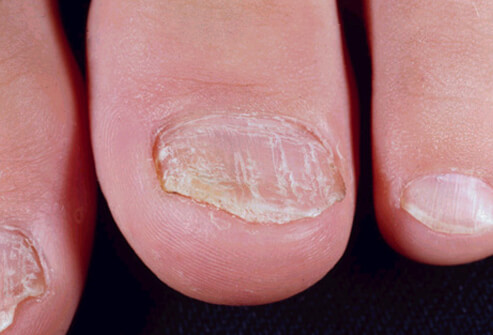
    In some cases, psoriasis may involve only the fingernails and toenails, though more commonly nail symptoms will accompany psoriasis and arthritis symptoms. The appearance of the nails may be altered and affected nails may have small pinpoint pits or large yellow-colored separations on the nail plate called "oil spots." Nail psoriasis can be hard to treat but may respond to medications taken for psoriasis or psoriatic arthritis. Treatments include topical steroids applied to the cuticle, steroid injections at the cuticle, or oral medications.

    Is Psoriasis Curable?

    Right now there is no cure for psoriasis. The disease can go into remission where there are no symptoms or signs present. Current research is underway for better treatments and a possible cure.

    Is Psoriasis Contagious?

    Psoriasis is not contagious even with skin-to-skin contact. You cannot catch it from touching someone who has it, nor can you pass it on to anyone else if you have it.

    Can I Pass Psoriasis on to My Children?

    Psoriasis can be passed on from parents to children, as there is a genetic component to the disease. Psoriasis tends to run in families and often this family history is helpful in making a diagnosis.

    What Kind of Doctor Treats Psoriasis?

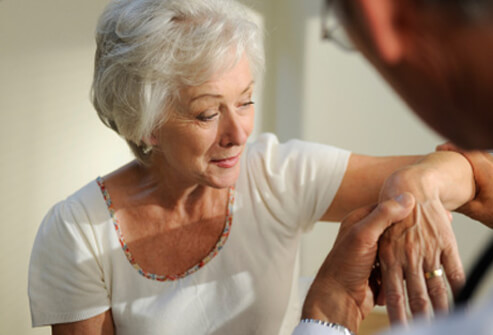
    There are several types of doctors who may treat psoriasis. Dermatologists specialize in the diagnosis and treatment of psoriasis. Rheumatologists specialize in the treatment of joint disorders, including psoriatic arthritis. Family physicians, internal medicine physicians, rheumatologists, dermatologists, and other medical doctors may all be involved in the care and treatment of patients with psoriasis.

    Home Treatment for Psoriasis

    There are some home remedies that may help minimize outbreaks or reduce symptoms of psoriasis:

    • Exposure to sunlight.
    • Apply moisturizers after bathing to keep skin soft.
    • Avoid irritating cosmetics or soaps.
    • Do not scratch to the point you cause bleeding or excessive irritation.
    • Over-the-counter cortisone creams can reduce itching of mild psoriasis.
    • A dermatologist may prescribe an ultraviolet B unit and instruct the patient on home use.

    Medical Treatment – Topical Agents

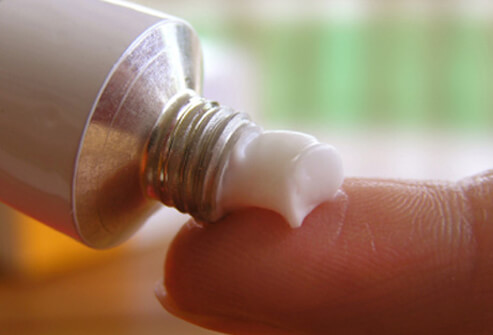
    The first line of treatment for psoriasis includes topical medications applied to the skin. The main topical treatments are corticosteroids (cortisone creams, gels, liquids, sprays, or ointments), vitamin D-3 derivatives, coal tar, anthralin, or retinoids. These drugs may lose potency over time so often they are rotated or combined. Ask you doctor before combining medications, as some drugs should not be combined.

    Medical Treatment – Phototherapy (Light Therapy)

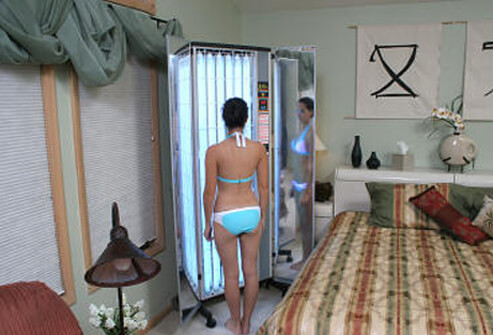
    Ultraviolet (UV) light from the sun slows the production of skin cells and reduces inflammation and can help reduce psoriasis symptoms in some people and artificial light therapy may be used for other people. Sunlamps and tanning booths are not proper substitutes for medical light sources. There are two main forms of light therapy:

    • Ultraviolet B (UV-B) light therapy is usually combined with topical treatments and is effective for treating moderate-to-severe plaque psoriasis. There is a risk of skin cancer, just as there is from natural sunlight.
    • PUVA therapy combines an orally administered psoralen drug that makes the skin more sensitive to light and the sun, with ultraviolet A (UV-A) light therapy. 85% of patients report relief of disease symptoms with 20-30 treatments. Therapy is usually given 2-3 times per week on an outpatient basis, with maintenance treatments every 2-4 weeks until remission. Nausea, itching, and burning are side effects. Complications include sensitivity to the sun, sunburn, skin cancer, and cataracts.

    Medical Treatment – Systemic Agents (Drugs Taken Within the Body)

    If topical treatment and phototherapy have been tried and have failed, medical treatment for psoriasis includes systemic drugs taken either orally or by injection. Drugs including methotrexate, adalimumab (Humira), ustekinumab (Stelara), secukinumab (Cosentyx), ixekizumab (Taltz), and infliximab (Remicade) block inflammation to help slow skin cell growth. Systemic drugs may be recommended for people with psoriasis that is disabling in any physical, psychological, social, or economic way.

    What Is the Long-Term Prognosis in Patients With Psoriasis?

    The prognosis for patients with psoriasis is good. Though the condition is chronic and is not curable, it can be controlled effectively in many cases. Studies for future treatments look promising and research to find ways to battle psoriasis is ongoing.

    0 comment
    0
    Facebook Twitter Google + Pinterest
    explainingmedicine

    previous post
    Foot Problems: Ingrown Toenails
    next post
    Ringworm: Does Ringworm Mean I Have Worms?

    Related Articles

    Restless Legs Syndrome: Home Remedies for RLS and Better Sleep

    October 14, 2016

    Weight Loss: 24 Ways to Lose Weight Without Dieting

    October 14, 2016

    Chest Pain: What is Costochondritis?

    October 14, 2016

    MRSA: How Much Do You Know About This “Superbug”?

    October 14, 2016

    Depression: Tips for Exercise Diet and Stress Reduction

    October 14, 2016

    COPD: 10 Smart Exercises for People With COPD

    October 14, 2016

    Scabies: Stop the Itch Mite

    October 14, 2016

    Stroke: Causes, Symptoms, and Recovery

    October 14, 2016

    Menopause: What Every Woman Can Expect

    October 15, 2016

    Better Sex After 50: Tips For A Healthier Sex Life

    October 14, 2016

    Recent Posts

    • Flu shot recommendation for kids dropped just as the illness rages

      January 12, 2026
    • The CDC just sidelined these childhood vaccines. Here’s what they prevent

      January 9, 2026
    • Your next primary care doctor could be online only, accessed through an AI tool

      January 9, 2026
    • In Lodge Grass, Montana, a Crow community works to rebuild from meth’s destruction

      January 8, 2026
    • RFK Jr.’s new dietary guidelines go all in on meat and dairy

      January 7, 2026

    Keep in touch

    Facebook Twitter Google + RSS

    Recent Posts

    • Flu shot recommendation for kids dropped just as the illness rages

      January 12, 2026
    • The CDC just sidelined these childhood vaccines. Here’s what they prevent

      January 9, 2026
    • Your next primary care doctor could be online only, accessed through an AI tool

      January 9, 2026
    • In Lodge Grass, Montana, a Crow community works to rebuild from meth’s destruction

      January 8, 2026
    • RFK Jr.’s new dietary guidelines go all in on meat and dairy

      January 7, 2026
    • Terms of Service
    • Privacy Policy

    @2026 - Explaining Medicine. All Right Reserved.


    Back To Top
    Explaining Medicine
    Proudly powered by WordPress Theme: soledad child.